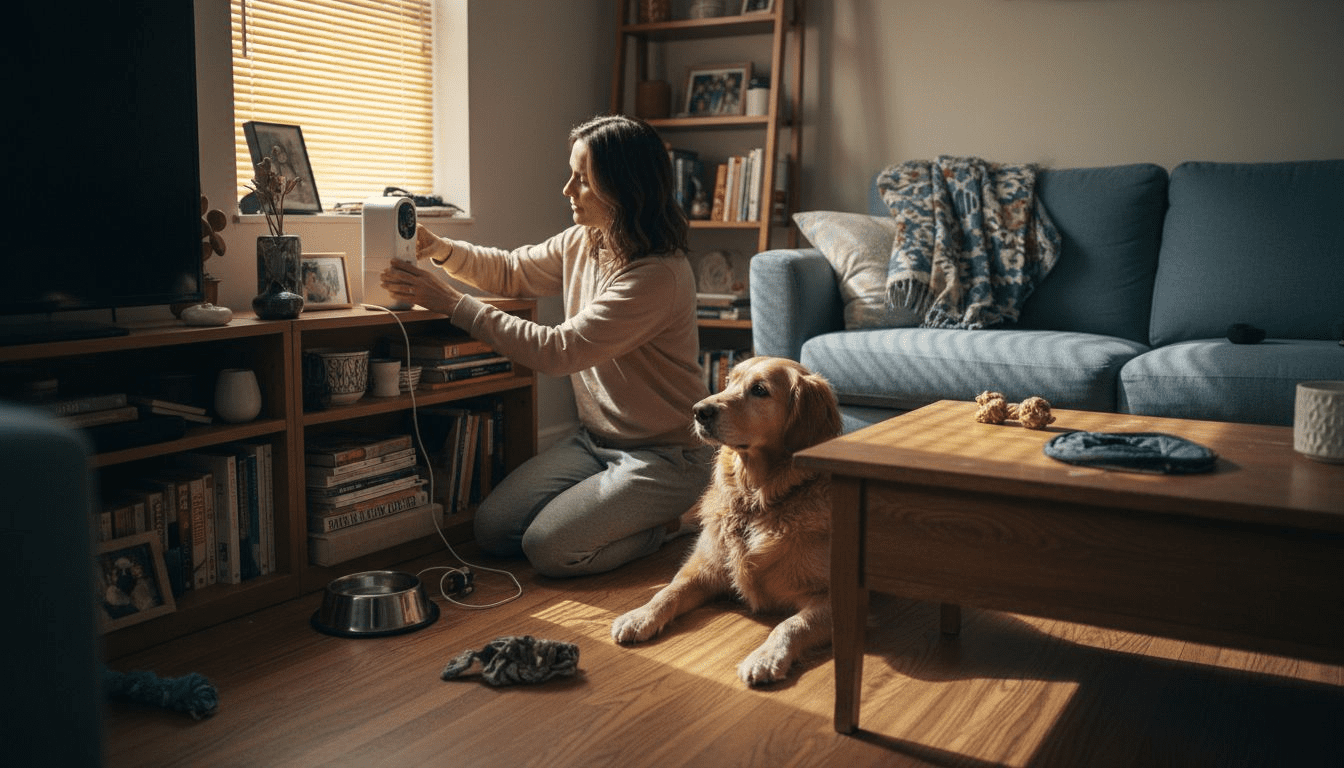
More than 60 percent of American households own pets, yet many struggle with keeping their furry friends calm and connected when away from home. Today’s smart pet cameras offer a sophisticated blend of technology and comfort, perfect for tech-savvy owners who want to reduce separation anxiety and deepen their bond. This guide reveals how intelligent features like two-way audio, treat dispensing, and AI-driven monitoring help American pet lovers enjoy real peace of mind and interactive connection with their pets.
Table of Contents
- What Makes A Pet Camera Unique?
- Types Of Pet Cameras And Core Variations
- Essential Features For Modern Pet Cameras
- How Smart Alerts And Ai Improve Safety
- Common Pitfalls When Choosing Pet Cameras
Key Takeaways
| Point | Details |
|---|---|
| Unique Features | Pet cameras offer advanced functionalities like two-way audio, treat dispensing, and motion detection, enhancing interaction and monitoring. |
| Camera Types | Choose between stationary, mobile, and AI-integrated cameras based on your pet’s behavior and living space for optimal usage. |
| Essential Features | Look for high-definition video, real-time alerts, and smart functionalities to improve pet care and monitoring experience. |
| Avoiding Pitfalls | Be wary of subscription fees and privacy issues; prioritize cameras that align with your needs and ensure data security. |
What Makes a Pet Camera Unique?
Pet cameras represent more than just traditional security devices—they are sophisticated tools designed specifically for remote pet interaction and monitoring. Advanced connectivity features have transformed these devices into intelligent companions that bridge the gap between owners and their pets, regardless of physical distance.
Unlike standard home security cameras, pet cameras offer specialized functionalities tailored to animal behavior and owner needs. Key distinguishing features include two-way audio communication, which allows owners to speak directly to their pets, providing comfort and reducing separation anxiety. Some models integrate treat dispensing mechanisms that enable remote rewards and positive reinforcement training. Motion detection technologies alert owners to unusual pet activities, while high-definition video streaming ensures clear visual monitoring.
The technological sophistication of modern pet cameras goes beyond simple surveillance. Intelligent device integration enables real-time health monitoring, behavior tracking, and interactive engagement. These smart systems can detect changes in pet movement patterns, provide alerts about potential health concerns, and even allow remote play through built-in laser toys or sound interactions.
Pro tip: When selecting a pet camera, prioritize models with multiple interaction features like two-way audio, treat dispensing, and mobile app compatibility to maximize your remote pet care experience.
Types of Pet Cameras and Core Variations
Advanced pet camera technologies have evolved into distinct categories that cater to different pet monitoring and interaction needs. These innovative devices range from basic stationary models to sophisticated, AI-powered systems designed to provide comprehensive pet care solutions.
The primary types of pet cameras can be categorized into three core variations: stationary indoor cameras, mobile robotic units, and AI-integrated monitoring systems. Stationary cameras offer fixed-point monitoring, typically mounted in areas where pets spend most of their time. Mobile robotic units provide more dynamic tracking, allowing remote movement and interaction. IoT-connected pet monitoring systems represent the most advanced category, integrating sophisticated sensor technologies that can track pet behavior, health indicators, and environmental conditions.
Each camera type serves unique purposes for pet owners. Stationary cameras are ideal for apartment dwellers or those wanting to monitor a specific area. Robotic units work best for larger spaces or multiple-pet households, offering more comprehensive coverage. AI-integrated cameras represent the cutting edge, providing not just visual monitoring but also behavioral analysis, movement tracking, and potential health anomaly detection. These systems can distinguish between normal and unusual pet activities, sending real-time alerts to owners about potential concerns.
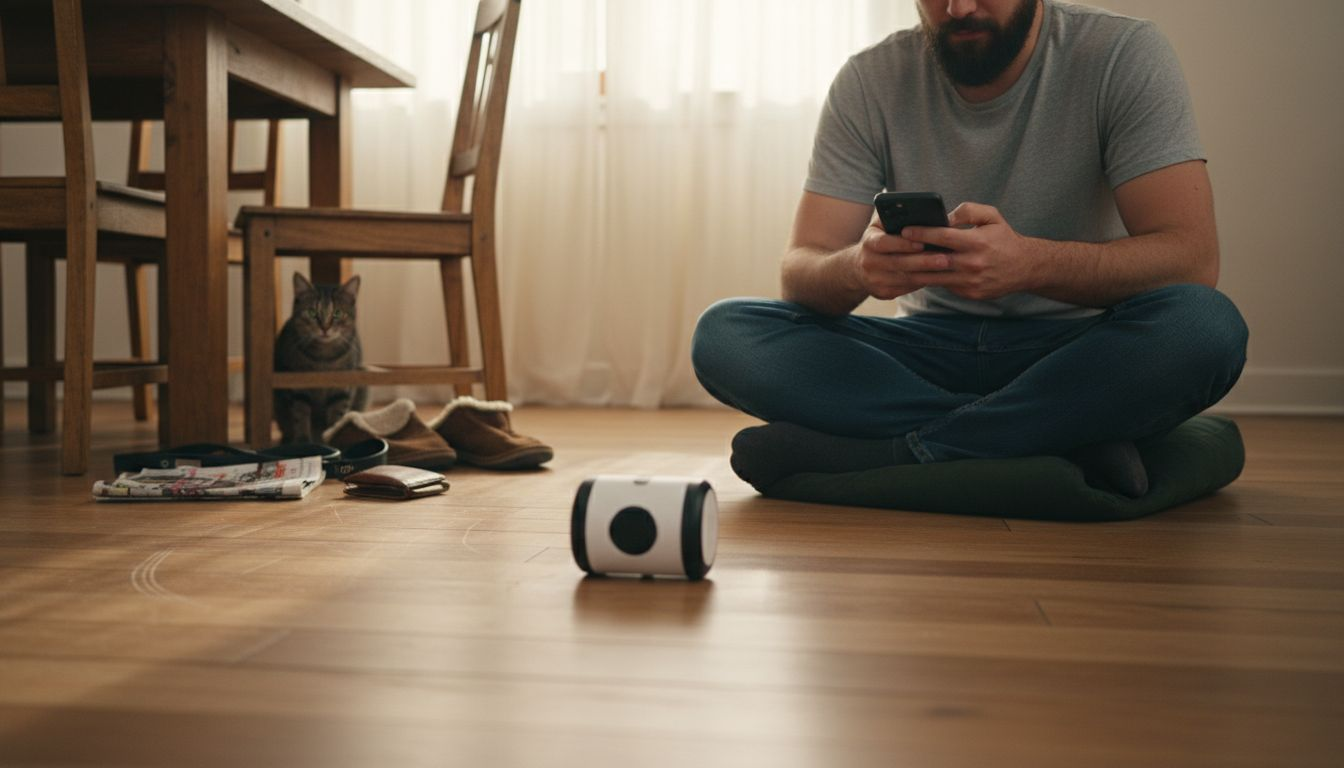
Here’s a quick comparison of the main types of pet cameras and their best use cases:
| Type of Pet Camera | Primary Advantage | Recommended Setting |
|---|---|---|
| Stationary Indoor | Reliable fixed-point monitoring | Apartments, single rooms |
| Mobile Robotic Unit | Active tracking, remote play | Large homes, multi-pet setups |
| AI-Integrated System | Behavior analysis, health alerts | Smart homes, advanced users |
Pro tip: When selecting a pet camera, consider your specific home environment, pet’s behavior, and monitoring needs to choose the most suitable camera type that provides optimal interaction and peace of mind.
Essential Features for Modern Pet Cameras
Advanced pet camera technologies have transformed home pet monitoring, integrating sophisticated features that go far beyond simple video surveillance. Modern pet cameras now serve as comprehensive pet care and interaction platforms, designed to provide owners with unprecedented insights and connectivity with their furry companions.
The core essential features of contemporary pet cameras include high-definition video streaming, two-way audio communication, and real-time mobile alerts. IoT-enabled monitoring systems now offer intelligent capabilities such as motion detection, night vision, and AI-driven behavioral analytics. These technologies enable pet owners to track their animal’s activities, detect potential health issues, and maintain meaningful interactions even when physically separated.
Beyond basic monitoring, modern pet cameras incorporate advanced functionalities that enhance pet care and owner peace of mind. Smart features like treat dispensing, laser toy integration, and sound interaction provide mental stimulation for pets. Additionally, environmental sensors can monitor temperature, humidity, and air quality, ensuring optimal living conditions. The integration of machine learning algorithms allows these devices to recognize individual pet behaviors, distinguish between normal and unusual activities, and provide predictive insights about potential health or behavioral concerns.
Pro tip: Prioritize pet cameras with multiple interactive features and robust mobile app integration to maximize your remote pet care and monitoring capabilities.
How Smart Alerts and AI Improve Safety
Integrated smart analytics platforms have revolutionized pet safety monitoring by transforming traditional surveillance into intelligent, proactive protection systems. These advanced technologies go beyond simple observation, creating a comprehensive safety network that anticipates and responds to potential risks before they escalate.
AI-powered pet cameras now leverage sophisticated algorithms to perform continuous behavioral analysis and detect anomalies in real-time. Continuous tracking technologies enable these systems to establish baseline pet behaviors, instantly recognizing deviations that might indicate health issues, stress, or potential emergencies. Key safety features include motion pattern recognition, unusual activity alerts, potential health indicator tracking, and immediate notification systems that can alert owners about everything from unexpected movements to potential medical concerns.
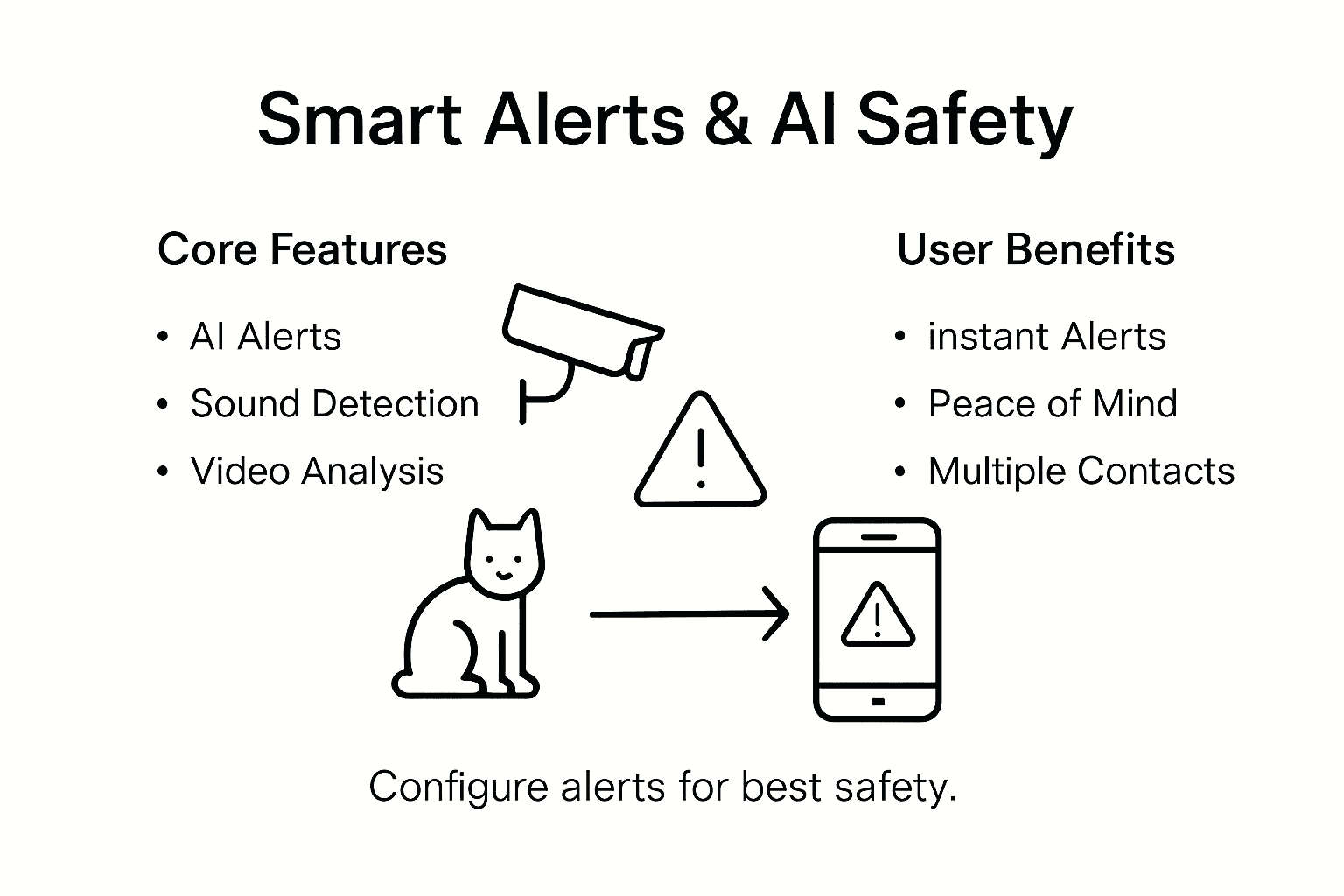
The most advanced smart alert systems integrate multiple layers of protection, combining visual monitoring, sound analysis, and environmental sensing. Machine learning algorithms can now distinguish between normal and concerning behaviors, providing context-rich alerts that help owners make informed decisions. For instance, these systems can detect signs of distress, identify potential separation anxiety indicators, monitor sleep patterns, and even recognize early warning signs of health complications, transforming pet cameras from passive observers to active health and safety guardians.
Pro tip: Configure your pet camera’s smart alert settings to send notifications to multiple emergency contacts, ensuring comprehensive safety coverage for your pet.
Common Pitfalls When Choosing Pet Cameras
Consumer awareness about potential pet camera challenges is crucial for making an informed purchasing decision. Pet owners often rush into buying devices without thoroughly understanding the complex landscape of features, privacy considerations, and potential impacts on their pets’ well-being.
One significant pitfall involves underestimating the psychological impact of pet cameras on animal behavior. Some pets experience increased anxiety from unfamiliar devices, especially those with sudden sounds or movements. Subscription models present another critical challenge, with many manufacturers requiring ongoing monthly fees for advanced features like cloud storage, AI analysis, and comprehensive alert systems. Compatibility issues can also arise, particularly when pet cameras do not seamlessly integrate with existing smart home ecosystems or require complex installation processes.
Privacy and data security represent another critical concern for tech-savvy pet owners. Not all pet cameras implement robust encryption protocols, potentially exposing personal home environments and pet behaviors to unauthorized access. Additional hidden costs emerge through required accessories, specialized mounting equipment, and ongoing maintenance. Some cameras generate excessive false alerts, creating notification fatigue and potentially desensitizing owners to genuinely important signals about their pet’s condition or home environment.
Consider these critical factors when choosing a pet camera to avoid common pitfalls:
| Pitfall | Description | How to Avoid |
|---|---|---|
| Subscription Fees | Ongoing costs for premium features | Choose cameras with free plans |
| Privacy/Data Security | Potential for data leaks or unauthorized access | Verify encryption standards |
| Compatibility Issues | Limited smart home integration | Check ecosystem requirements |
| False Notifications | Excessive alerts causing notification fatigue | Fine-tune sensitivity settings |
Pro tip: Test your pet camera’s compatibility and settings during a short trial period, ensuring your specific home environment and pet’s temperament align with the device’s capabilities before making a long-term commitment.
Discover Smarter Pet Care with Expert Guidance
Understanding the many features that define modern pet cameras can be overwhelming. If you’ve been facing challenges choosing the right device to meet your pet’s unique needs and home environment, you are not alone. From mastering two-way communication and treat dispensing to analyzing smart alerts for enhanced safety, knowing which technology best reduces separation anxiety and supports remote interaction is essential.
At ModernPetTech, we specialize in breaking down these complex features into easy-to-understand comparisons and detailed reviews. Whether you want to explore interactive treat-dispensing models or learn about the latest AI-powered safety alerts, our Guides & Comparisons and Pet Cameras sections provide trusted insights tailored for informed pet owners.

Elevate your pet care experience today by visiting ModernPetTech. Dive into our expert resources and find the perfect smart monitoring solution designed to keep your pet happy, secure, and connected even when you’re away. Start exploring now and empower your remote pet care journey.
Frequently Asked Questions
What are the key features to look for in a pet camera?
When choosing a pet camera, prioritize features such as high-definition video streaming, two-way audio communication, treat dispensing, motion detection, night vision, and AI-driven behavioral analytics to enhance your remote pet monitoring experience.
How do AI-integrated pet cameras improve pet safety?
AI-integrated pet cameras utilize sophisticated algorithms for continuous behavioral analysis, enabling them to detect anomalies in real-time and alert owners about potential health issues or unusual activities, thereby acting as proactive safety tools.
What types of pet cameras are available, and how do they differ?
The main types of pet cameras include stationary indoor cameras for fixed monitoring, mobile robotic units for dynamic tracking and interaction, and AI-integrated systems for comprehensive pet behavior analysis and health monitoring. Each serves unique needs based on home environment and pet behavior.
What common pitfalls should I avoid when choosing a pet camera?
Be aware of potential pitfalls such as subscription fees for advanced features, privacy and data security concerns, compatibility issues with existing smart home devices, and excessive false notifications that can lead to notification fatigue.
Recommended
- Pet Camera Reviews & Smart Pet Tech Guides | ModernPetTech
- budget pet camera under $50 | cheap pet cameras that work
- Cat Camera 2025: Best Smart Cameras for Modern Cat Owners
- Discount Pet Camera Review | Best Affordable Pet Cams 2025

4 thoughts on “Pet Camera Features Breakdown: Smarter Pet Care”