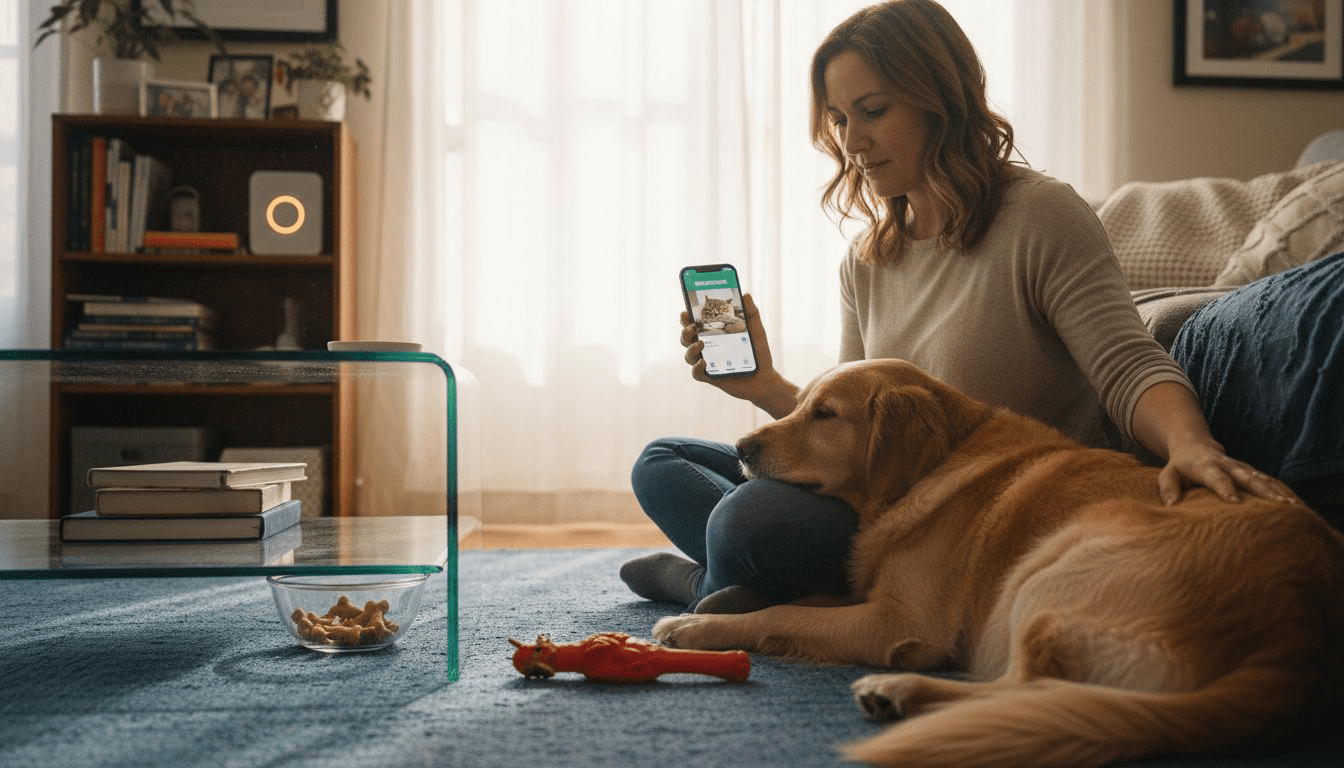
More than half of American pet owners report that their animals experience separation anxiety when left home alone. For busy households, the challenge of keeping pets calm and connected can be stressful for both humans and animals. With advances in smart home integration, tech-savvy American owners can now use connected cameras and treat dispensers to monitor their pets remotely, ease anxiety, and enjoy real-time peace of mind every day.
Table of Contents
- Smart Home Integration for Pet Owners
- Popular Types of Pet Monitoring Devices
- How Integration Reduces Pet Anxiety
- Key Features: Cameras, Treats, and Alerts
- Practical Challenges and Privacy Concerns
Key Takeaways
| Point | Details |
|---|---|
| Smart Home Integration Enhances Pet Care | Utilizing smart home technologies allows pet owners to monitor their pets’ behavior and health remotely, improving overall care and responsiveness to potential issues. |
| Variety of Monitoring Devices Available | A range of devices, including GPS trackers, health wearables, and smart cameras, provide comprehensive monitoring of pets’ activities and well-being. |
| Managing Pet Anxiety with Technology | Smart home systems can reduce pet anxiety through features like remote interaction and automated environmental controls, promoting a comforting atmosphere. |
| Privacy and Security Considerations | Owners must prioritize network security and regularly update device settings to protect against unauthorized access and data breaches. |
Smart Home Integration for Pet Owners
Smart home technologies are revolutionizing how pet owners manage and understand their furry companions’ daily experiences. The Internet of Pets represents a groundbreaking approach to animal care, enabling unprecedented remote monitoring capabilities that transform traditional pet care strategies.
Integrated smart home systems now offer comprehensive solutions for tracking pet behavior, health, and emotional well-being. Advanced technologies like IoT-enabled devices provide real-time insights into pet activities, allowing owners to detect potential anxiety triggers before they escalate. These systems can monitor everything from movement patterns to audio cues, giving owners unprecedented visibility into their pets’ experiences when they’re away from home.
The core benefits of smart home integration for pet owners include continuous remote monitoring, proactive health tracking, and stress reduction for both pets and humans. By combining GPS tracking, cloud databases, and AI behavioral analysis, these platforms create a holistic approach to pet care that goes far beyond traditional monitoring methods. Owners can receive immediate alerts about unusual behaviors, potential health issues, or signs of distress, enabling rapid intervention and support.
Pro tip: Start with a basic smart home pet camera system and gradually integrate additional monitoring technologies to help your pet adjust to the new technological environment.
Popular Types of Pet Monitoring Devices
Pet monitoring technology has evolved dramatically, offering owners an unprecedented range of devices to track and support their animal companions. Advanced IoT monitoring systems now provide comprehensive solutions that go far beyond simple video cameras, integrating multiple technologies to ensure pet safety and well-being.
The most popular pet monitoring devices can be categorized into several key types. GPS trackers allow real-time location tracking, helping owners quickly locate pets who might wander away. Health monitoring wearables track activity levels, vital signs, and movement patterns, providing insights into a pet’s physical condition. Smart cameras with two-way audio enable direct interaction, allowing owners to speak to and observe their pets remotely. Smart home pet tech ecosystems now include additional innovations like automatic feeders, smart doors controlled by RFID, and environmental sensors that monitor temperature and humidity.
These devices offer more than just monitoring – they provide a holistic approach to pet care. By integrating multiple technologies, owners can now detect potential health issues early, reduce pet anxiety, and maintain a continuous connection with their animals even when physically separated. The ability to receive instant alerts about unusual behaviors or environmental changes represents a significant advancement in proactive pet care.
Pro tip: When selecting pet monitoring devices, prioritize systems that offer multiple integration capabilities and can communicate across different smart home platforms.
Here’s how popular pet monitoring device types compare:
| Device Type | Main Function | Ideal For | Notable Limitation |
|---|---|---|---|
| GPS Tracker | Real-time location updates | Outdoor pets | Limited indoors accuracy |
| Health Wearable | Tracks activity and health metrics | Health-conscious owners | May require frequent charging |
| Smart Camera | Video and audio interaction | Daily check-ins | Needs stable Wi-Fi |
| Automatic Feeder | Scheduled food dispensing | Routine feeding | Not for timed medication |
| Smart Door | Remote pet access | Cats, dogs with outdoor access | Entry to stray animals possible |
How Integration Reduces Pet Anxiety
Smart home technologies have revolutionized our approach to managing pet anxiety, offering unprecedented strategies for supporting animal emotional well-being. Integrated pet care solutions now provide comprehensive methods to address separation stress, creating more stable and comforting environments for pets left alone.
The core mechanism of anxiety reduction involves multiple technological interventions. Remote interaction systems enable owners to communicate directly with their pets through two-way audio and video, providing immediate emotional reassurance. Automated environment controls help maintain consistent conditions that minimize stress triggers, such as maintaining steady temperatures, managing lighting, and reducing unexpected noise. AI-powered monitoring technologies can detect subtle changes in pet behavior, allowing for proactive intervention before anxiety escalates into more serious emotional disruptions.
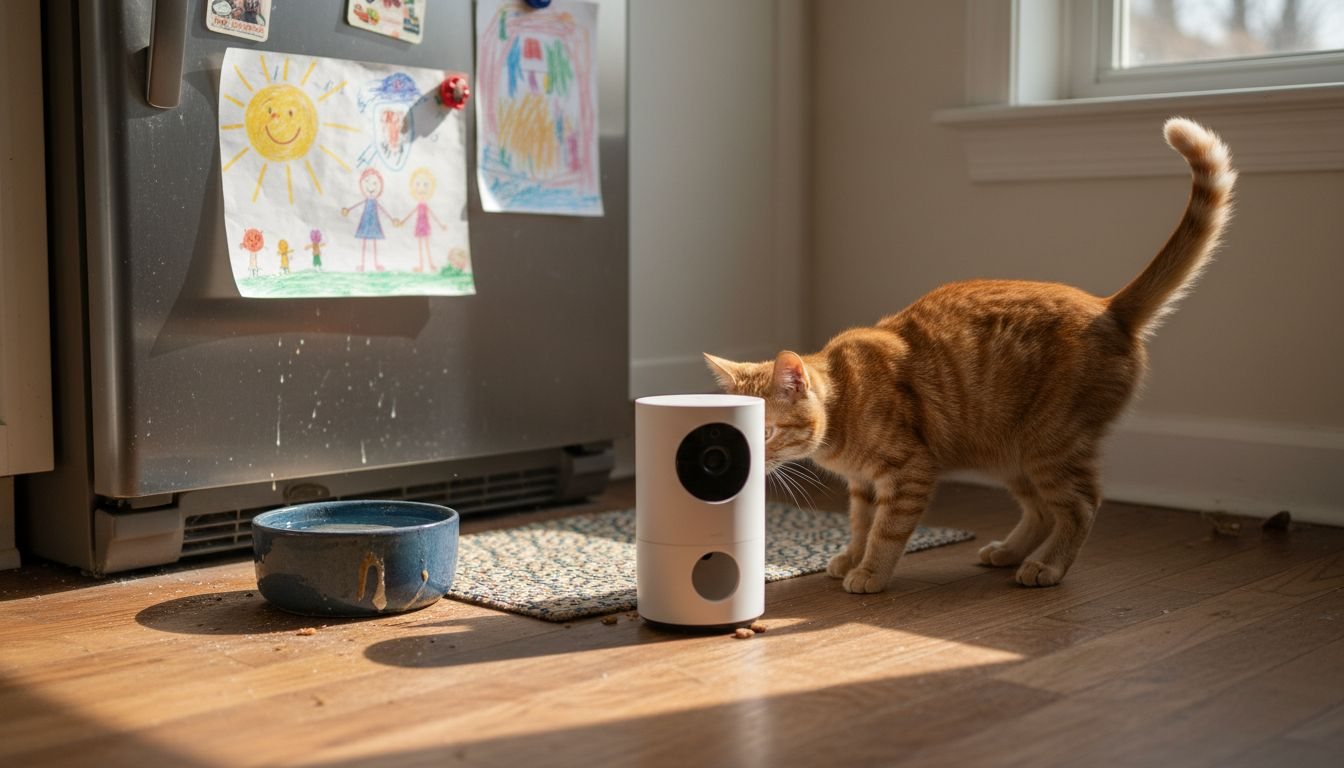
These smart home integrations work by creating a predictable, responsive environment that mimics the comfort of human presence. Automatic feeding schedules, programmed play interactions, and real-time monitoring help pets feel secure and connected, even when their owners are physically absent. By providing continuous engagement and eliminating sudden environmental changes, these technologies directly address the primary sources of separation anxiety.
Pro tip: Gradually introduce smart home pet monitoring devices to your pet, using positive reinforcement to help them associate these technologies with comfort and security.
Key Features: Cameras, Treats, and Alerts
Smart home pet monitoring technologies have transformed how owners interact with and care for their animal companions. Integrated pet monitoring devices now offer sophisticated features that go beyond simple observation, providing comprehensive care and emotional support for pets.
The three critical features of modern pet monitoring systems include advanced cameras, intelligent treat dispensers, and responsive alert mechanisms. Cameras provide high-definition, multi-angle video streams that allow owners to visually check on their pets in real-time, with many systems offering two-way audio communication. Automated treat dispensers serve multiple purposes – from rewarding good behavior to providing comfort and maintaining feeding schedules. Smart alert systems can detect unusual activity patterns, potential health issues, or emotional distress, enabling proactive intervention and reducing pet anxiety.
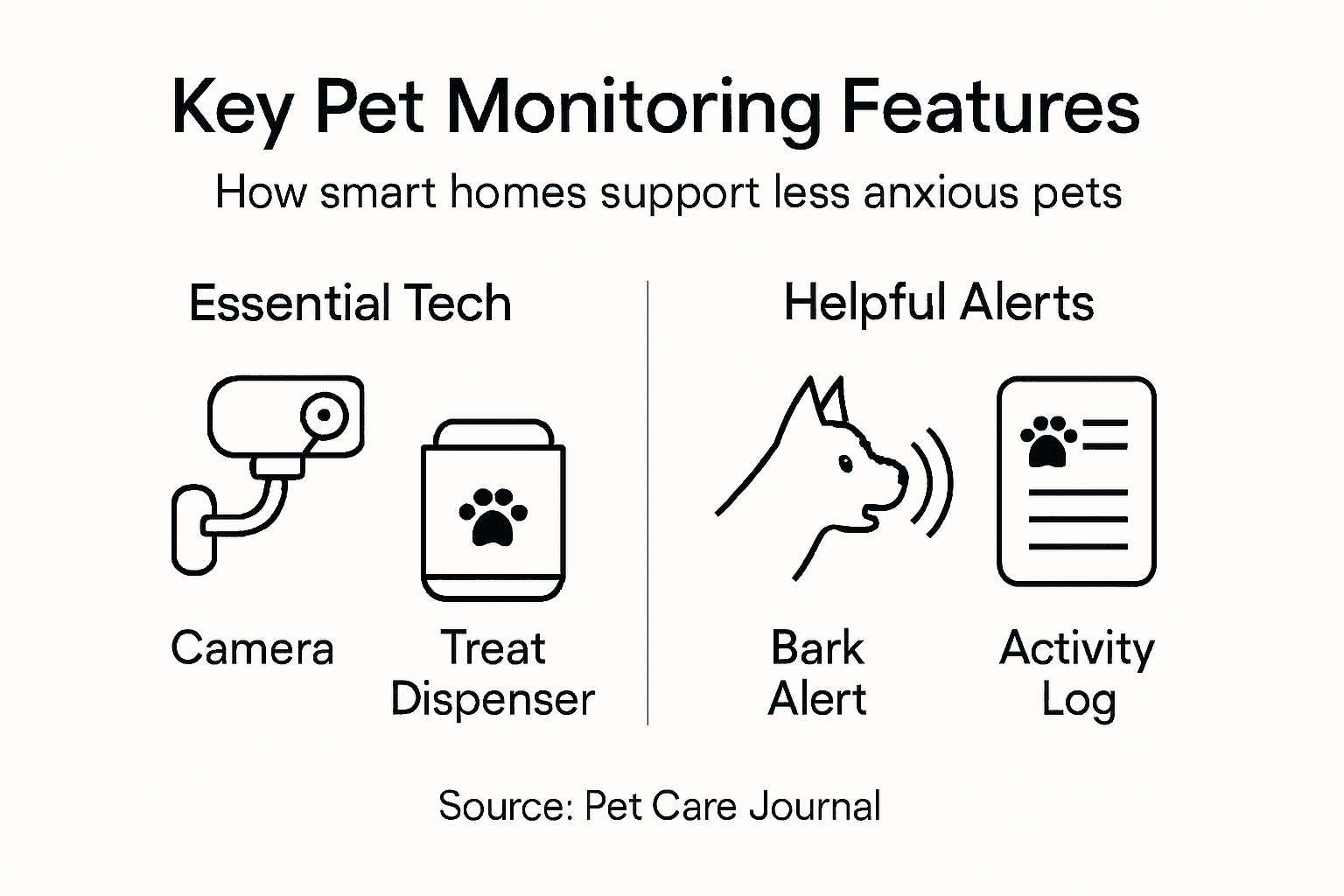
These technological features work synergistically to create a supportive environment that mimics human care. For instance, cameras with night vision can provide continuous monitoring, treat dispensers can offer positive reinforcement during owner absence, and alert systems can notify owners about any unexpected changes in pet behavior or health. By providing continuous engagement and immediate response capabilities, these technologies help pets feel secure and connected, even when their owners are not physically present.
Pro tip: Choose pet monitoring devices with customizable features that can be adjusted to match your specific pet’s personality and comfort level.
Practical Challenges and Privacy Concerns
Smart home pet technology offers incredible benefits, but it also introduces complex privacy and security considerations that owners must carefully navigate. IoT device vulnerabilities can potentially expose sensitive personal and pet-related information, creating significant risks for unsuspecting users.
The primary privacy challenges stem from the interconnected nature of these devices. Network security becomes critical, as pet monitoring systems often connect directly to home wireless networks, potentially creating entry points for cybersecurity threats. Data protection risks include unauthorized access to home camera feeds, location data, and personal information. Potential vulnerabilities could allow malicious actors to intercept device communications, monitor household activities, or compromise critical pet care functions like medication or feeding systems.
Mitigating these risks requires a proactive approach from both technology manufacturers and pet owners. Consumers should prioritize devices with robust encryption, regular software updates, and clear privacy policies. This includes using strong, unique passwords, enabling two-factor authentication, and regularly reviewing device settings and connected accounts. Manufacturers must implement stringent security protocols, including end-to-end encryption, secure data storage, and transparent privacy practices that protect user and pet information.
Pro tip: Always research the privacy policy and security features of any pet monitoring device before installation, and regularly update device firmware to maintain maximum protection.
Key strategies to address smart pet tech privacy risks:
| Risk Area | Example Concern | Owner Action |
|---|---|---|
| Network Security | Hacking of home Wi-Fi | Use strong, unique passwords |
| Data Privacy | Unauthorized camera access | Enable two-factor authentication |
| Device Updates | Unpatched vulnerabilities | Check for firmware updates monthly |
| Data Sharing | Excessive vendor data collection | Review device privacy settings |
| Physical Security | Tampering with devices | Position devices out of reach |
Ease Your Pet’s Anxiety with Smart Home Technology
The challenge of reducing pet anxiety is more approachable than ever by embracing smart home integration. This article highlights how remote interaction, automated environment controls, and AI-powered monitoring can create a sense of security for your pet when you are away. If you want to transform these insights into real solutions, discovering the right smart pet monitoring devices is key. From two-way cameras to treat-dispensing features, these technologies build comfort and emotional support for your furry friends.
Explore our detailed reviews on Smart Feeders & Care and unlock the full benefits of treat-dispensing pet cameras that help ease separation anxiety.
Take control of your pet’s well-being today by visiting modernpettech.com. Learn how to choose devices that fit your pet’s unique needs and create a calming, connected environment with smart home integration. Your pet’s peace of mind is just a click away.
Frequently Asked Questions
How can smart home technology help reduce my pet’s anxiety?
Smart home technology can reduce pet anxiety by providing features like remote interaction systems that allow owners to communicate directly with their pets. Automated environment controls help maintain a consistent atmosphere, and real-time monitoring enables proactive intervention when signs of distress are detected.
What types of devices can I use to monitor my pet’s emotional well-being?
Devices such as smart cameras with two-way audio, health wearables that track activity and vital signs, and automated treat dispensers can all help monitor and support your pet’s emotional well-being, providing engagement and comfort.
How does a smart camera assist in alleviating pet anxiety?
A smart camera allows owners to visually check on their pets in real-time and communicate with them via two-way audio, providing reassurance and reducing feelings of loneliness or stress when the owner is away from home.
Can automated feeding schedules help with my pet’s anxiety?
Yes, automated feeding schedules can help create predictability in your pet’s routine, which contributes positively to reducing anxiety. Knowing when to expect food can provide comfort and stability, especially during times of separation from their owner.
Recommended
- What Is Interactive Pet Camera Technology?
- Pet Camera Security Benefits for Modern Pet Owners
- Best 8 Pet Cameras 2025 – Expert Comparison 2026
- 7 Pet Monitoring Best Practices for Tech-Savvy Owners
- Natural Herbs in Dog Food for Stress Relief
- Calming – Wellness Dog Treat to Aid Stresses and Anxiety – Ultimate Pet Foods

4 thoughts on “Why Smart Home Integration Reduces Pet Anxiety”