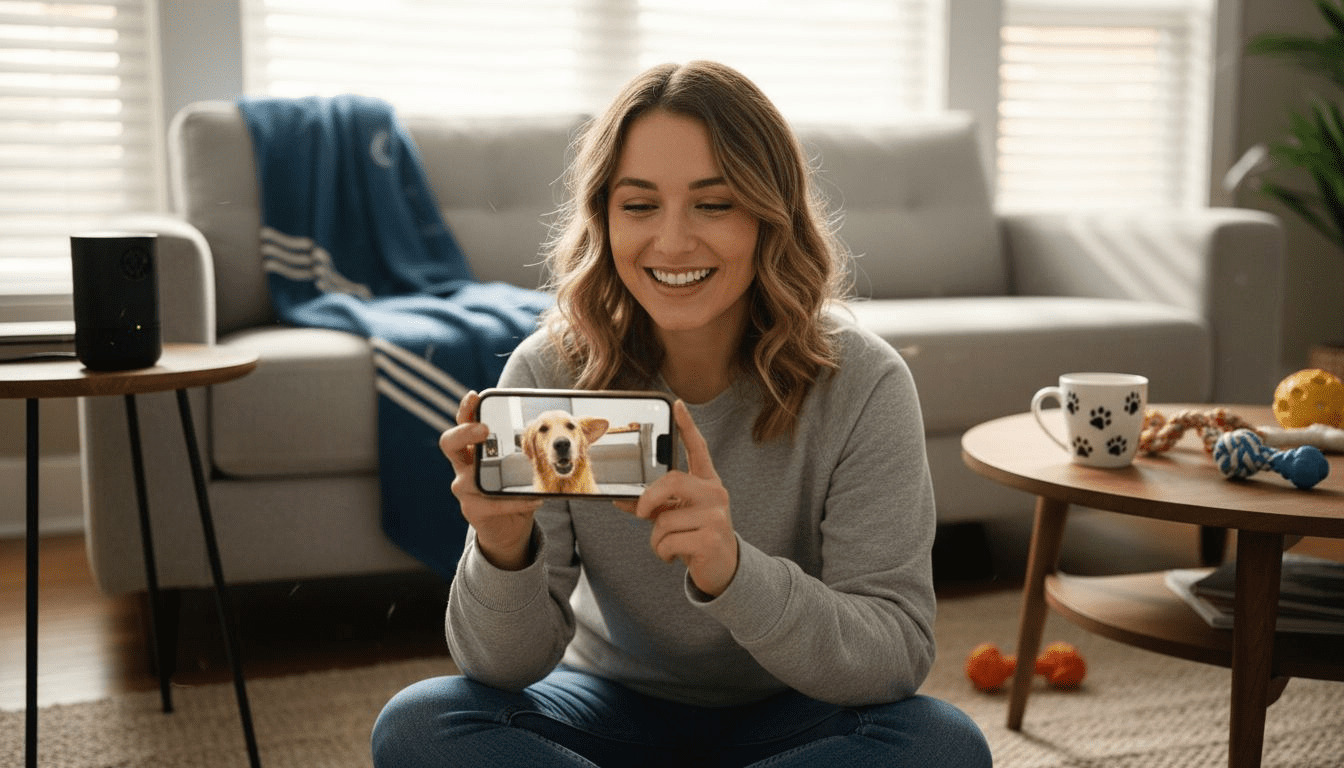
Finding a way to truly comfort your pet while stuck at the office can be frustrating, especially when video alone just doesn’t cut it. For tech-savvy Americans who want more than passive monitoring, two-way audio lets you hear and speak to your pet in real time through your camera’s microphone and speaker. This interactive feature brings much-needed reassurance to anxious pets during work hours, offering a direct connection that changes the home-alone dynamic.
Table of Contents
- What Is Two-Way Audio in Pet Cameras?
- Types of Two-Way Audio Technology Explained
- How Two-Way Audio Works for Remote Interaction
- Real-Life Benefits for Reducing Separation Anxiety
- Privacy, Safety, and Legal Considerations
- Comparing Two-Way Audio With Other Pet Monitoring Features
Key Takeaways
| Point | Details |
|---|---|
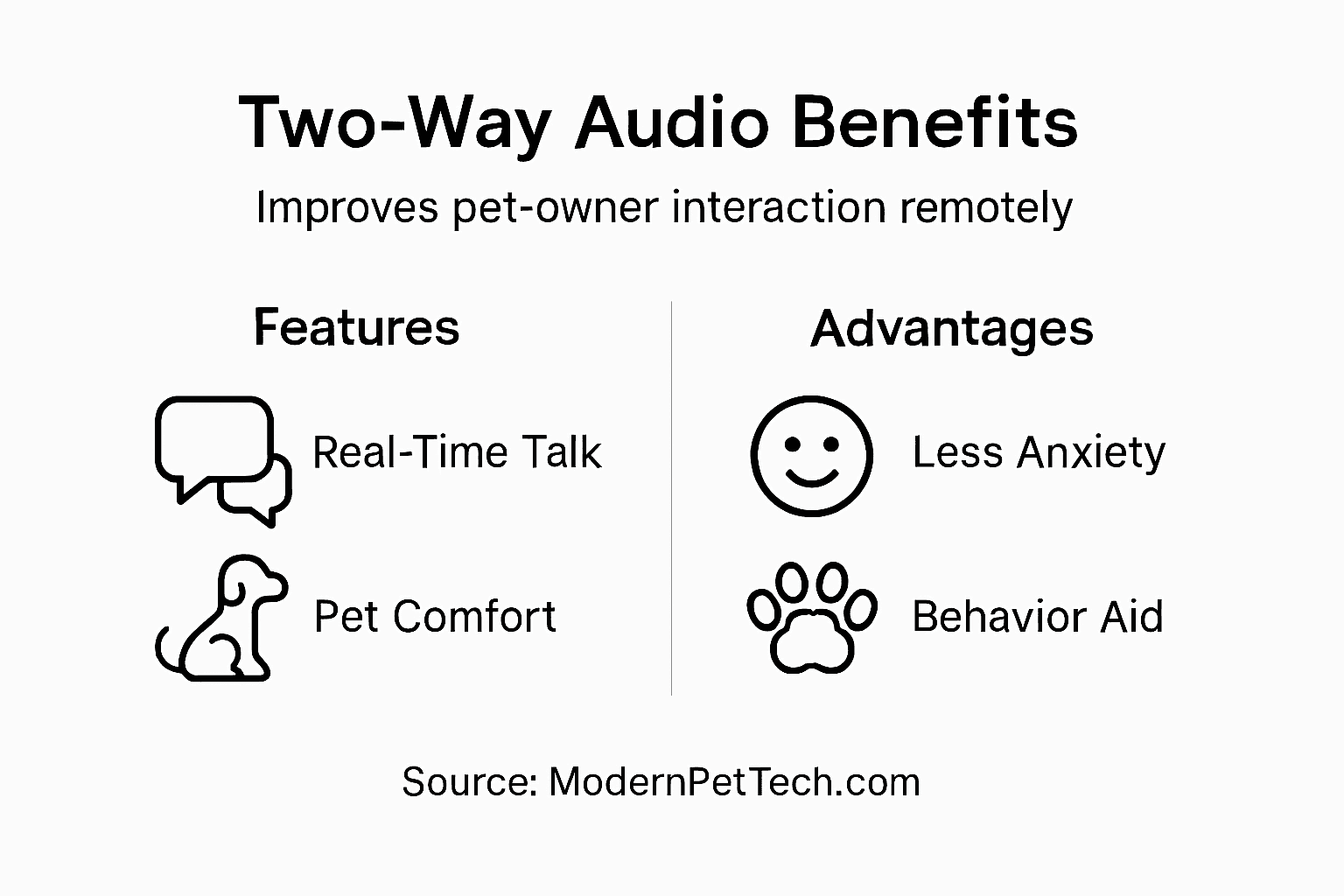
| Two-Way Audio Enhances Interaction | This feature allows real-time communication with pets, helping to alleviate anxiety when left alone. |
| Voice Recognition Is Calming | Hearing their owner’s voice can significantly reduce stress-related behaviors in pets, especially dogs. |
| Connectivity Impacts Functionality | Wi-Fi-based two-way audio systems generally provide better audio quality and lower latency compared to Bluetooth systems. |
| Privacy and Security Are Key | Understand the audio recording settings and ensure encryption measures are in place to protect household privacy. |
What Is Two-Way Audio in Pet Cameras?
Two-way audio is simply a microphone and speaker built into your pet camera that lets you hear your pet AND talk back to them in real time. Unlike a regular security camera where you can only listen to what’s happening at home, two-way communication means the conversation flows both directions. Your dog hears your voice coming through the camera speaker while you listen to their barks, whines, or the general sounds of your home through the camera’s microphone.
Here’s what makes this feature stand out for pet owners. When you’re at work and your dog starts getting anxious, you can actually talk to them directly through the camera. Your voice comes through the speaker, and suddenly your pet knows you’re still there, even if you’re miles away in an office. This real-time interaction creates a meaningful connection that static video monitoring simply cannot provide.
The technical setup is straightforward. The camera contains both a microphone to pick up sound from your home and a speaker to broadcast your voice back. Your phone connects to the camera through a mobile app, and that app handles the audio transmission over your internet connection. When you tap the talk button in the app, your voice travels to the camera, gets amplified through the speaker, and your pet hears you clearly.
What makes two-way audio particularly valuable is how it addresses separation anxiety. Research shows that hearing their owner’s familiar voice can calm anxious pets significantly more than video alone. Your dog may pace less, bark less, and feel more secure knowing they haven’t been abandoned. You’re not just monitoring anymore. You’re actually present in your pet’s day, even remotely.
The comfort level varies by pet. Some dogs respond immediately and excitedly to hearing their owner’s voice. Cats tend to be more curious than excited. Rabbits or other small animals might startle initially but usually adjust quickly. The key is that you now have an active tool for interaction, not just passive observation.
Here’s a summary of pet reactions to two-way audio for easier comparison:
| Pet Type | Typical Reaction | Adjustment Time |
|---|---|---|
| Dog | Excitement, reassurance | Immediate to a few days |
| Cat | Curiosity, investigation | Gradual over weeks |
| Rabbit/Small Animal | Initial startle, calms with routine | Several days to adjust |
Pro tip: Start with short, calm voice messages through the camera to let your pet adjust to the sound rather than sudden loud talking, which can startle them and work against reducing anxiety.
Types of Two-Way Audio Technology Explained
Not all two-way audio systems work the same way. The main difference comes down to how the audio flows between you and your pet camera. Understanding these distinctions helps you know what to expect when you’re talking to your furry friend from across town.
Half-Duplex vs Full-Duplex Communication
Most pet cameras use half-duplex technology, which means you and the camera take turns talking. You press the talk button, your voice goes through, then you release it to listen. It’s like using a walkie-talkie. Your pet hears you speak, but there’s a brief pause before you can hear their response. This works perfectly fine for most pet owners and keeps costs down.
Full-duplex systems allow simultaneous two-way conversation without interruption, just like a phone call. You can talk and listen at the same time. Your pet can bark while you’re speaking and you’ll hear it instantly. This creates more natural interaction but requires more sophisticated hardware and typically costs significantly more.
Connectivity Methods
Two-way audio relies on different wireless protocols depending on your camera setup. Most pet cameras use Wi-Fi connectivity because it provides reliable range throughout your home and works over the internet when you’re away. Some use Bluetooth for close-range communication, though that limits you to being nearby.
Wi-Fi based systems transmit your voice over your home internet connection. The audio quality depends heavily on your bandwidth and signal strength. Stronger internet connections mean clearer, less delayed audio. Weaker signals can create lag between when you speak and when your pet hears you.
Audio Quality and Latency Considerations
Half-duplex and full-duplex modes affect not just how you communicate but also the quality of what you hear. Half-duplex systems typically have lower latency because they only process audio in one direction at a time. Full-duplex requires more processing power to handle simultaneous audio streams, which can occasionally introduce slight delays.
Latency matters when you’re trying to interact with your pet. A delay of 2-3 seconds feels natural. Delays of 5-10 seconds make the interaction feel disconnected and defeat the purpose of real-time communication. Your internet speed and camera quality directly impact this.
Pro tip: Test your camera’s two-way audio during a short absence by recording your pet’s reaction to your voice, then review the footage to gauge latency and audio clarity before relying on it for separation anxiety management.
How Two-Way Audio Works for Remote Interaction
The magic of talking to your pet through a camera involves several steps happening almost instantly. When you press that talk button on your phone, you’re triggering a chain of events that sends your voice across the internet to your camera’s speaker. Understanding this process helps you troubleshoot issues and appreciate why internet quality matters so much.
The Voice Capture and Transmission Process
It starts with your phone’s microphone picking up your voice. The audio gets digitally encoded, which means it’s converted into data that can travel over the internet. Your phone sends this encoded audio to the pet camera through your home Wi-Fi network or cellular data, depending on your setup.
The camera receives this digital signal and decodes it back into sound. The camera’s speaker then plays your voice loud enough for your pet to hear clearly. This entire process happens in real time, though there’s always a tiny delay as data travels through networks.
How Your Pet Camera Listens Back
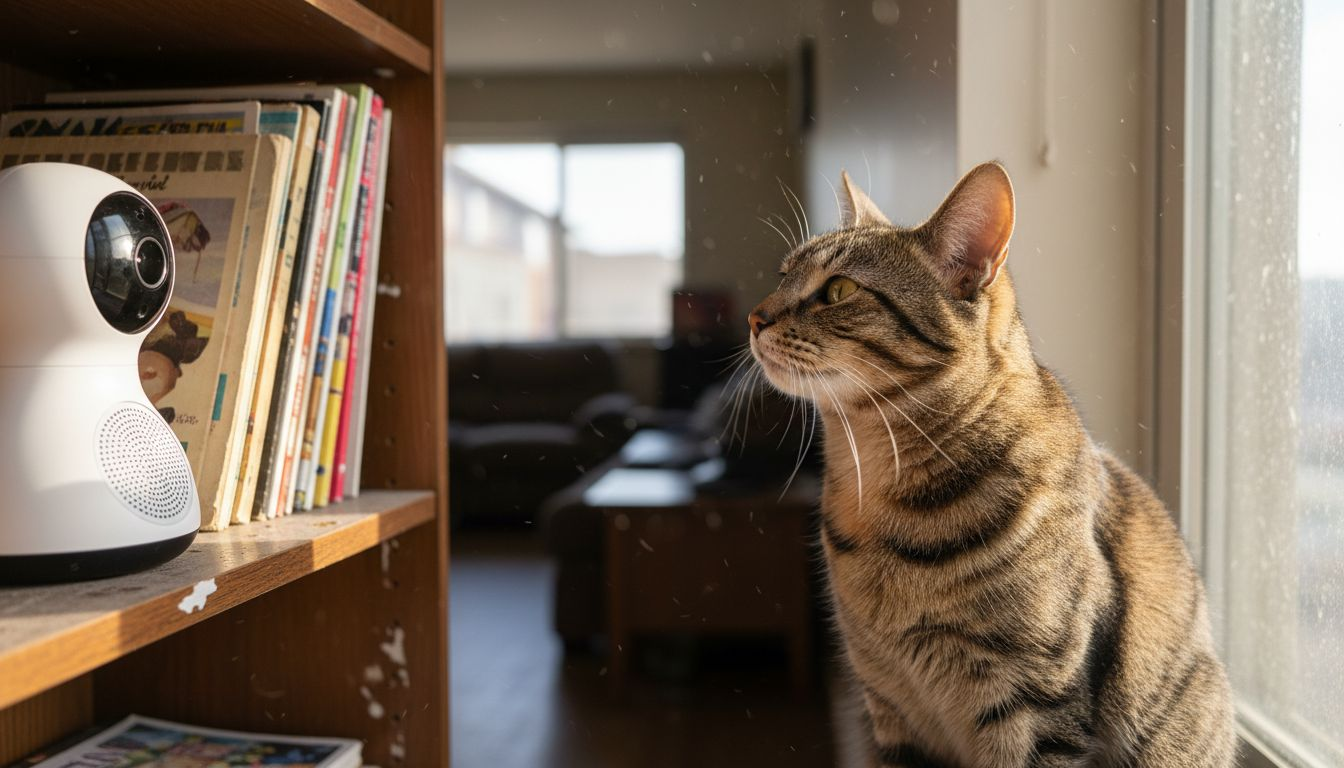
The camera’s microphone works the opposite direction. It captures sounds from your home—your dog barking, your cat meowing, or just the ambient noise of an empty living room. That audio gets encoded and sent back through the internet to your phone, where it plays through your phone’s speaker.
This creates the two-way experience. You speak, your pet hears you. Your pet makes noise, you hear it. The real-time audio streaming makes the interaction feel immediate and natural, even though data is constantly flowing both directions.
Network Technology Behind the Scenes
Peer-to-peer communication technologies power most modern pet cameras. Rather than routing all audio through a central server, the camera and your phone establish a direct connection that transmits audio with minimal delay. This approach keeps latency low and reduces strain on internet infrastructure.
Your internet speed directly affects audio quality and responsiveness. A stable connection with at least 2-3 megabits per second of upload and download bandwidth ensures clear audio and minimal lag. Weaker connections can cause audio dropouts or noticeable delays that frustrate both you and your pet.
Pro tip: Position your camera within 15 feet of your Wi-Fi router and ensure no large metal objects block the signal path, as this significantly reduces latency and improves audio clarity during interactions.
Real-Life Benefits for Reducing Separation Anxiety
Separation anxiety isn’t just annoying barking or destructive behavior. It’s genuine distress your pet experiences when you leave. Two-way audio addresses this directly by letting you maintain a presence in your pet’s life, even from miles away. The results can be remarkably transformative.
The Power of Your Voice
Your dog recognizes your voice immediately. When they hear it coming through the camera speaker, their brain registers that you’re still connected to them. Hearing the owner’s voice can calm pets and reduce stress-related behaviors significantly more than silent monitoring alone.
Pets experiencing separation anxiety often pace, whine, or destroy things out of panic. With two-way audio, you can interrupt those spiral patterns. Speaking calmly to your anxious dog breaks the cycle of escalating stress and provides the reassurance they desperately need.
Real-World Behavioral Changes
Many pet owners report concrete improvements within weeks of using two-way audio. Your dog barks less because they know you haven’t abandoned them. They settle down faster when left alone because they’ve heard your voice and feel your presence. Some pets even wait by the camera, expecting to hear from you.
Cats show different responses. Rather than seeking constant reassurance, they become curious about the camera and the voice coming through it. Anxious rabbits or other small animals similarly show reduced panic behaviors once they adjust to hearing their owner’s voice.
Building Trust and Security
Consistent use of two-way audio strengthens your pet’s emotional security. You’re not just a person who leaves them anymore. You’re someone who remains present and responsive, even during absences. This fundamentally changes how your pet perceives alone time.
The consistency matters tremendously. Using two-way audio sporadically actually worsens anxiety because your pet becomes confused about when you’ll be reachable. Regular, predictable check-ins during your workday create stable expectations and measurable calmness.
Immediate Intervention Capabilities
Two-way audio gives you real-time response tools. If your pet starts showing anxiety signs, you can address it immediately rather than waiting hours until you get home. This prevents anxiety from escalating into destructive behaviors or self-harm situations.
You can also redirect unwanted behaviors. Your dog starts chewing the couch, you see it on video, you speak up calmly but firmly. The immediate feedback loop is far more effective than arriving home to damage and confusion.
Pro tip: Schedule 2-3 brief check-in calls during your workday at consistent times, keeping each interaction to 30-60 seconds so your pet learns when to expect your voice rather than becoming dependent on constant contact.
Privacy, Safety, and Legal Considerations
Before you set up two-way audio on your pet camera, you need to understand the privacy and security implications. These devices capture audio constantly, which means they’re collecting data about your home environment. Getting this right protects your household and respects everyone living under your roof.
Audio Privacy in Your Home
Pet cameras with two-way audio pick up everything in the room. Conversations between family members, phone calls, background television, or sensitive discussions can all be recorded. This becomes complicated in multi-person households where not everyone has consented to audio capture.
Check your camera’s recording settings carefully. Does it record audio continuously or only during motion detection? Can you disable audio recording while keeping two-way talk enabled? Understanding these distinctions helps you maintain privacy for household members who didn’t agree to be recorded.
Data Security and Encryption
Robust encryption and security practices protect your audio from unauthorized access. Your voice transmissions should be encrypted both in transit over the internet and stored on company servers. Without proper encryption, hackers could potentially listen to your conversations with your pet or capture sensitive household information.
Choose cameras from manufacturers with strong security track records. Check whether they offer two-factor authentication, regular security updates, and transparent data practices. Avoid connecting your pet camera to public Wi-Fi networks, which leaves audio vulnerable to interception.
Legal Requirements and Consent
One-party consent versus two-party consent laws vary by state. In two-party consent states, you may need permission from everyone in your household before recording audio. Recording audio without consent, even in your own home, can expose you to legal liability if someone else lives there and objects.
Inform family members, roommates, or hired help that two-way audio is active in certain areas. Some households choose to disable recording features entirely and use only the talk function for real-time interaction without permanent audio files.
Third-Party Access and Data Sharing
Read your camera manufacturer’s privacy policy carefully. Do they share audio data with third parties? Can they access your audio for troubleshooting purposes? Understanding these practices helps you make informed decisions about what information you’re comfortable storing with the company.
Pro tip: Before activating audio recording, review your state’s consent laws, notify all household members in writing, and choose a camera manufacturer with published encryption standards and transparent data deletion policies.
Comparing Two-Way Audio With Other Pet Monitoring Features
Pet cameras offer numerous features beyond two-way audio. Understanding how audio compares to these other capabilities helps you decide which combination best serves your specific needs and pet situation. Not every feature matters equally for every pet owner.
Two-Way Audio vs Video Monitoring
Video monitoring lets you see what your pet is doing. You watch your dog sleep, pace, or play throughout the day. Two-way audio goes further by letting you interact. Your dog sees nothing new on the camera, but hearing your voice creates immediate emotional connection that video alone cannot provide.
Video is passive observation. Audio is active engagement. Many pet owners find that combining both creates the most effective monitoring experience. You see the problem developing on video, then use audio to address it in real time.
Two-Way Audio vs Motion Detection and Alerts
Motion detection sends you notifications when your pet moves around. It’s useful for knowing when your pet is active versus resting. However, motion alerts tell you what your pet is doing, not why. A motion alert about your dog pacing rapidly could signal anxiety, boredom, or just normal activity.
Two-way audio enables auditory feedback and intervention, allowing you to hear the stress in your pet’s vocalizations and respond immediately. You’re not just alerted to the problem. You can address it while it’s happening.
Temperature Sensors and Activity Tracking
Temperature sensors tell you if your home is getting too hot or cold. Activity trackers measure how much your pet moves throughout the day. These are valuable for understanding environmental conditions and overall wellness patterns.
But they’re purely informational. They don’t let you help your pet. If the temperature rises dangerously, you need to call someone. If activity levels drop mysteriously, you need to schedule a vet visit. Two-way audio lets you actively manage situations as they unfold.
Building a Comprehensive Monitoring System
The best pet monitoring setup uses multiple features together. Two-way audio handles real-time interaction and behavioral response. Video gives you visual confirmation. Motion alerts notify you of activity changes. Temperature sensors protect against environmental hazards. Together, they create a complete safety net.
Your priority should be two-way audio combined with video if you’re addressing separation anxiety. Add motion detection and temperature monitoring if you have a large home or live in a climate with temperature extremes.
Here is a quick comparison of major pet camera features and their unique benefits:
| Feature | Primary Benefit | Best Use Case |
|---|---|---|
| Two-Way Audio | Real-time interaction | Calming anxious pets |
| Video Monitoring | Visual oversight | Tracking pet activity |
| Motion Detection | Behavior alerts | Spotting unexpected actions |
| Temperature Sensors | Environmental safety | Preventing overheating/cold |
Pro tip: Prioritize cameras offering both two-way audio and video quality over models with more sensors but mediocre audio clarity, since interaction is more important than data collection for reducing separation anxiety.
Experience the Power of Two-Way Audio for Your Pet’s Well-Being
Separation anxiety can leave both pets and owners feeling helpless. This article reveals how two-way audio transforms pet cameras from simple monitoring tools into emotional lifelines. If you want to calm your anxious dog, engage with your curious cat, or soothe your smaller pets remotely, understanding the nuances of half-duplex and full-duplex communication is key. It also points out critical factors like latency and audio quality that affect real-time interaction and your pet’s comfort.
Explore the best pet cameras that specialize in two-way audio and more by visiting modernpettech.com. Unlock detailed reviews and expert advice on how to reduce separation anxiety, improve remote engagement, and ensure your pet feels connected even when you are away. Take control today by learning what features suit your home and pet’s unique needs through our comprehensive guidance. Start building a smarter, more comforting pet monitoring setup now and give your furry friend the reassurance they deserve with insights from Modern Pet Tech.
Frequently Asked Questions
What is two-way audio in pet cameras?
Two-way audio in pet cameras refers to the built-in microphone and speaker that allow real-time communication between you and your pet. You can hear your pet and talk to them through the camera, creating a more interactive experience than standard video monitoring.
How does two-way audio help with separation anxiety in pets?
Two-way audio helps alleviate separation anxiety by allowing you to communicate with your pet while you are away. Hearing their owner’s voice can calm anxious pets and reduce stress-related behaviors, making them feel more secure and connected.
What is the difference between half-duplex and full-duplex two-way audio?
Half-duplex audio allows for one party to speak at a time, similar to a walkie-talkie, while full-duplex audio enables simultaneous two-way communication, allowing both you and your pet to talk and listen at the same time without interruptions. Full-duplex systems typically offer a more natural interaction experience.
What should I consider for optimal audio quality and latency in two-way audio?
For optimal audio quality and minimal latency, ensure that your pet camera is positioned close to your Wi-Fi router and that your internet connection has sufficient bandwidth (at least 2-3 megabits per second). This helps reduce delays and enhances audio clarity during interactions.
Recommended
- What Is Interactive Pet Camera Technology?
- Optimize Pet Camera Features for Smarter Pet Monitoring
- 7 Common Pet Camera Features Every Owner Should Know
- Benefits of Pet Cameras: Safer, Happier Pets at Home
- Why Interactive Feeders Matter for Pet Behavior – Pawfect Picks

4 thoughts on “Two-Way Audio: Enhancing Pet Camera Interaction”