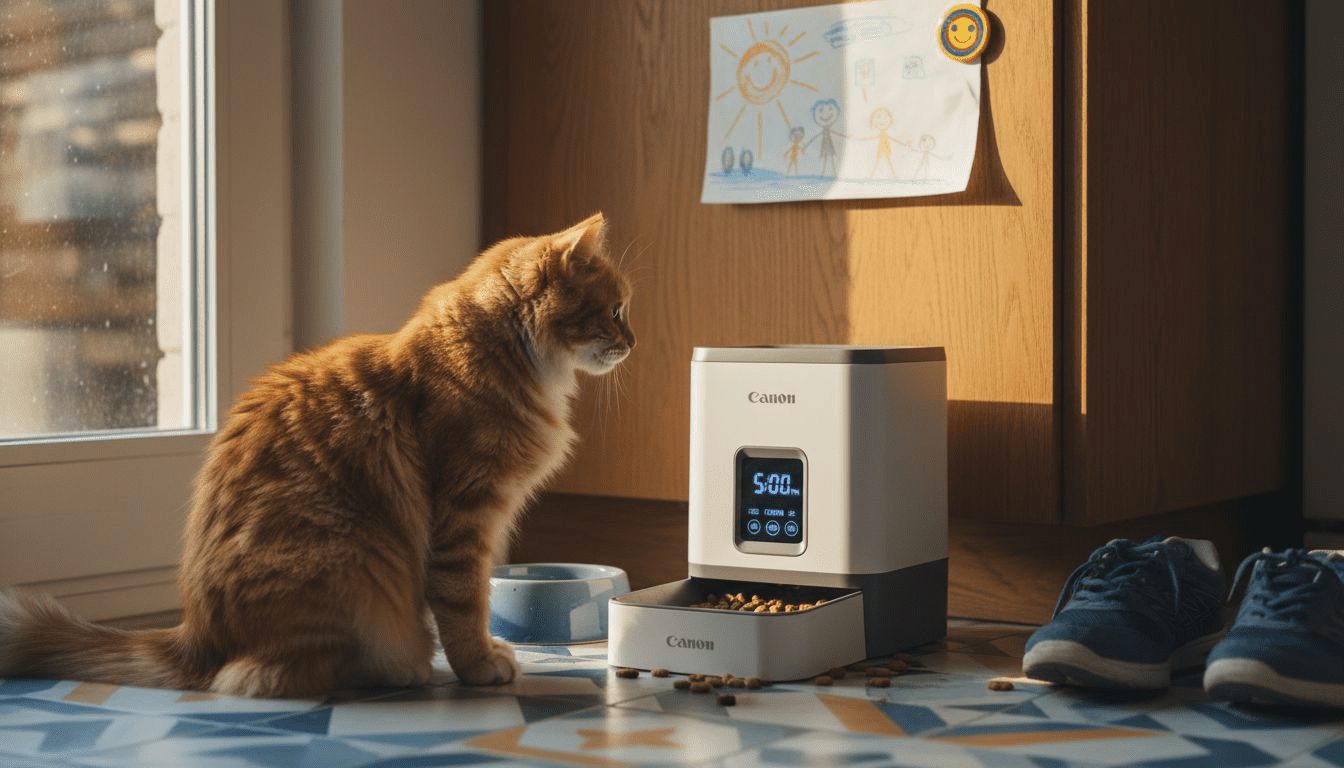
Nearly one in three American cat owners now rely on automatic feeders to keep their pets nourished even when life gets busy. With busy schedules and growing interest in smart pet care, many seek tools that simplify routines while supporting feline health. Understanding the latest in automatic pet feeders will help you make confident choices for meal consistency, proper nutrition, and peace of mind whether you are at home or away.
Table of Contents
- Defining Automatic Pet Feeders for Cats
- Key Types and Feeding Mechanisms Explained
- Essential Features for Cat Safety and Health
- Smart Integration and Remote Monitoring
- Common Risks, Drawbacks, and Safer Alternatives
Key Takeaways
| Point | Details |
|---|---|
| Automatic Feeders Enhance Convenience | These devices provide consistent meal times and portion control, benefiting busy cat owners. |
| Smart Features Improve Monitoring | Advanced models offer app connectivity and health tracking for better pet care insights. |
| Evaluate Needs Before Purchase | Consider your cat’s dietary requirements and your home’s tech compatibility for optimal use. |
| Balance Automation and Interaction | Combine automated feeding with occasional manual feedings to maintain social bonds with pets. |
Defining Automatic Pet Feeders for Cats
Automatic pet feeders represent a technological solution designed to simplify feeding routines for cat owners. These innovative devices automatically manage pet feeding systems by dispensing precise food portions at predetermined times, addressing the challenges of maintaining consistent nutrition for cats.
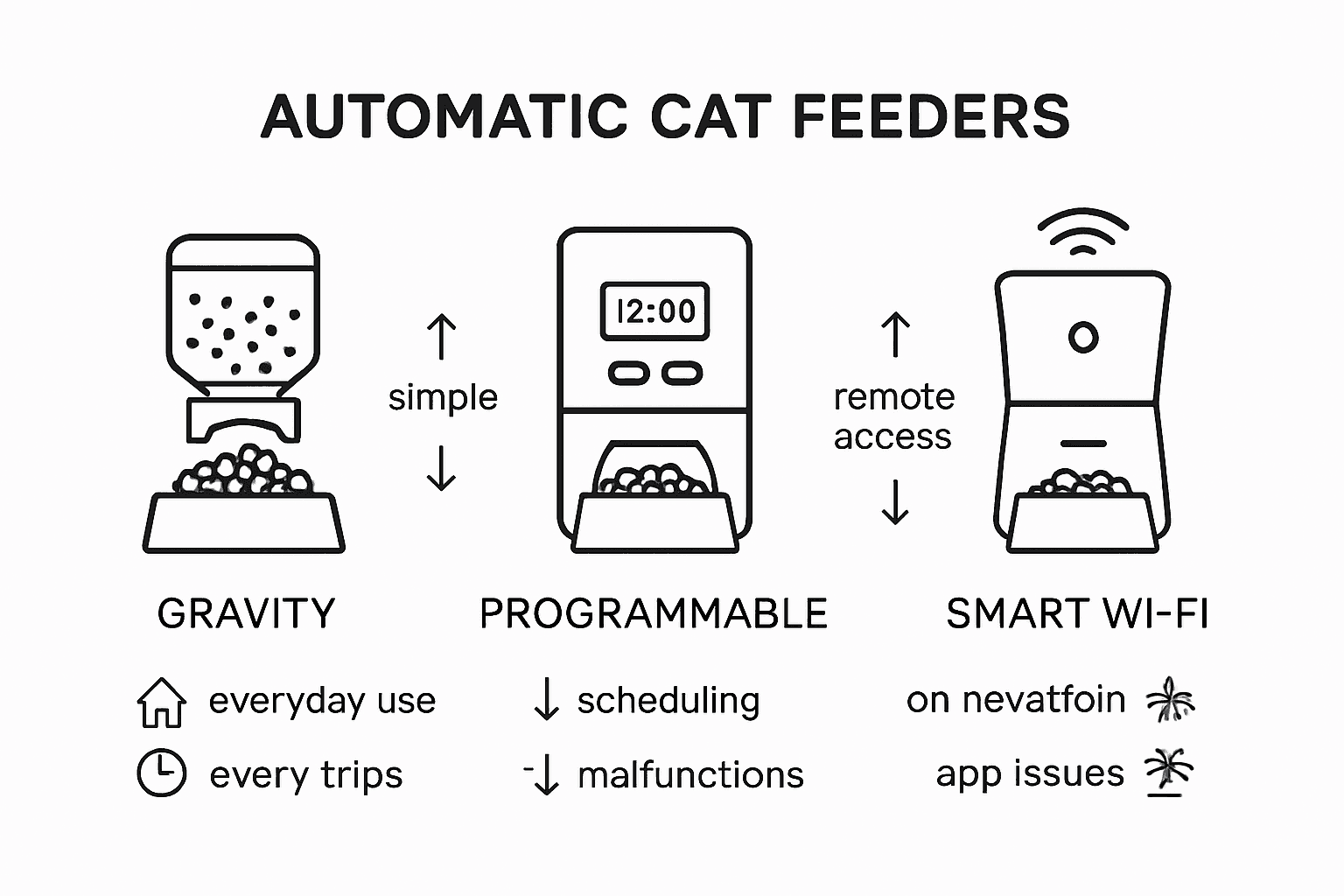
Modern automatic pet feeders range from simple gravity-based models to sophisticated programmable units with advanced features. Key characteristics typically include:
- Portion control mechanisms
- Digital scheduling capabilities
- Multiple meal programming options
- Remote monitoring functionalities
- Battery or electrical power sources
The primary goal of these devices is to ensure cats receive regular, measured meals even when their owners are away or unable to feed them manually. By maintaining consistent feeding schedules, automatic pet feeders help prevent overfeeding, support weight management, and reduce pet anxiety related to irregular meal times.
Technological advancements have transformed these devices from basic food dispensers into smart home integration tools. Contemporary models often include features like smartphone app connectivity, portion tracking, and even camera monitoring, allowing pet owners to interact with and observe their cats during feeding times.
Pro Tip: Research and Select Wisely: Before purchasing an automatic pet feeder, carefully evaluate your cat’s specific dietary needs, your home’s technological ecosystem, and the device’s reliability to ensure optimal feeding performance.
Key Types and Feeding Mechanisms Explained
Automatic pet feeders encompass a diverse range of technological solutions designed to meet different feline nutrition needs. Technological advances have transformed pet feeding systems from simple mechanical dispensers to sophisticated smart devices with advanced monitoring capabilities.
The primary categories of automatic cat feeders include:
- Gravity-Based Feeders: Simple mechanical devices that use gravitational force to replenish food as the bowl empties
- Programmable Digital Feeders: Electronic units with precise scheduling and portion control
- Smart WiFi-Enabled Feeders: Advanced models with smartphone connectivity and remote monitoring
- Microchip-Activated Feeders: Specialized devices that only open for specific pets with matching microchip identification
Each feeding mechanism offers unique advantages depending on a cat owner’s specific requirements. Gravity-based models work best for cats with consistent eating habits, while programmable digital feeders provide more precise portion management and multiple daily feeding schedules. Smart WiFi-enabled devices take convenience further by allowing owners to monitor and adjust feeding remotely, track consumption patterns, and receive real-time notifications.
The technological sophistication of modern automatic pet feeders extends beyond basic food dispensing. Contemporary models incorporate sensors to monitor food levels, track eating behaviors, and ensure consistent nutrition. Some advanced systems even integrate weight management algorithms and can adjust portion sizes based on the cat’s specific dietary needs.
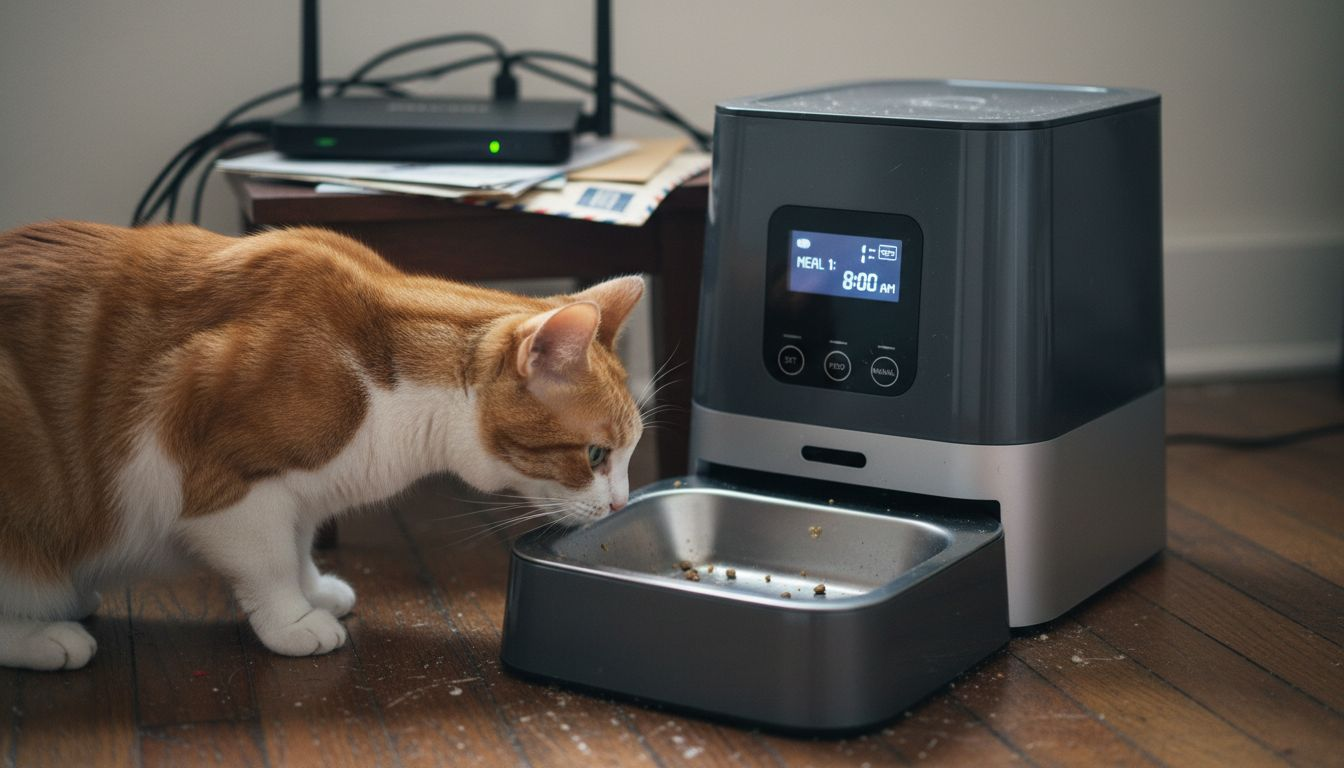
Here’s a comparison of the four main types of automatic cat feeders and their unique strengths:
| Feeder Type | Best For | Distinctive Technology | Typical Limitation |
|---|---|---|---|
| Gravity-Based | Cats with routine habits | Simple mechanical design | Lacks portion control |
| Programmable Digital | Weight management needs | Custom scheduling electronics | No app or camera integration |
| Smart WiFi-Enabled | Tech-savvy households | Cloud and app connectivity | Requires stable internet |
| Microchip-Activated | Multi-pet homes | Pet-specific access | Higher price, setup time |
Pro Tip: Compatibility Check: Before investing in an automatic pet feeder, assess your cat’s eating behavior, your home’s technological infrastructure, and the device’s compatibility with your pet’s specific dietary requirements to ensure optimal performance.
Essential Features for Cat Safety and Health
Automatic pet feeders have evolved to incorporate advanced features that prioritize feline health and safety. Research demonstrates the potential for targeted feeding technologies to significantly improve cats’ nutritional management and overall well-being.
Key safety and health features in modern automatic pet feeders include:
- Portion Control Mechanisms: Precise measurement of food quantities to prevent overfeeding
- Multiple Meal Programming: Ability to schedule frequent smaller meals throughout the day
- Weight Management Sensors: Advanced systems that track and adjust food dispensing based on the cat’s nutritional needs
- Food Freshness Protection: Sealed compartments and controlled environment to maintain food quality
- Pet Recognition Technology: Microchip or camera-based systems to ensure only intended pets access food
Nutritional management is a critical aspect of these devices. Advanced IoT technologies now enable sophisticated pet feeding solutions that go beyond simple food dispensing. These smart systems can integrate sensors that monitor food levels, track eating behaviors, and even provide real-time nutritional insights. Some cutting-edge models use deep learning algorithms to recognize individual pets, ensuring personalized feeding experiences.
The health benefits of these technologies extend beyond convenience. Frequent, controlled feeding can help manage weight, reduce food-seeking behaviors, and support more consistent nutritional intake. Research indicates that cats fed through advanced automated systems are more likely to maintain an ideal body condition, with some studies showing significant improvements in weight management compared to traditional feeding methods.
Pro Tip: Gradual Transition: When introducing an automatic pet feeder, gradually transition your cat to the new feeding system by mixing it with traditional feeding methods to minimize stress and ensure smooth adaptation.
Smart Integration and Remote Monitoring
Automatic pet feeders have transformed from simple food dispensers into sophisticated smart home devices. Internet of Things technologies now enable advanced remote monitoring capabilities that provide unprecedented insights into pet nutrition and behavior.
Key smart integration features include:
- Smartphone App Connectivity: Real-time feeding tracking and control
- Cloud-Based Monitoring: Access feeding data from anywhere with internet connection
- Voice Assistant Compatibility: Integration with smart home ecosystems
- Activity Logging: Comprehensive tracking of eating patterns and nutritional intake
- Push Notifications: Alerts for low food levels, missed meals, or unusual feeding behaviors
Modern automatic pet feeders leverage multiple sensor technologies to create a comprehensive pet care experience. These advanced systems can integrate cameras for visual monitoring, weight sensors for portion control, and proximity detectors to ensure safe and controlled feeding. The deep learning algorithms embedded in these devices can recognize individual pets, customize feeding protocols, and provide nuanced nutritional management.
The technological sophistication extends beyond simple feeding. Some advanced models offer comprehensive health monitoring, tracking metrics like food consumption, eating speed, and potential changes in appetite that might indicate underlying health issues. This level of detailed monitoring allows pet owners to gain unprecedented insights into their cat’s nutritional habits and overall well-being, bridging the gap between technology and pet care.
This summary outlines how smart integration boosts both owner convenience and cat health:
| Smart Feature | Owner Benefit | Cat Health Impact |
|---|---|---|
| App Control | Remote, instant adjustments | Reduces missed or late meals |
| Camera Monitoring | Visual check-in anytime | Detects changes in eating |
| Food Intake Logging | Tracks detailed consumption | Enables early health alerts |
| Push Notifications | Alerts to anomalies | Promotes timely intervention |
Pro Tip: Connectivity Preparation: Before purchasing a smart pet feeder, verify your home’s WiFi strength and compatibility with the device’s technological requirements to ensure seamless integration and reliable performance.
Common Risks, Drawbacks, and Safer Alternatives
Automatic pet feeders offer convenience, but they are not without potential challenges. Research highlights nuanced considerations in implementing automatic feeding systems that pet owners must carefully evaluate before adoption.
Key potential risks and drawbacks include:
- Mechanical Reliability: Potential for device malfunction or inconsistent food dispensing
- Social Interaction Loss: Reduction in direct feeding-related bonding moments
- Technical Dependency: Reliance on power sources and internet connectivity
- Individual Pet Adaptability: Varying responses to automated feeding mechanisms
- Potential Stress Triggers: Disruption of familiar feeding routines
Comprehensive studies reveal significant psychological considerations surrounding automatic feeding technologies. Many cats develop strong emotional connections with their feeding rituals, viewing meal times as more than just nutritional experiences. The absence of human interaction during feeding can potentially create feelings of isolation or disconnection, especially for cats with high social needs.
Safer alternatives and mitigation strategies involve a balanced approach. Hybrid feeding methods that combine automatic feeders with occasional manual feeding can help maintain social bonds. Selecting devices with robust backup systems, manual override options, and transparent monitoring capabilities can address many technological concerns. Additionally, gradually introducing the automatic feeder, maintaining consistent placement, and ensuring the device matches your cat’s specific behavioral patterns can minimize potential negative impacts.
Pro Tip: Transition Strategy: Introduce automatic feeders incrementally, alternating between manual and automated feeding to help your cat adapt smoothly and preserve essential social interactions during meal times.
Discover Smart Feeding Solutions That Work for Your Cat
Managing your cat’s nutrition with consistent portion control and timely meals can be challenging. As discussed in the article, automatic pet feeders offer innovative features like programmable scheduling and pet recognition technology to address feeding irregularities and health risks. However, pairing these feeders with reliable monitoring tools ensures your furry friend’s safety and well-being while you are away or busy.
Enhance your pet care with expert reviews and guidance on the latest in Smart Feeders & Care and Pet Cameras that allow you to remotely observe, interact, and manage your cat’s feeding routine. With actionable insights and comparisons available at ModernPetTech, you can confidently select devices that support both your cat’s health and your peace of mind.
Take control of your cat’s feeding experience today. Visit ModernPetTech to explore smart feeding solutions tailored for every cat owner and discover proven ways to maintain your pet’s health with the latest technology. Start making informed choices and keep your cat nourished and happy.
Frequently Asked Questions
What is an automatic pet feeder for cats?
Automatic pet feeders are devices that dispense precise portions of food for cats at scheduled times, helping owners maintain consistent nutrition for their pets, even when they are unavailable to feed them manually.
What are the different types of automatic cat feeders available?
There are several types of automatic cat feeders, including gravity-based feeders, programmable digital feeders, smart WiFi-enabled feeders, and microchip-activated feeders. Each type offers unique features and advantages based on specific feeding needs.
How do I choose the right automatic cat feeder for my pet?
When choosing an automatic cat feeder, consider your cat’s dietary needs, eating habits, and any special requirements such as weight management. It’s also important to evaluate the feeder’s reliability, power sources, and whether it integrates with your home technology.
What safety features should I look for in an automatic pet feeder?
Key safety features include portion control mechanisms to prevent overfeeding, food freshness protection to maintain quality, and pet recognition technology to ensure only the intended pet accesses the food. These features help support your cat’s health and well-being.
Recommended
- Best Smart Pet Feeder Without WiFi | Easy, Reliable Feeding
- Best Smart Pet Feeder Guide for Reliable and Convenient Pet Care – ModernPetTech: Treat-Dispensing Pet Camera Reviews
- best smart pet feeder for large dogs
- Cat Camera 2025: Best Smart Cameras for Modern Cat Owners
