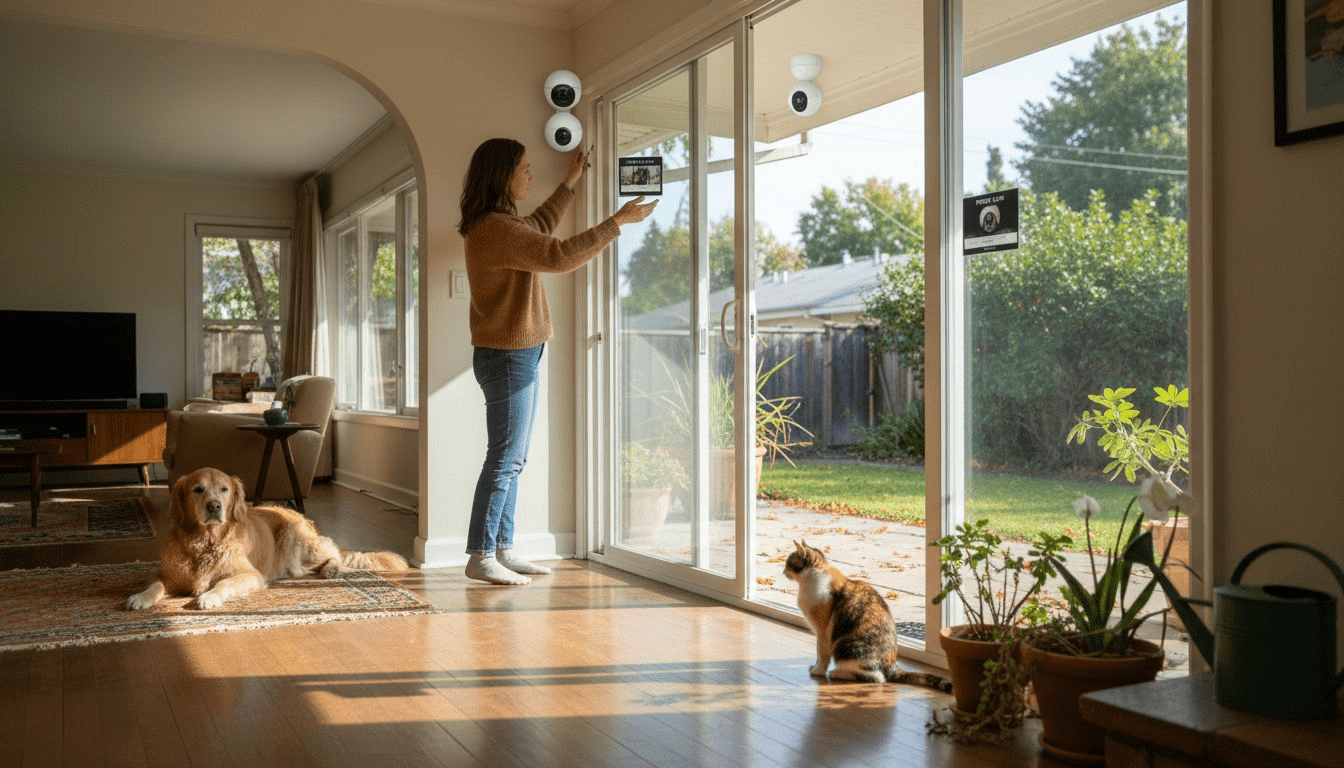
Nearly one in three American households relies on smart technology to keep their pets safe and connected while away. For tech-savvy pet lovers, managing separation anxiety is as important as maintaining reliable home security. The choice between indoor and outdoor pet cameras comes down to how these options meet both emotional needs and practical concerns. Get clarity on which type of device offers the right blend of peace of mind and protection for your American home.
Table of Contents
- Indoor Vs Outdoor Pet Cameras Defined
- Types And Features Of Pet Cameras For Homes
- Key Differences In Placement And Durability
- Smart Alerts, Interaction, And Night Vision Compared
- Risks, Legal Aspects, And Common Mistakes
- Cost, Maintenance, And Long-Term Value
Key Takeaways
| Point | Details |
|---|---|
| Indoor vs Outdoor Cameras | Choose indoor cameras for home monitoring and outdoor cameras for external environments, considering durability and environmental conditions. |
| Key Features | Prioritize cameras with two-way audio, motion detection, and high-definition video for enhanced pet interaction and monitoring capabilities. |
| Legal Considerations | Be aware of privacy laws and cybersecurity risks, ensuring proper camera placement and robust network security to protect both privacy and data. |
| Cost Implications | Consider initial costs along with ongoing maintenance and potential subscription fees to understand the total cost of ownership for pet cameras. |
Indoor vs outdoor pet cameras defined
Pet cameras are specialized monitoring devices designed to help pet owners keep track of their furry companions remotely. These technological tools come in two primary configurations: indoor and outdoor models, each engineered with distinct features to suit different environments and tracking needs.
Indoor pet cameras are primarily designed for home monitoring, focusing on tracking pets within living spaces like living rooms, bedrooms, and home offices. These digital video cameras transmit data via IP networks, allowing real-time streaming directly to smartphones or computers. They typically feature wide-angle lenses, two-way audio communication, and motion detection capabilities that help owners observe pet behaviors, check on their well-being, and even interact remotely.
Outdoor pet cameras, in contrast, are built to withstand environmental challenges. These robust monitoring devices are engineered with weatherproof and rugged housings capable of enduring rain, snow, extreme temperatures, and other outdoor conditions. Advanced outdoor cameras often include enhanced night vision, wider field of view, and more durable construction to protect against potential damage from environmental exposure.
Pro tip: Before purchasing a pet camera, carefully measure the specific area you want to monitor and consider the environmental conditions to ensure you select the most appropriate model for your needs.
Here’s a quick comparison of indoor vs outdoor pet cameras to aid your decision:
| Aspect | Indoor Pet Cameras | Outdoor Pet Cameras |
|---|---|---|
| Primary Environment | Inside homes and apartments | Yards, gardens, property exteriors |
| Durability Features | Lightweight materials | Weatherproof, impact-resistant |
| Video Clarity | High resolution, wide angle | Enhanced night vision, broader field of view |
| Security Capabilities | Basic user authentication | Advanced threat detection and alerts |
| Maintenance Needs | Occasional cleaning, minimal upkeep | Weather protection checks, regular updates |
Types and features of pet cameras for homes
Pet cameras have evolved into sophisticated monitoring tools with multiple configurations designed to meet various home monitoring needs. These devices range from basic models to advanced systems that provide comprehensive pet surveillance and interaction capabilities.
Home security cameras now offer diverse options for pet owners, typically falling into several key categories. Wireless cameras represent the most flexible type, allowing placement anywhere in the home without complex installation. Indoor cameras specialize in tracking pet movements within living spaces, featuring wide-angle lenses, two-way audio communication, and motion detection. Outdoor cameras provide robust monitoring for yards and exterior spaces, with weatherproof designs and enhanced durability.
Key features of modern pet cameras include high-definition video resolution, smartphone connectivity, and intelligent tracking capabilities. Advanced models from manufacturers like Eufy offer additional functionalities such as pan-and-tilt mechanisms, local and cloud storage options, and strong encryption protocols. Some sophisticated cameras even include treat dispensing, sound and motion alerts, and seamless integration with smart home systems.
Pro tip: When selecting a pet camera, prioritize models with multiple features like two-way audio, motion detection, and high-resolution video to maximize your monitoring capabilities and pet interaction.
Key differences in placement and durability
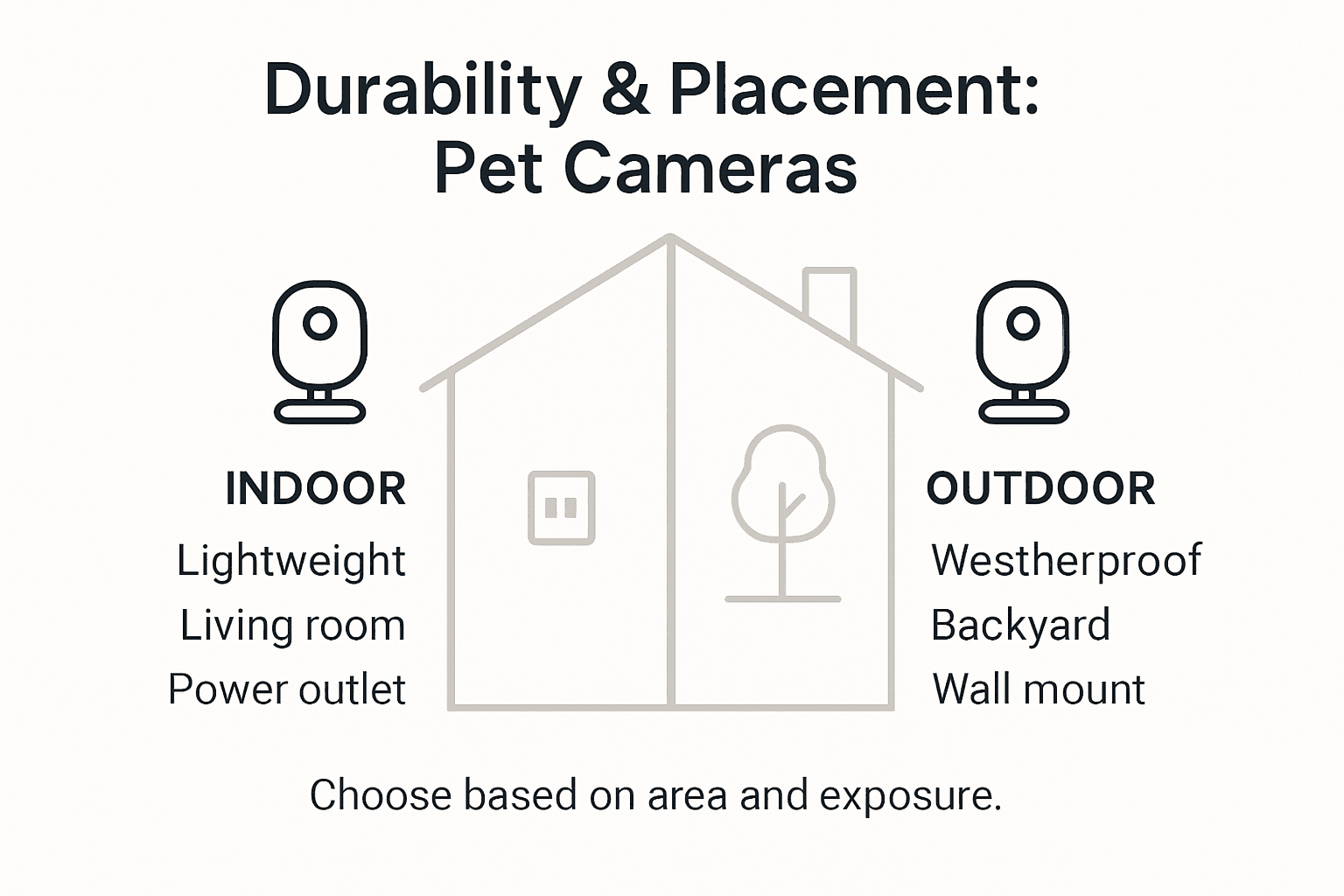
Camera placement significantly impacts the effectiveness of pet monitoring systems, with indoor and outdoor cameras requiring distinctly different installation strategies. The environment and specific monitoring goals determine the most appropriate camera configuration for pet owners.
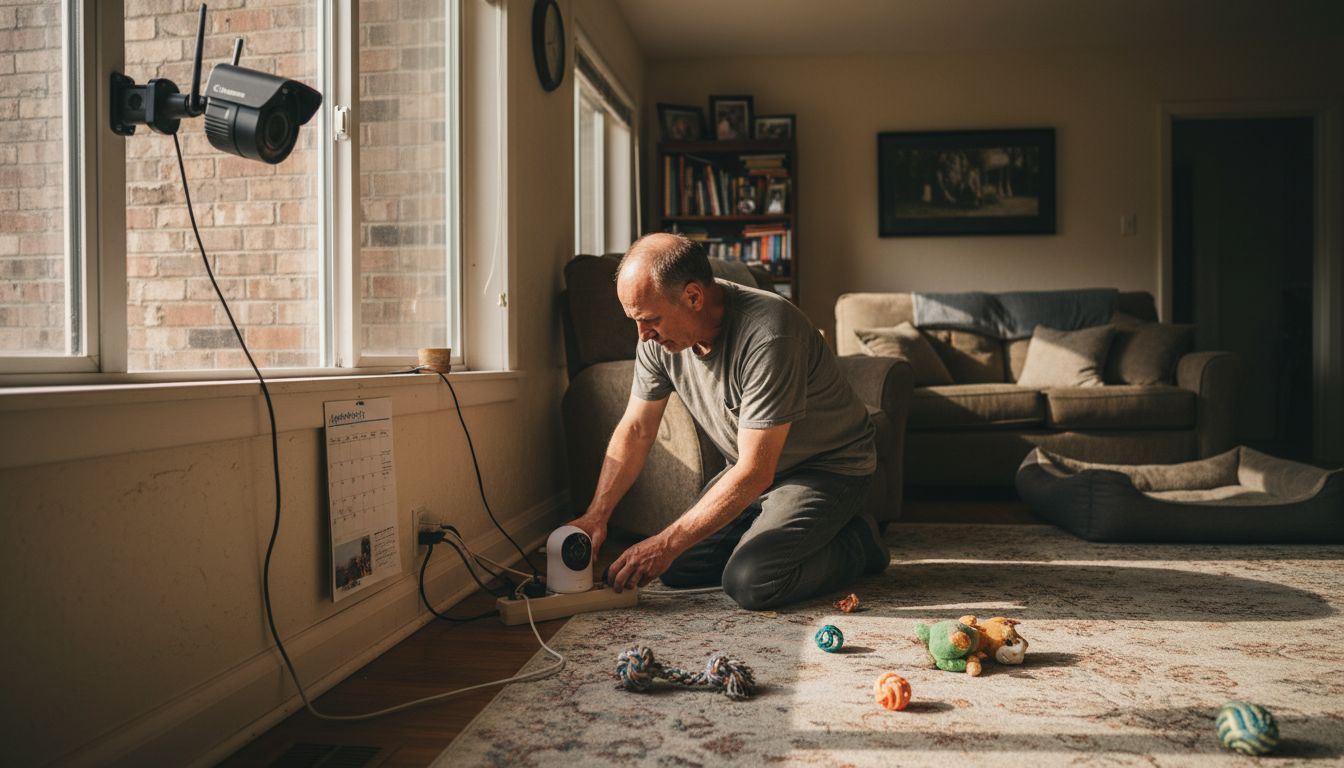
Indoor camera placement focuses on strategic locations within living spaces, typically targeting areas where pets spend most of their time. Common mounting spots include living rooms, hallways, and pet-frequented zones that provide comprehensive coverage. In contrast, outdoor cameras demand more complex placement considerations, requiring protection from environmental elements while maintaining clear property perimeter views.
Durability represents another critical distinction between indoor and outdoor pet cameras. Outdoor cameras are engineered with robust, weatherproof housing designed to withstand extreme temperatures, rain, snow, and potential physical impacts. These cameras typically feature IP-rated waterproof certifications, vandal-resistant materials, and enhanced structural integrity. Indoor cameras, by comparison, are constructed with lighter materials and lack the extensive environmental protections necessary for exterior deployment.
Pro tip: Measure your specific monitoring areas and evaluate environmental conditions before selecting a camera to ensure optimal placement and long-term performance.
Smart alerts, interaction, and night vision compared
Smart pet cameras have revolutionized home monitoring, offering increasingly sophisticated technologies that go far beyond simple video recording. These advanced devices now provide nuanced interactions and intelligent monitoring capabilities tailored to pet owners’ specific needs.
Outdoor security cameras feature advanced smart alert technologies that leverage artificial intelligence to differentiate between pets, humans, and potential security threats. Night vision capabilities represent a critical feature across both indoor and outdoor camera systems, enabling clear monitoring during low-light conditions. Infrared technology allows pet owners to track their animal companions’ movements with remarkable clarity, regardless of time of day or ambient lighting.
Interaction features distinguish modern pet cameras from traditional monitoring systems. Two-way audio communication enables pet owners to speak directly to their animals, potentially calming anxious pets or providing verbal commands. Advanced models include additional interactive elements like treat dispensing, laser toys for cats, and motion-activated alerts that notify owners of unusual pet behaviors or potential security concerns.
Pro tip: When selecting a pet camera, prioritize models with customizable smart alert zones and sensitivity settings to minimize false notifications and maximize meaningful pet monitoring.
Risks, legal aspects, and common mistakes
Pet camera technology brings powerful monitoring capabilities, but also introduces complex legal and privacy considerations that pet owners must carefully navigate. Understanding these nuanced challenges is crucial for responsible and legal camera deployment.
Privacy laws in the U.S. strictly regulate security camera placement and usage, particularly for indoor monitoring systems. Legal restrictions are most stringent in areas with a reasonable expectation of privacy, such as bedrooms and bathrooms. Outdoor cameras must be positioned carefully to avoid inadvertently capturing neighbors’ private spaces, which could potentially lead to legal complications or personal disputes.
Security risks extend beyond physical placement considerations, encompassing digital vulnerabilities like potential data breaches and network security. Unsecured Wi-Fi networks can expose camera feeds to unauthorized access, compromising both personal privacy and pet safety. Common mistakes include failing to change default passwords, neglecting firmware updates, and not implementing robust network encryption protocols that protect against potential cyber intrusions.
Pro tip: Consult local privacy regulations and conduct a thorough assessment of your camera’s placement and network security before installation to prevent potential legal and digital risks.
Below is a summary of risks and legal concerns to consider when setting up pet cameras:
| Concern | Main Risk | Prevention Tip |
|---|---|---|
| Privacy | Capturing private spaces | Review local laws before installation |
| Cybersecurity | Unauthorized access | Use strong passwords, enable encryption |
| Placement Error | Poor coverage, legal issues | Map out viewing angles carefully |
| Upkeep | Outdated firmware threats | Schedule regular software updates |
Cost, maintenance, and long-term value
Pet camera investments represent a strategic decision that extends far beyond initial purchase price. Pet owners must consider multiple financial factors when selecting monitoring technologies that balance immediate costs with sustained performance and utility.
Home security camera costs vary significantly based on features and durability, with indoor models generally being more budget-friendly compared to robust outdoor systems. Outdoor cameras typically command higher prices due to advanced weatherproofing, AI-enhanced threat detection, and superior environmental resilience. Factors influencing pricing include video resolution, storage options, connectivity features, and potential cloud subscription requirements.
Long-term value extends beyond initial purchase expenses, encompassing ongoing maintenance needs and technological relevance. Maintenance requirements include periodic lens cleaning, firmware updates, ensuring consistent power supply, and potentially replacing batteries or adapters. Sophisticated cameras with regular software support and adaptable integration capabilities tend to provide more sustainable value, potentially offsetting higher upfront investments through extended functional lifespans and enhanced monitoring capabilities.
Pro tip: Calculate your total cost of ownership by factoring in initial purchase price, potential subscription fees, maintenance expenses, and expected replacement cycle when evaluating pet camera investments.
Find the Perfect Pet Camera for Your Home and Peace of Mind
Choosing between indoor and outdoor pet cameras can feel overwhelming with so many features like two-way communication, night vision, and smart alerts to consider. If you want to ensure your furry friend stays safe and connected no matter where they roam, you need expert guidance tailored to your unique home environment and pet’s behavior.

Explore our Pet Cameras category to discover comprehensive reviews and comparisons that break down the best options for indoor and outdoor use. With insights on durability, video quality, and interactive features, we help you take control of your pet’s safety and reduce separation anxiety. Don’t wait until the next unexpected moment—visit modernpettech.com now and make the confident choice that keeps your pet happy and secure.
Frequently Asked Questions
What are the main differences between indoor and outdoor pet cameras?
Indoor pet cameras are designed for monitoring pets within the home, featuring lightweight materials and capabilities like two-way audio and motion detection. Outdoor pet cameras are weatherproof and rugged, suitable for monitoring yards and exteriors, with enhanced night vision and durability against environmental elements.
What features should I look for when choosing a pet camera?
Prioritize models with high-definition video resolution, two-way audio, motion detection, and smart alerts for effective monitoring and interaction with your pets. Advanced features such as treat dispensing and integration with smart home systems are also beneficial.
How should I place my pet cameras for optimal monitoring?
For indoor cameras, install them in locations where pets spend most of their time, such as living rooms or hallways. Outdoor cameras should be placed to cover the property perimeter while being protected from harsh weather conditions and vandalism.
What are the legal considerations of using pet cameras indoors and outdoors?
When installing pet cameras, be mindful of privacy laws that regulate in-home monitoring, especially in private spaces like bedrooms or bathrooms. Outdoor cameras should be positioned to avoid capturing neighbors’ private areas to prevent legal disputes.
Recommended
- Pet Camera Reviews & Smart Pet Tech Guides | ModernPetTech
- budget pet camera under $50 | cheap pet cameras that work
- Best Pet Camera 2025: Monitor Your Pets Anytime, Anywhere
- Cat Camera 2025: Best Smart Cameras for Modern Cat Owners
- 7 Creative Ideas for Pet Portrait Inspiration for Parents – The Family Portrait Companys

3 thoughts on “Indoor vs Outdoor Pet Cameras: Choosing What Fits Your Home”