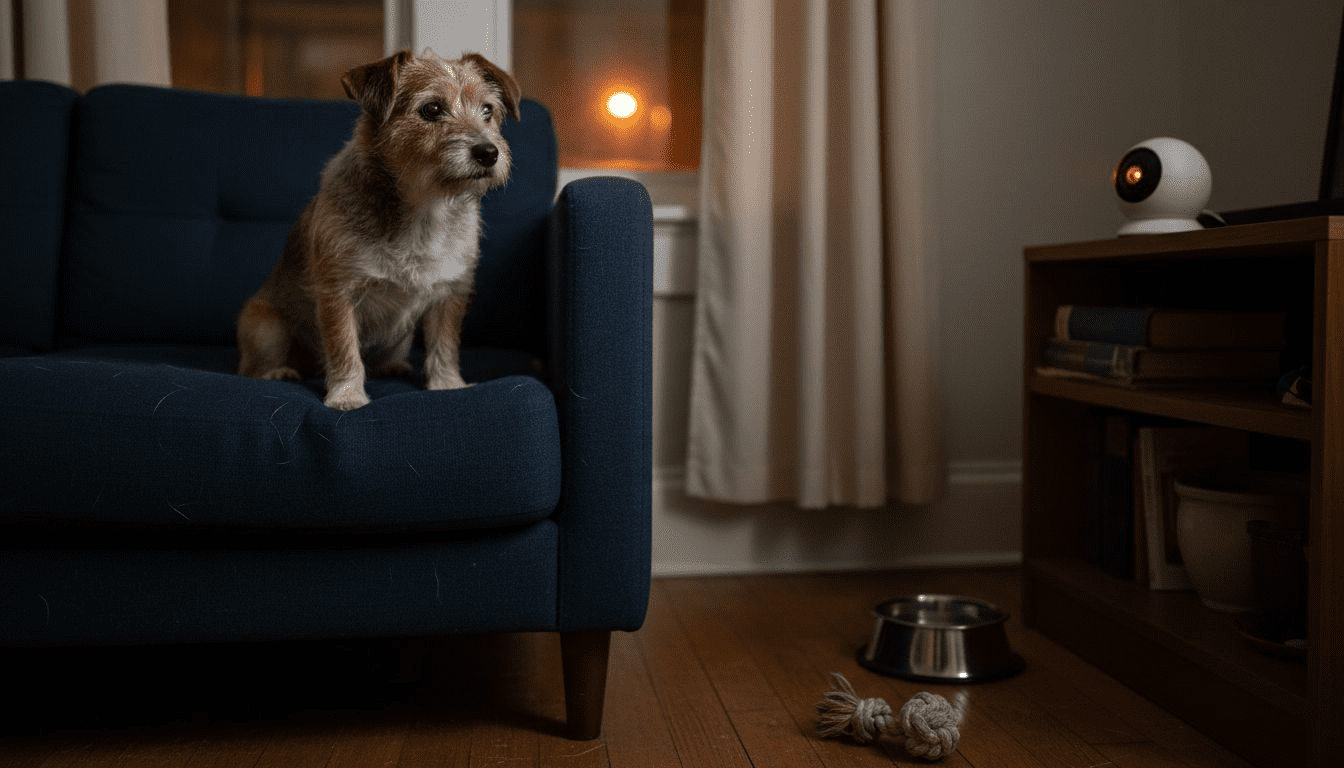
Many American pet owners struggle with wondering what their cats or dogs do once the lights are out and the house is quiet. High-tech pet cameras with night vision capabilities change the way you watch over your furry companions when you are away or asleep. With advanced infrared technology inspired by how animals see in the dark, these cameras allow you to keep your pets safe and reduce separation anxiety—even during the nighttime hours.
Table of Contents
- What Night Vision in Pet Cameras Means
- How Pet Night Vision Technology Works
- Types of Night Vision Used in Pet Cameras
- Key Benefits for Nighttime Pet Monitoring
- Common Issues and Setup Mistakes to Avoid
Key Takeaways
| Point | Details |
|---|---|
| Night Vision Technology | Pet cameras utilize infrared LEDs and specialized sensors to monitor pets in low-light conditions without disturbing them. |
| Types of Night Vision | The primary technologies include Standard Infrared, Image Intensification, and Full-Color Night Vision, each with varying capabilities and costs. |
| Benefits of Monitoring | Nighttime monitoring offers continuous safety surveillance, health insights, and a better understanding of pet behaviors to improve overall pet welfare. |
| Setup and Security | Proper camera setup, network security, and battery management are critical to ensuring effective performance and safeguarding privacy. |
What Night Vision in Pet Cameras Means
Night vision in pet cameras represents a technological solution that allows pet owners to monitor their furry companions in low-light or completely dark environments. This advanced feature uses specialized infrared technology to capture clear, detailed images when ambient lighting is minimal. Night vision technologies transform how pet owners can remotely observe and understand their pets’ nighttime behaviors.
The core mechanism behind night vision in pet cameras involves using infrared illumination and specialized image sensors that can detect and amplify extremely low levels of light. Unlike human eyes, these cameras can capture visual information across a broader spectrum, including infrared wavelengths invisible to both pets and people. These cameras typically employ infrared LEDs arranged around the camera lens, which emit light that provides illumination without producing visible brightness that might disturb pets.
There are several key components that make night vision in pet cameras effective:
- Infrared LEDs: Provide invisible illumination
- Specialized image sensors: Capture light across broader wavelength ranges
- Image processing algorithms: Enhance low-light image quality
- Sensitivity range: Ability to detect minimal light variations
By mimicking the biological night vision adaptations of animals, these cameras create a sophisticated monitoring system that allows pet owners to keep watchful eyes on their companions without disrupting their natural environment.
Pro tip: Verify your pet camera’s night vision range and quality before purchasing to ensure comprehensive home monitoring capabilities.
How Pet Night Vision Technology Works
Pet night vision technology transforms how owners monitor their animals in dark environments by utilizing advanced infrared sensing capabilities. Infrared camera systems operate through a sophisticated process that captures images invisible to human and pet eyes. The core mechanism involves specialized sensors and illumination techniques that convert low-light conditions into clear, detailed visual information.
The technical process begins with infrared LED illumination, which emits light waves just outside the visible spectrum. These invisible light waves are strategically positioned around the camera lens, creating an illumination field that allows the camera sensor to detect and record visual information. Unlike traditional cameras that require ambient light, these infrared sensors can capture detailed images in complete darkness without producing any noticeable light that might disturb pets.
Key technological components of pet night vision cameras include:
- Infrared LEDs: Provide invisible illumination across the viewing area
- Specialized image sensors: Detect and amplify low-light wavelengths
- Image processing algorithms: Enhance contrast and clarity of captured images
- Sensitivity filters: Adjust to varying darkness levels
- Near-infrared light spectrum: Enables imaging without visible light emission
Wireless camera technologies have further enhanced these night vision systems, allowing pet owners to receive real-time monitoring through smartphone applications. The advanced sensors can detect movement, temperature variations, and subtle changes in the environment, providing comprehensive monitoring capabilities.
Pro tip: Test your pet camera’s night vision range in different home lighting conditions to ensure optimal performance and coverage.
Types of Night Vision Used in Pet Cameras
Pet cameras utilize two primary night vision technologies: image intensification and infrared illumination. Each technology offers unique capabilities for monitoring pets in low-light environments, with infrared being the most common approach for indoor pet monitoring. These advanced imaging systems transform how pet owners can observe their animals during nighttime hours.
Infrared (IR) night vision represents the standard technology in most modern pet cameras. Infrared LED systems emit invisible light waves that illuminate the surrounding area without disturbing pets or creating visible light. These specialized sensors capture black-and-white images by detecting infrared reflections, providing clear visual information even in complete darkness. The technology mimics natural low-light detection while maintaining a non-invasive approach to pet monitoring.
The key types of night vision technologies include:
- Standard Infrared (IR) Night Vision
- Uses invisible infrared LEDs
- Produces black-and-white images
- Works in total darkness
- Image Intensification Night Vision
- Amplifies existing low-light conditions
- Requires minimal ambient light
- More complex technological approach
- Full-Color Night Vision
- Utilizes additional low-light sensors
- Provides color images in dark environments
- More advanced and expensive technology
Advanced camera technologies continue to evolve, with some cutting-edge pet cameras now offering full-color night vision capabilities. These systems use sophisticated low-light sensors and additional illumination techniques to capture more detailed and vibrant nighttime images, giving pet owners unprecedented visibility into their pets’ nighttime activities.
Here’s a quick comparison of the main night vision technologies used in pet cameras:
| Technology Type | Typical Use Cases | Image Quality | Cost/Accessibility |
|---|---|---|---|
| Standard Infrared (IR) | Indoor pet monitoring | Clear, monochrome | Widely available, low cost |
| Image Intensification | Outdoor/low-light areas | Enhanced low-light detail | Moderately accessible, higher cost |
| Full-Color Night Vision | High-end surveillance | Bright, color nighttime images | Limited, most expensive option |
Pro tip: Compare the night vision range and image quality of different pet cameras before making a purchase to ensure optimal monitoring capabilities.
Key Benefits for Nighttime Pet Monitoring
Nighttime pet monitoring technology revolutionizes pet safety by providing unprecedented visibility into animals’ behaviors during dark hours. Modern pet cameras equipped with advanced night vision capabilities transform how owners understand and protect their pets, offering a continuous window into their nighttime activities. This technological breakthrough addresses the fundamental challenge of limited human perception in low-light environments.
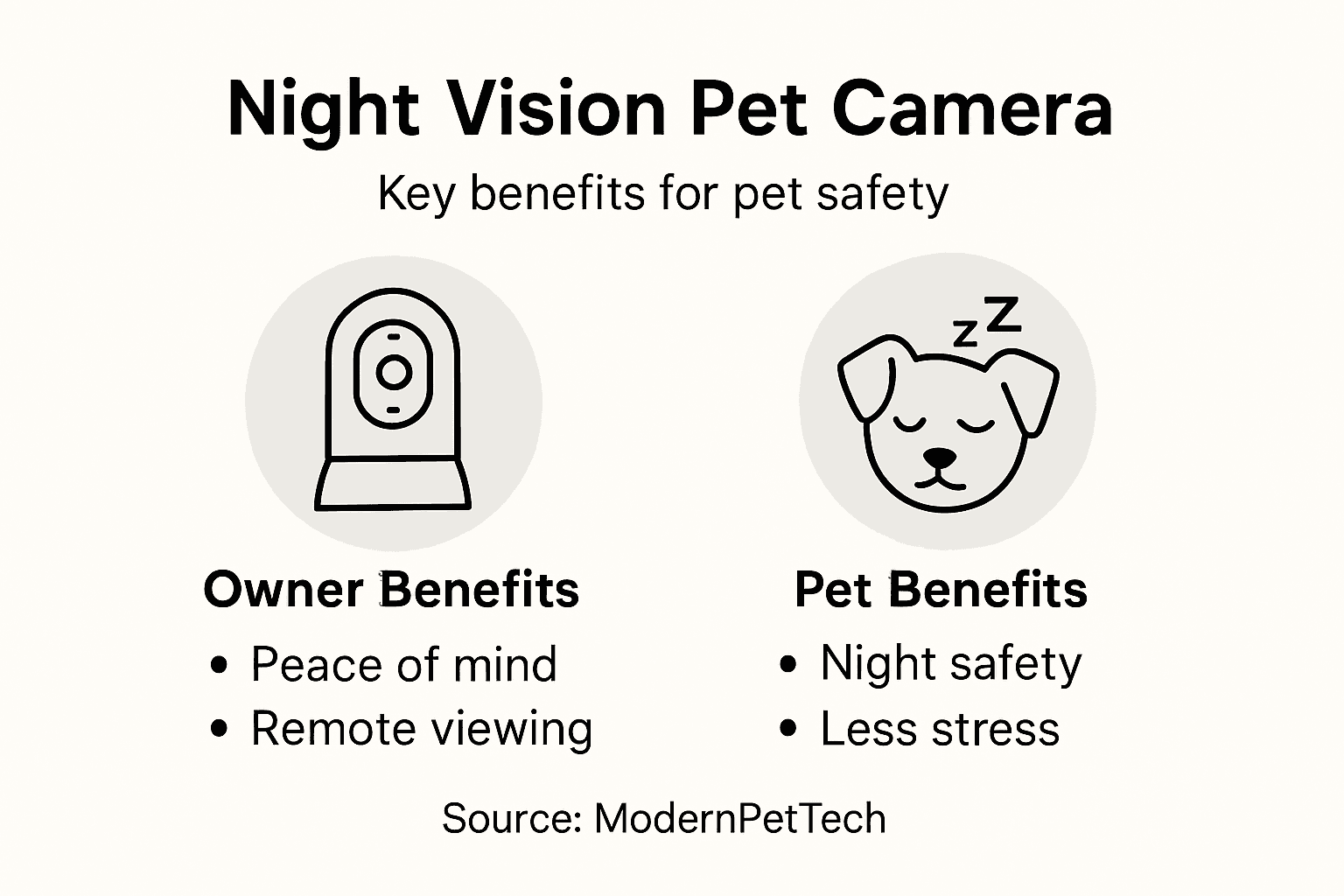
The primary benefits of nighttime pet monitoring extend far beyond simple surveillance. These sophisticated systems enable early detection of potential health issues, behavioral changes, and emergency situations that might otherwise go unnoticed. Infrared technologies allow pet owners to observe their animals without introducing disruptive light sources, maintaining the natural sleep and comfort of their pets while ensuring comprehensive safety monitoring.
Key advantages of nighttime pet monitoring include:
- Continuous Safety Surveillance
- 24/7 monitoring capabilities
- Detect unexpected movements
- Identify potential security risks
- Health Monitoring
- Track nocturnal behavior patterns
- Observe potential medical distress signals
- Monitor pets with chronic health conditions
- Anxiety and Stress Reduction
- Provide peace of mind for owners
- Understand pet’s nighttime behaviors
- Detect signs of separation anxiety
Advanced camera technologies continue expanding the boundaries of pet monitoring, offering increasingly sophisticated features that provide deeper insights into pets’ nighttime experiences. These innovations help owners proactively address potential issues, from medical concerns to behavioral challenges, by providing clear, unobtrusive observation capabilities.
The following table summarizes benefits of nighttime pet monitoring and their impact:
| Benefit | How It Helps Owners | Impact on Pets |
|---|---|---|
| Health insights | Early detection of problems | Less disruption during checks |
| Continuous surveillance | Reduced anxiety about safety | Maintains natural environment |
| Behavioral understanding | Improved routine tracking | Identifies stress signals |
Pro tip: Position your pet camera at an optimal angle that covers the most important areas of your pet’s nighttime environment to maximize monitoring effectiveness.
Common Issues and Setup Mistakes to Avoid
Camera security vulnerabilities represent a critical concern for pet owners implementing night vision monitoring systems. Many pet owners unknowingly compromise their device’s effectiveness and personal privacy by overlooking fundamental setup and maintenance requirements. Understanding these potential pitfalls is essential for creating a robust and reliable pet monitoring environment.
The primary technical challenges in pet camera deployment involve network connectivity, power management, and strategic positioning. Weak Wi-Fi signals can create intermittent video feeds, while improper camera placement might result in significant blind spots or ineffective monitoring. Pet owners must carefully consider their home’s physical layout and technological infrastructure when implementing these sophisticated surveillance tools.
Common setup mistakes and issues include:
- Network and Connectivity Problems
- Weak Wi-Fi signal strength
- Inconsistent internet connection
- Inadequate bandwidth for video streaming
- Camera Placement Errors
- Obstructed viewing angles
- Poor lighting conditions
- Insufficient night vision range
- Security and Privacy Risks
- Weak default passwords
- Unsecured wireless networks
- Outdated firmware vulnerabilities
Battery performance challenges can significantly impact nighttime monitoring capabilities. Night vision mode typically consumes more power, potentially leading to unexpected camera shutdowns. Pet owners should invest in high-quality rechargeable batteries and establish consistent charging or replacement routines to maintain continuous surveillance.
Pro tip: Conduct a comprehensive home network assessment and perform monthly security updates to ensure your pet camera’s optimal performance and protection.
Discover How Night Vision Pet Cameras Improve Your Pet’s Safety
If you want to truly protect your pet during nighttime hours you need the right tools that offer clear and uninterrupted monitoring. This article highlights how night vision technology plays a vital role in keeping pets safe when natural light fades. Many pet owners face challenges like poor image quality in darkness or missed behavioral cues. The key concepts such as infrared LED illumination and specialized sensors emphasize the importance of choosing a pet camera that meets these needs.
At ModernPetTech you can explore comprehensive insights into the best pet cameras with advanced night vision capabilities. Our Pet Cameras – ModernPetTech: Treat-Dispensing Pet Camera Reviews section breaks down the features and benefits so you can find the perfect device for your home environment. Stay informed with our Guides & Comparisons – ModernPetTech: Treat-Dispensing Pet Camera Reviews to understand key differences and make confident purchase decisions.

Take control of your pet’s nighttime safety right now by visiting ModernPetTech. Start with trusted reviews and expert guidance to select a pet camera that delivers reliable night vision and peace of mind every day and night.
Frequently Asked Questions
What does night vision in pet cameras mean?
Night vision in pet cameras refers to the technology that allows pet owners to monitor their pets in low-light or dark environments using infrared illumination and specialized image sensors.
How does night vision technology work in pet cameras?
Pet cameras utilize infrared LEDs to emit invisible light, which specialized sensors then capture to create clear images in complete darkness, enhancing visibility without disturbing pets.
What are the different types of night vision used in pet cameras?
The primary types of night vision in pet cameras are standard infrared (IR) night vision, image intensification night vision, and full-color night vision, each offering varying image quality and capabilities in low-light conditions.
What are the benefits of using night vision cameras for pet monitoring?
Night vision cameras provide continuous surveillance, health monitoring, and help reduce pet anxiety by allowing owners to observe their pets’ nighttime behaviors without disrupting their natural environment.
Recommended
- Night Vision in Pet Cameras: Why It Matters
- 7 Night Vision Camera Benefits Every Pet Owner Should Know
- Role of Cameras in Home Security for Pet Owners
- Pet Camera Security Benefits for Modern Pet Owners
- Pet Friendly Blinds: Complete Guide for Homes
- Essential Night Photography Guide for Stunning Results – Amateur Photographer Guide

1 thought on “Night Vision in Pet Cameras: Enhancing Pet Safety”