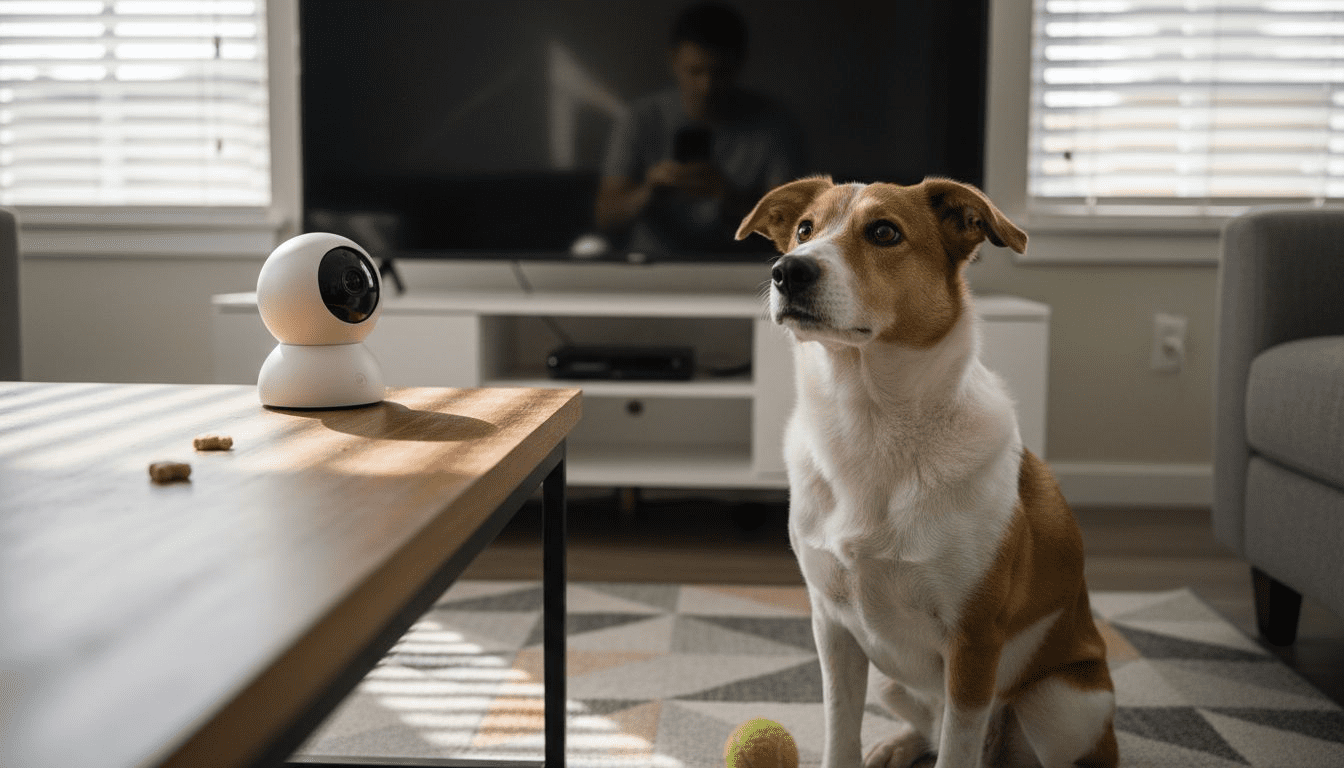
Every American dog parent knows the uneasy feeling that comes from leaving a beloved pet home alone. For tech-savvy owners, finding ways to ease this separation is a top priority. Two-way audio technology in modern pet cameras now lets you speak and listen to your dog from anywhere, helping reduce anxiety and nurture a deeper sense of connection. Discover how these interactive systems empower meaningful communication while supporting both your dog’s well-being and your peace of mind.
Table of Contents
- Two-Way Audio in Pet Tech Explained
- Types of Two-Way Audio Systems
- How Audio Features Support Pet Wellness
- Comparing Top Models and Alternatives
- Practical Issues: Privacy, Costs, and Limitations
Key Takeaways
| Point | Details |
|---|---|
| Two-Way Audio Enhancements | Two-way audio technology allows pet owners to communicate and connect with their pets remotely, reducing stress and anxiety during separations. |
| Types of Systems | Full-duplex systems provide simultaneous communication, enhancing interaction quality compared to half-duplex systems that allow one-way communication at a time. |
| Wellness Benefits | Advanced audio features promote emotional regulation and behavioral monitoring, contributing to the overall mental health of pets and improving the bond with owners. |
| Security Considerations | Pet owners must be aware of privacy and security risks associated with pet cameras and take proactive measures, such as changing default passwords and ensuring encrypted connections. |
Two-Way Audio in Pet Tech Explained
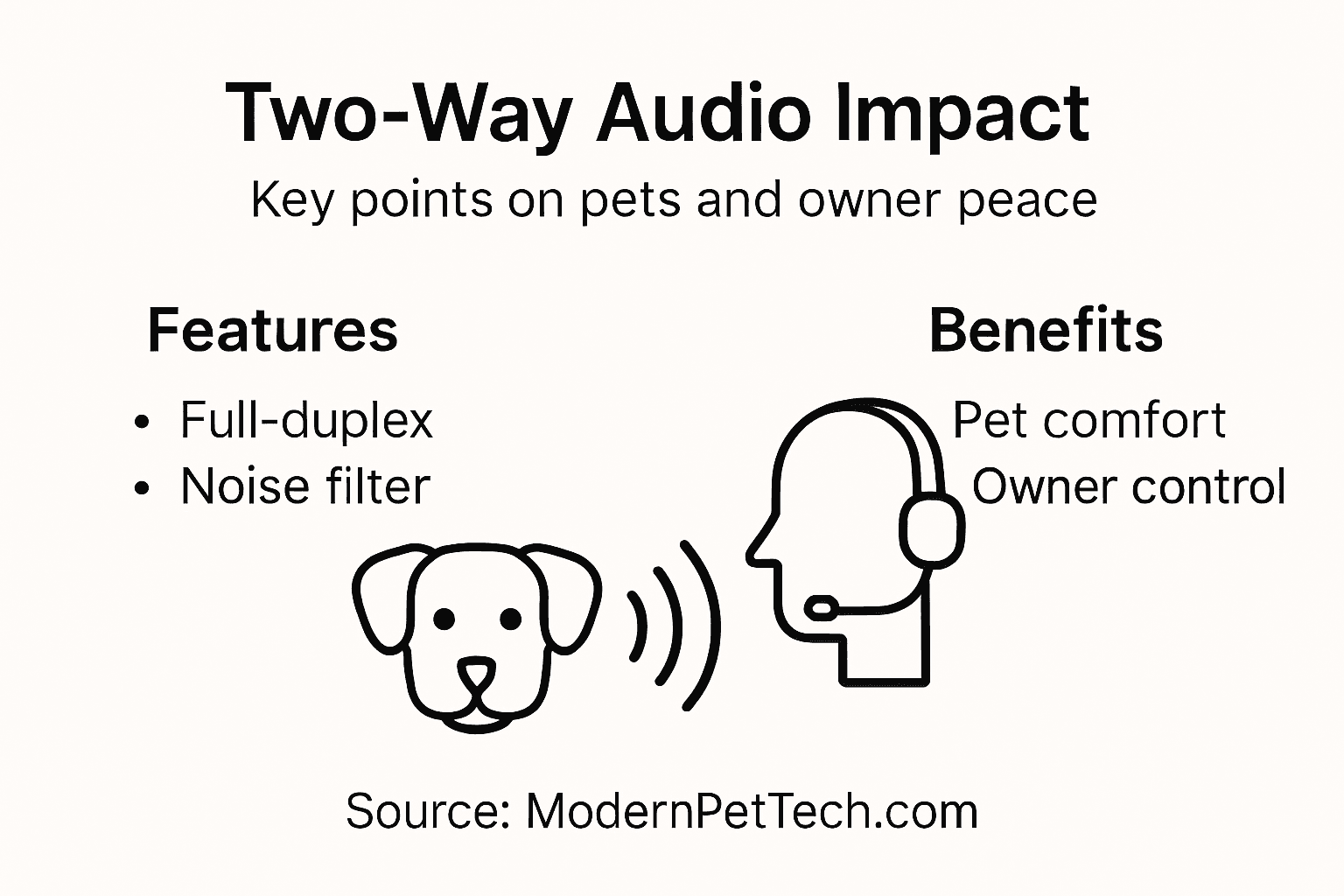
Two-way audio technology represents a revolutionary breakthrough in pet monitoring, enabling pet owners to communicate with their animals remotely through advanced digital platforms. Innovative communication systems now allow real-time interaction that goes beyond traditional surveillance.
The core functionality of two-way audio in pet cameras involves sophisticated microphones and speakers that transmit sound in both directions. These systems enable pet owners to:
- Hear their pet’s ambient sounds and activities
- Speak directly to their pet from a remote location
- Provide verbal comfort during periods of separation
- Offer verbal commands or training reinforcement
- Monitor pet behavior and emotional state
Recent scientific research demonstrates fascinating insights into how pets perceive and respond to these technological interactions. Audio communication technologies provide more than just surveillance – they create meaningful connections between pets and their owners, potentially reducing stress and separation anxiety.
Advanced microphone arrays in modern pet cameras can now capture nuanced audio signals, allowing pet owners to distinguish between different types of animal vocalizations. This technological advancement means owners can more accurately interpret their pet’s emotional state, even when physically distant.
Two-way audio transforms pet cameras from passive monitoring devices into interactive communication platforms that bridge physical distances.
Key technological components that enable sophisticated two-way audio include high-sensitivity digital microphones, noise-cancellation algorithms, and low-latency audio transmission protocols. These technical elements work together to create a seamless communication experience that feels natural and responsive.
Pro tip: Test your pet camera’s two-way audio system in different home locations to understand its range and audio clarity before relying on it for critical communication.
Types of Two-Way Audio Systems
Two-way audio systems in pet cameras are sophisticated communication technologies that enable remote interaction between pets and their owners. Two-way audio technologies predominantly operate through two distinct communication modes: half-duplex and full-duplex systems, each offering unique capabilities for pet monitoring and interaction.
The primary types of two-way audio systems include:
- Half-Duplex Systems
- Allows only one-way communication at a time
- Similar to walkie-talkie functionality
- Requires alternating between speaking and listening
- Full-Duplex Systems
- Enables simultaneous two-way communication
- Provides phone-like interaction experience
- Allows continuous, uninterrupted conversation
Communication technology in pet cameras has evolved significantly, incorporating advanced features like noise cancellation and high-sensitivity microphones. These technological improvements ensure clearer, more responsive interactions between pets and their owners, making remote communication more effective and emotionally engaging.
Full-duplex audio systems represent the pinnacle of pet camera communication, bridging geographical distances with seamless, real-time interaction.
Audio transmission protocols play a crucial role in determining the quality of two-way communication. Modern pet cameras utilize sophisticated digital signal processing techniques to minimize latency, reduce background noise, and create a more natural communication experience. Advanced audio technologies now integrate seamlessly with treat dispensers and other interactive features, enhancing the overall pet monitoring experience.
Below is a quick comparison of half-duplex and full-duplex audio systems:
| System Type | Interaction Style | Communication Flow | Use Case Scenario |
|---|---|---|---|
| Half-Duplex | Alternating (one-way) | Speak or listen, not both | Basic reassurance remotely |
| Full-Duplex | Simultaneous (two-way) | Speak and listen at once | Real-time training, bonding |
Pro tip: When selecting a pet camera, prioritize full-duplex systems with advanced noise cancellation to ensure the most responsive and clear communication with your pet.
How Audio Features Support Pet Wellness
Innovative communication technologies are revolutionizing the way we understand and support pet mental health. Two-way audio systems in pet cameras provide more than just remote monitoring – they offer a critical lifeline for pets experiencing separation anxiety, stress, and emotional distress.
The key wellness benefits of audio features include:
- Emotional Regulation
- Provides immediate comfort during owner absence
- Reduces stress and anxiety levels
- Helps pets feel connected and secure
- Behavioral Monitoring
- Enables early detection of unusual sounds
- Tracks pet’s vocal and emotional states
- Identifies potential health or distress signals
- Mental Stimulation
- Offers interactive communication
- Prevents loneliness during extended separations
- Maintains cognitive engagement
Communication technology has transformed pet care by creating unprecedented opportunities for remote emotional support. Human-animal wellness research demonstrates that consistent audio interactions can significantly improve both pet and owner psychological well-being, bridging geographical distances with meaningful connection.
Two-way audio is not just a technological feature – it’s a powerful tool for maintaining emotional bonds between pets and their owners.
Advanced audio systems now incorporate sophisticated features like noise cancellation, emotional tone recognition, and adaptive communication protocols. These technologies enable more nuanced, responsive interactions that go beyond simple sound transmission, creating a more holistic approach to pet wellness and mental health support.
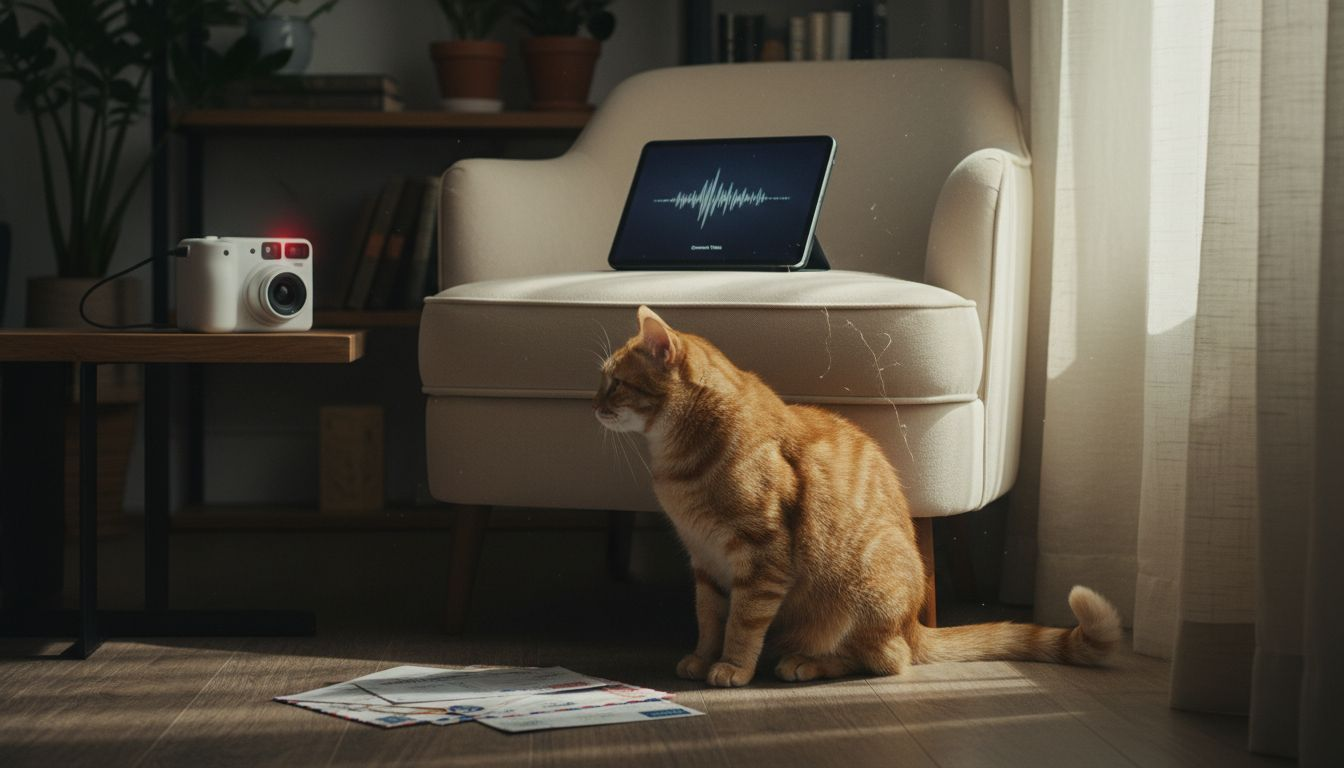
Here’s a summary of how advanced audio features benefit both pets and owners:
| Audio Feature | Benefit for Pets | Benefit for Owners |
|---|---|---|
| Noise Cancellation | Reduces stress from loud sounds | Enables clearer interaction |
| Emotional Tone Recognition | Increased feeling of connection | Better understanding of mood |
| Low-Latency Transmission | Immediate comfort and response | Real-time behavioral insight |
| Adaptive Protocols | Less confusion or anxiety | Smoother, more natural dialogue |
Pro tip: Introduce two-way audio gradually to your pet, using calm, reassuring tones to help them understand and appreciate this new form of communication.
Comparing Top Models and Alternatives
Top pet camera models in 2026 represent a significant leap forward in remote pet monitoring and interaction technologies. The latest generation of devices goes beyond simple video streaming, offering comprehensive solutions for pet owners seeking advanced communication and monitoring capabilities.
Key features to consider when comparing pet camera models include:
- Audio Quality
- Full-duplex communication
- Noise cancellation technology
- Low-latency sound transmission
- Video Capabilities
- High-resolution video
- Wide-angle or panoramic views
- Color night vision
- Additional Functionalities
- AI-enhanced motion alerts
- Remote treat dispensing
- Two-way interactive communication
Technological advancement has transformed pet cameras from simple monitoring devices into sophisticated communication platforms. Modern systems integrate multiple features designed to enhance pet wellness, reduce anxiety, and provide owners with unprecedented insights into their pet’s daily experiences.
Not all pet cameras are created equal – the best models offer a holistic approach to remote pet care and interaction.
Advanced models now incorporate intelligent tracking systems that can follow pet movement, provide real-time behavioral analysis, and even detect potential health issues through sound and motion monitoring. These sophisticated technologies represent a quantum leap in pet care, offering unprecedented levels of remote interaction and monitoring.
Pro tip: Prioritize cameras with full-duplex audio and multiple communication features to ensure the most comprehensive remote pet monitoring experience.
Practical Issues: Privacy, Costs, and Limitations
Pet technology security vulnerabilities represent a critical consideration for modern pet owners exploring two-way audio camera systems. The convenience of remote pet monitoring comes with potential risks that demand careful evaluation and proactive management.
Key privacy and security concerns include:
- Data Vulnerability
- Unencrypted communication channels
- Potential unauthorized access
- Risk of personal information exposure
- Financial Considerations
- Initial device costs
- Monthly subscription fees
- Firmware and security update expenses
- Technical Limitations
- Connectivity reliability issues
- Signal latency
- Potential system malfunctions
Technological infrastructure plays a crucial role in mitigating potential risks. IoT device security challenges underscore the importance of selecting devices with robust encryption, regular firmware updates, and comprehensive privacy protections.
Not all pet cameras are created equal – understanding the potential vulnerabilities is your first line of defense.
Consumers must carefully balance the benefits of advanced pet monitoring technologies with potential privacy risks. This involves researching device specifications, understanding data handling practices, and implementing additional security measures like secure network configurations and strong authentication protocols.
Pro tip: Always change default passwords, use secure network connections, and regularly update firmware to minimize potential security vulnerabilities in your pet monitoring devices.
Enhance Your Pet’s Wellbeing with Smart Two-Way Audio Pet Cameras
Separation anxiety and stress can deeply affect your pet’s happiness and behavior. This article highlights how two-way audio technology offers an essential solution by allowing you to comfort and communicate with your pet remotely. If calming your furry friend during your absence is a top priority, understanding the differences between half-duplex and full-duplex systems, along with advanced audio features like noise cancellation, is vital.
Discover the ideal pet camera that fits your pet’s unique needs and home setup by visiting modernpettech.com. Our comprehensive reviews compare popular smart pet cameras like Furbo and Petcube focusing on features proven to reduce anxiety and enhance interaction. Don’t wait to strengthen your bond and bring peace of mind to your household. Explore expert insights and find your perfect pet monitoring solution now at modernpettech.com.
Frequently Asked Questions
What is two-way audio in pet cameras?
Two-way audio in pet cameras allows pet owners to communicate with their pets remotely through integrated microphones and speakers, enabling real-time interaction.
How does two-way audio help reduce pet anxiety?
Two-way audio provides pets with verbal comfort and reassurance during their owner’s absence, helping to alleviate stress and separation anxiety through familiar sounds and voices.
What are the different types of two-way audio systems in pet cameras?
There are two main types: half-duplex systems, which allow one-way communication at a time, and full-duplex systems, which enable simultaneous two-way interaction for a more natural conversation experience.
What features should I look for in a pet camera with two-way audio?
When selecting a pet camera, prioritize full-duplex communication, noise cancellation technology, and low-latency sound transmission to ensure clear and effective communication with your pet.
Recommended
- Two-Way Audio: Enhancing Pet Camera Interaction
- Why Choose Wireless Pet Cameras for Home Monitoring
- Pet Camera Integration: Reducing Separation Anxiety
- Why Smart Home Integration Reduces Pet Anxiety

3 thoughts on “Role of Two-Way Audio in Pet Cameras: Impact on Anxiety”