
Over forty percent of American households now include at least one pet, making advanced monitoring tools more relevant than ever. For tech-savvy pet owners, tackling separation anxiety and staying connected with furry friends is a daily concern. Smart devices that provide real-time video, health insights, and interactive features are changing how Americans care for their pets, offering peace of mind and stronger connections even when family members are apart.
Table of Contents
- What Is Pet Monitoring Technology?
- Different Types of Smart Pet Cameras
- Core Features And How Devices Work
- Key Benefits For Pet Owners And Pets
- Comparing Pet Monitoring Alternatives
- Potential Drawbacks And Safety Concerns
Key Takeaways
| Point | Details |
|---|---|
| Pet Monitoring Technology | Integrates sensors and cameras for real-time insights into pet health and behavior, promoting proactive care. |
| Smart Pet Cameras | Various types offer features like GPS tracking, two-way communication, and health monitoring to suit diverse pet needs. |
| Core Features | Devices use wireless sensors and cloud analytics for continuous health tracking and actionable insights for pet owners. |
| Safety Concerns | Users should prioritize data privacy, device reliability, and the ethical implications of constant monitoring for pet welfare. |
What Is Pet Monitoring Technology?
Pet monitoring technology represents an innovative approach to understanding and caring for pets through advanced digital solutions. These sophisticated systems integrate sensors, cameras, and internet-connected devices to provide real-time insights into pet behavior, health, and wellbeing tracking pet health remotely.
At its core, pet monitoring encompasses a range of smart technologies designed to help pet owners stay connected with their animals. These systems typically include smart cameras, wearable sensors, and mobile application interfaces that enable comprehensive remote observation. The technology can track critical metrics such as physical activity levels, sleep patterns, nutrition intake, and even potential health anomalies.
Modern pet monitoring solutions leverage Internet of Things (IoT) technology to automate and remotely control pet care tasks. These systems might incorporate advanced components like ultrasonic movement sensors, weight-measuring load cells for food portions, and high-definition cameras that allow pet owners to observe their animals in real-time. The goal is to provide peace of mind and enable proactive pet care, even when owners are physically distant.

Pro tip: Start with a basic pet monitoring camera that offers two-way audio and motion detection to get comfortable with the technology before investing in more complex systems.
Different Types of Smart Pet Cameras
Smart pet cameras have evolved into diverse technological solutions designed to meet various pet monitoring needs. Advanced tracking technologies now offer pet owners multiple options for remote surveillance and interaction, ranging from basic video monitoring to sophisticated interactive systems.
The primary categories of smart pet cameras include:
- GPS Tracking Cameras: Specialized devices that combine location monitoring with video capabilities, ideal for tracking pets outdoors and ensuring their safety
- Interactive Cameras: Systems with two-way audio, treat dispensing, and motion detection features that allow real-time communication and engagement
- Health Monitoring Cameras: Advanced devices that track pet vital signs, activity levels, and potential behavioral changes
Beyond traditional cameras, robotic pet technologies are emerging as sophisticated companions that simulate live pet interactions using artificial intelligence. These innovative devices can provide emotional support and engagement, particularly for individuals unable to maintain traditional pets.
The IoT-enabled smart camera market continues to expand, with manufacturers developing increasingly nuanced technologies that offer comprehensive pet care solutions. These systems now integrate complex sensor networks, machine learning algorithms, and user-friendly mobile applications to provide unprecedented insights into pet behavior and wellbeing.
Pro tip: Choose a pet camera that matches your specific monitoring needs, considering factors like home layout, pet personality, and desired interaction level.
Core Features and How Devices Work
Advanced pet monitoring technologies represent a sophisticated ecosystem of sensors, wireless communication, and intelligent data processing designed to provide comprehensive insights into pet health and behavior. These innovative systems integrate multiple technological components to create a holistic approach to remote pet care.
The core technological infrastructure of pet monitoring devices typically includes several critical components:
- Wireless Sensors: Sophisticated wearable devices that continuously track physiological metrics
- Data Transmission Protocols: Secure wireless networks enabling real-time information transfer
- Mobile Application Interfaces: User-friendly platforms for receiving and analyzing pet health data
- Cloud-Based Analytics: Advanced algorithms that process and interpret collected information
Wearable health sensors coupled with data analytics platforms form the backbone of modern pet monitoring systems. These technologies continuously collect critical metrics such as heart rate, activity levels, sleep patterns, and potential health anomalies. The collected data is then transmitted through secure wireless protocols to centralized systems that can generate actionable insights for pet owners and veterinarians.
The integration of Internet of Things (IoT) technologies has transformed pet monitoring from passive observation to active health management. Modern devices now feature machine learning algorithms that can predict potential health issues, track behavioral changes, and provide early warning systems for pet owners. This technological evolution represents a significant leap in preventive pet care, offering unprecedented levels of remote monitoring and intervention.
Pro tip: Regularly update your pet monitoring device’s firmware to ensure you have the latest security patches and feature improvements.
Key Benefits for Pet Owners and Pets
Pet monitoring systems offer transformative advantages that fundamentally reshape how pet owners understand and care for their animal companions. These innovative technologies provide unprecedented insights into pet health, behavior, and emotional wellbeing, bridging the communication gap between humans and their furry family members.
The key benefits for pet owners include:
- Proactive Health Management: Early detection of potential health issues before they become serious
- Reduced Anxiety: Real-time visibility into pet activities and conditions while away from home
- Enhanced Safety: Immediate alerts for unusual behaviors or potential emergencies
- Improved Understanding: Deeper insights into pet behavior patterns and emotional states
Holistic health monitoring technologies are revolutionizing pet care by creating a more integrated approach to animal wellness. These systems do more than simply track physical metrics; they provide a comprehensive view of pet health that encompasses emotional and behavioral dimensions. By collecting and analyzing continuous data streams, pet owners can make more informed decisions about their pets’ nutrition, exercise, and medical care.
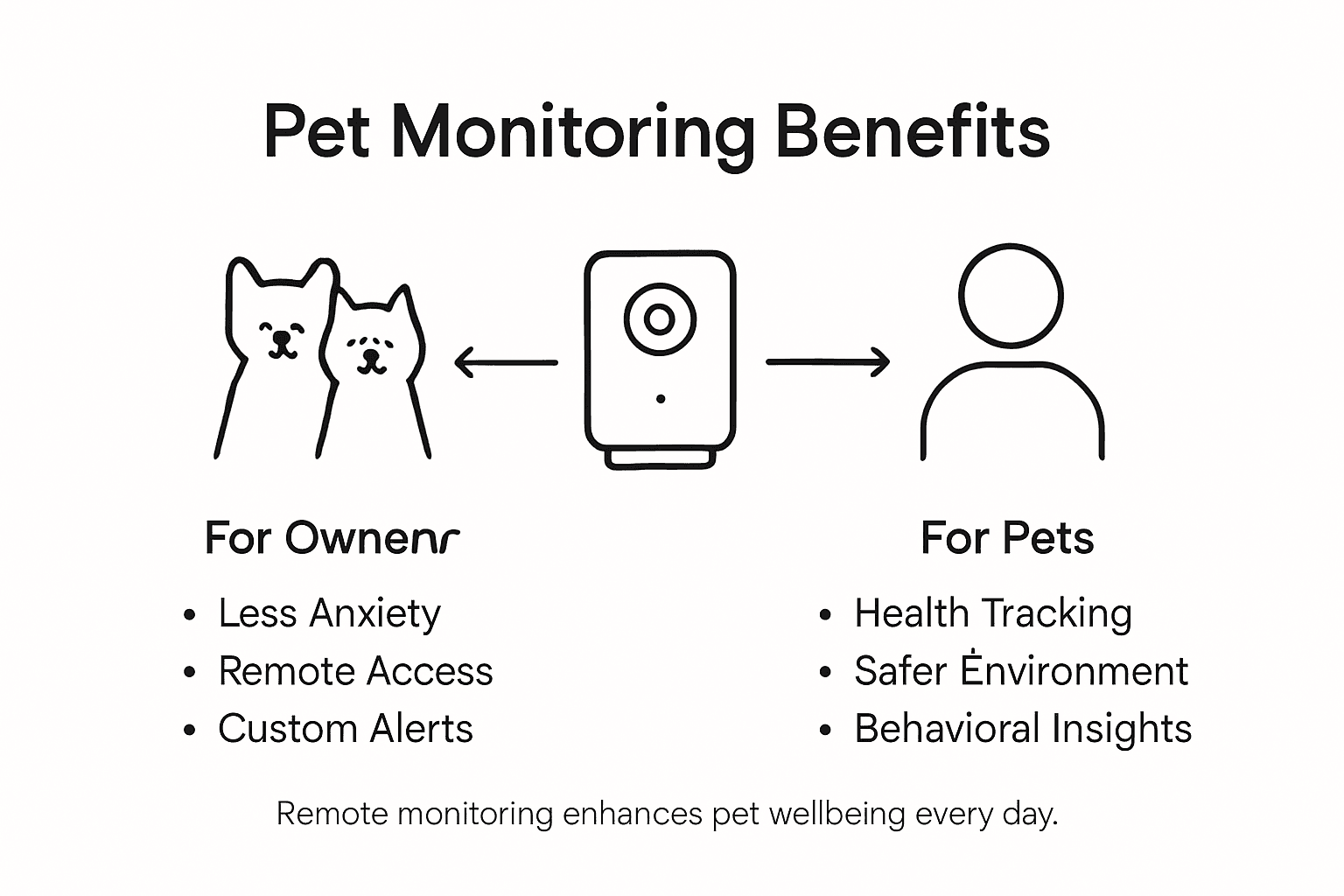
For pets, the benefits are equally significant. Continuous monitoring can help identify subtle changes in behavior that might indicate underlying health conditions, potentially preventing serious medical issues. The technology allows for more personalized care, enabling owners to adjust diet, exercise, and medical interventions based on precise, real-time data. This approach represents a fundamental shift from reactive to preventive pet healthcare, ultimately improving quality of life and potentially extending pets’ lifespans.
Pro tip: Create a baseline health profile for your pet using monitoring data to help veterinarians more effectively track changes over time.
Comparing Pet Monitoring Alternatives
Pet monitoring technologies encompass a diverse range of solutions designed to address different pet care needs, each with unique strengths and limitations. Understanding these alternatives helps pet owners select the most appropriate technology for their specific situation and pet’s requirements.
The primary pet monitoring alternatives include:
- Wearable Sensors: Focused on comprehensive health tracking and activity monitoring
- Ideal for detailed physiological data collection
- Best for health-conscious pet owners
- GPS Trackers: Specialized in location monitoring and safety
- Excellent for outdoor pets or those prone to wandering
- Provides real-time location updates
- Smart Cameras: Interactive monitoring with two-way communication
- Enables visual and audio interaction with pets
- Offers motion detection and recording capabilities
- Robotic Pet Companions: Advanced technology simulating pet interactions
- Provides emotional engagement for isolated individuals
- Limited physical interaction compared to live pets
IoT-enabled monitoring systems present nuanced technological alternatives that integrate multiple functionalities. These advanced platforms combine location tracking, health metrics, and communication features, offering a more holistic approach to pet care. The selection process involves carefully evaluating factors such as internet reliability, device durability, cost-effectiveness, and specific monitoring requirements.
Each monitoring alternative addresses different aspects of pet care, from basic safety tracking to comprehensive health management. The ideal choice depends on individual pet characteristics, owner lifestyle, and specific monitoring objectives. Advanced systems now offer increasingly sophisticated combinations of features, blurring traditional technology boundaries and providing more comprehensive pet care solutions.
Here’s how core smart pet monitoring technologies compare in terms of their primary purpose and unique user advantages:
| Technology Type | Main Function | Ideal User Scenario | Standout Benefit |
|---|---|---|---|
| Wearable Sensors | Health and activity tracking | Health-focused pet households | Early detection of illness |
| GPS Trackers | Location and movement alerts | Pets prone to wandering | Real-time outdoor safety updates |
| Smart Cameras | Visual monitoring and alerts | Pets home alone frequently | Two-way interaction with pets |
| Robotic Companions | Simulated play/interaction | Owners needing virtual support | Emotional engagement for pets |
Pro tip: Assess your specific pet monitoring needs by considering your pet’s age, health condition, lifestyle, and your primary concern before selecting a monitoring technology.
Potential Drawbacks and Safety Concerns
Pet monitoring technologies present complex privacy and security challenges that extend beyond traditional technological considerations. Understanding these potential limitations is crucial for responsible and informed use of pet monitoring systems.
The primary safety and privacy concerns include:
- Data Security Risks
- Potential unauthorized access to sensitive pet health information
- Risk of data breaches and personal information exposure
- Technical Limitations
- Inconsistent performance in different environmental conditions
- Potential device malfunctions or inaccurate data collection
- Animal Comfort and Welfare
- Physical discomfort from wearable devices
- Potential stress from continuous monitoring
- Psychological Impact
- Potential over-reliance on technology
- Reduced personal interaction with pets
Wireless transmission technologies raise significant reliability and privacy concerns that pet owners must carefully evaluate. These systems are inherently dependent on consistent internet connectivity and can be susceptible to signal interference, potentially compromising monitoring accuracy and reliability. The technological complexity also introduces challenges in device durability and long-term performance across diverse environmental conditions.
Ethical considerations surrounding pet monitoring technologies are increasingly important. While these systems offer unprecedented insights into pet health and behavior, they simultaneously raise questions about the boundaries of technological intervention in animal care. Pet owners must balance the potential benefits of continuous monitoring with respect for their pet’s natural behaviors and psychological well-being.
The following table summarizes key safety and ethical considerations for pet monitoring device users:
| Concern Category | Example Issue | Recommended Precaution |
|---|---|---|
| Data Privacy | Information breaches | Use encrypted data connections |
| Device Reliability | Signal loss or malfunctions | Regular device maintenance |
| Pet Well-Being | Stress from constant sensors | Monitor for signs of discomfort |
| Ethical Balance | Over-reliance on technology | Maintain personal interaction |
Pro tip: Always read and understand the privacy policy of any pet monitoring device, and choose systems that offer robust data encryption and user control over information sharing.
Discover the Best Pet Monitoring Solutions to Enhance Your Pet’s Wellbeing
Feeling the challenge of staying connected with your pet when you are away is common among pet owners. The article highlights the importance of real-time visibility, two-way communication, and proactive health management to reduce separation anxiety and ensure your pet’s safety and happiness. If you want to experience the peace of mind that comes with advanced pet monitoring technology like smart cameras featuring treat dispensing, night vision, and smart alerts, you are in the right place.
Explore our Pet Cameras section to compare top products tailored to various pet behaviors and home environments. For in-depth advice on choosing the right device, check out our Guides & Comparisons to match your pet’s unique needs with the perfect technology. Ready to take control of your pet’s wellbeing remotely Right now visit ModernPetTech and make an informed decision that benefits both you and your furry friend.
Frequently Asked Questions
What is pet monitoring technology?
Pet monitoring technology refers to innovative digital solutions that integrate sensors, cameras, and IoT devices to provide real-time insights into pet behavior and health, allowing owners to monitor their pets remotely.
What are the benefits of using pet monitoring systems?
The key benefits of pet monitoring systems include proactive health management, reduced anxiety for pet owners, improved understanding of pet behavior, and enhanced safety through immediate alerts for unusual activities.
How do smart pet cameras work?
Smart pet cameras typically include features like video monitoring, two-way audio, treat dispensing, and motion detection, offering pet owners the ability to engage with their pets and monitor them remotely.
What should I consider when choosing a pet monitoring technology?
When selecting a pet monitoring technology, consider your pet’s health needs, lifestyle, required features (like GPS tracking or health monitoring), the reliability of your internet connection, and any specific concerns about your pet’s comfort.
Recommended
- Best Pet Camera 2025: Monitor Your Pets Anytime, Anywhere
- Pet Cameras: The Ultimate Guide for Pet Owners in 2025 – ModernPetTech: Treat-Dispensing Pet Camera Reviews
- Pet Camera Reviews & Smart Pet Tech Guides | ModernPetTech
- Cat Camera 2025: Best Smart Cameras for Modern Cat Owners
- WiFi Automatic Cat Feeder for 2 Cats – 4L Smart Food Dispenser with App – Pawfect Picks

7 thoughts on “Why Use Pet Monitoring – Enhancing Pet Wellbeing Remotely”