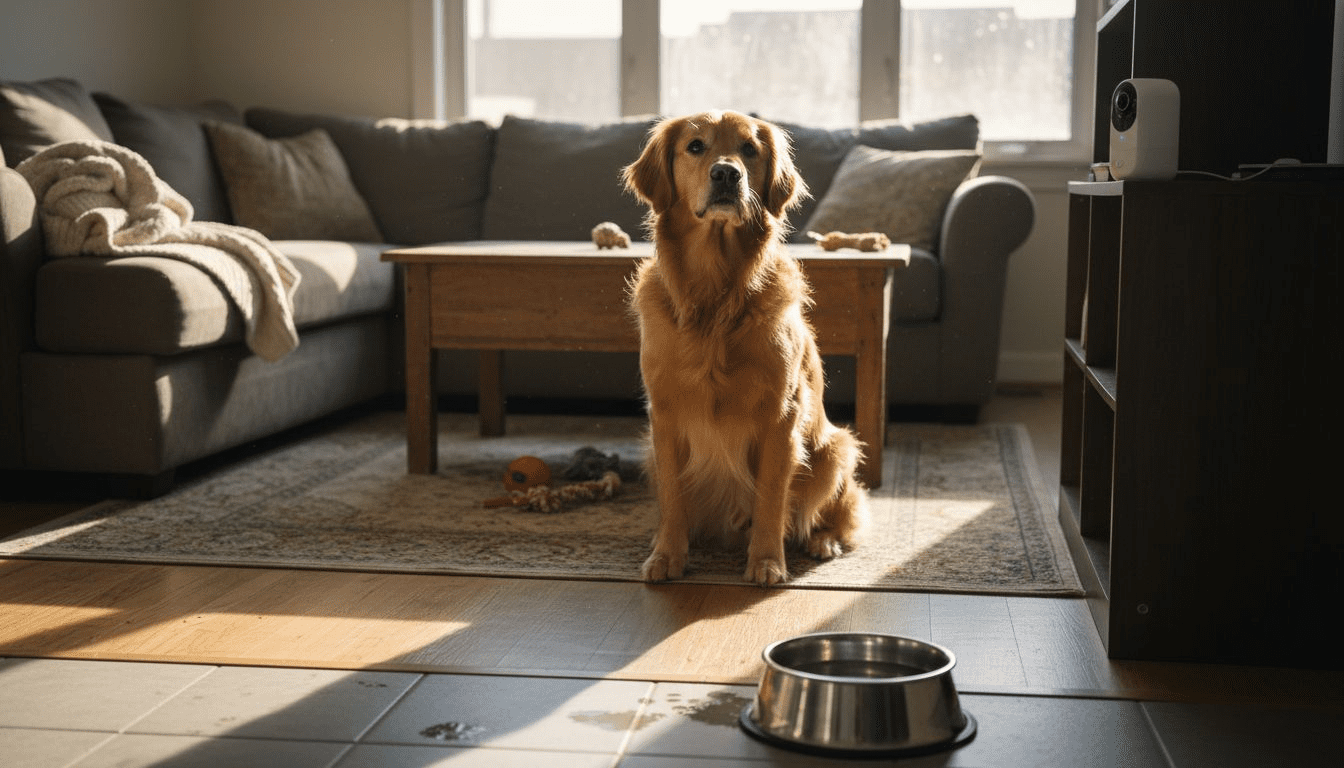
Every dog parent knows the uneasy feeling that comes with leaving their pet home alone. The desire for constant connection and peace of mind is driving many American families to adopt smart monitoring solutions. With motion detection in pet cameras, you gain crucial visibility into your dog’s behaviors and spot moments of separation anxiety or unexpected activity as they happen, helping you keep your companion safe, secure, and comforted while you are away.
Table of Contents
- What Is Motion Detection In Pet Cameras?
- Types Of Motion Detection Technologies Used
- How Motion Detection Works For Pet Monitoring
- Key Benefits And Common Drawbacks Explained
- Comparing Ai-Driven And Standard Motion Alerts
Key Takeaways
| Point | Details |
|---|---|
| Motion Detection Enhances Pet Monitoring | Motion detection technology provides real-time alerts for pet movement, improving safety and allowing for timely responses to emergencies. |
| Understanding Detection Types is Crucial | Different motion detection technologies, such as passive infrared and AI-driven analysis, impact alert accuracy and false alarms significantly. |
| AI-Driven Systems Reduce Alert Fatigue | AI-based motion detection minimizes unnecessary notifications by accurately identifying pet-related movements, making monitoring more effective. |
| Choosing the Right Camera Matters | Selecting a camera with suitable motion detection technology ensures it meets your specific monitoring needs and minimizes common drawbacks. |
What Is Motion Detection in Pet Cameras?
Motion detection is the technology that alerts you when your pet moves. It uses sensors and algorithms to identify changes in video frames, triggering notifications on your phone so you know activity is happening in your home.
At its core, motion detection works by analyzing video continuously. When the camera identifies movement, it compares each new frame to the previous one. Any significant difference triggers an alert. This is how pet cameras catch your dog jumping on the couch or your cat knocking something off a shelf.
Understanding how motion detection sensors operate helps explain why some cameras miss movement while others catch everything. Different pet cameras use different technologies to detect motion, ranging from basic pixel comparison to advanced artificial intelligence.
How Motion Detection Technology Works
Pet cameras employ several methods to identify movement:
- Pixel analysis: The camera compares pixels between frames, flagging changes as motion
- Infrared sensors: Some models detect body heat changes, useful during night monitoring
- Optical flow algorithms: Advanced cameras track moving objects across frames for accuracy
- Machine learning: Advanced algorithms detect and track moving objects, reducing false alerts from shadows or light changes
The technology varies by camera model and price point. Budget cameras often use basic pixel comparison, which generates more false alerts. Premium models use AI to distinguish between your pet moving and a curtain blowing in the breeze.
Motion detection that uses artificial intelligence recognizes your pet’s movement while ignoring environmental changes, cutting false alerts dramatically.
Why This Matters for Your Pet’s Safety
Accurate motion detection protects your dog in several ways. It alerts you to unusual activity when you’re at work. It captures destructive behavior during the day so you understand your pet’s anxiety triggers.
When your camera detects motion, you can act fast. See your dog in distress? Check in with two-way audio or contact someone nearby. This real-time visibility transforms how you manage separation anxiety.
Motion alerts also work as a security feature. Strange movement in your home triggers notifications, helping you catch potential break-ins. Your pet’s safety connects directly to your home’s overall security.
Pro tip: Enable motion detection zones in your pet camera settings to focus alerts on areas where your pet spends time, reducing notifications from hallways or windows and preventing alert fatigue.
Types of Motion Detection Technologies Used
Pet cameras use different motion detection approaches depending on their price and features. Understanding these technologies helps you choose a camera that matches your pet’s needs and your home environment.
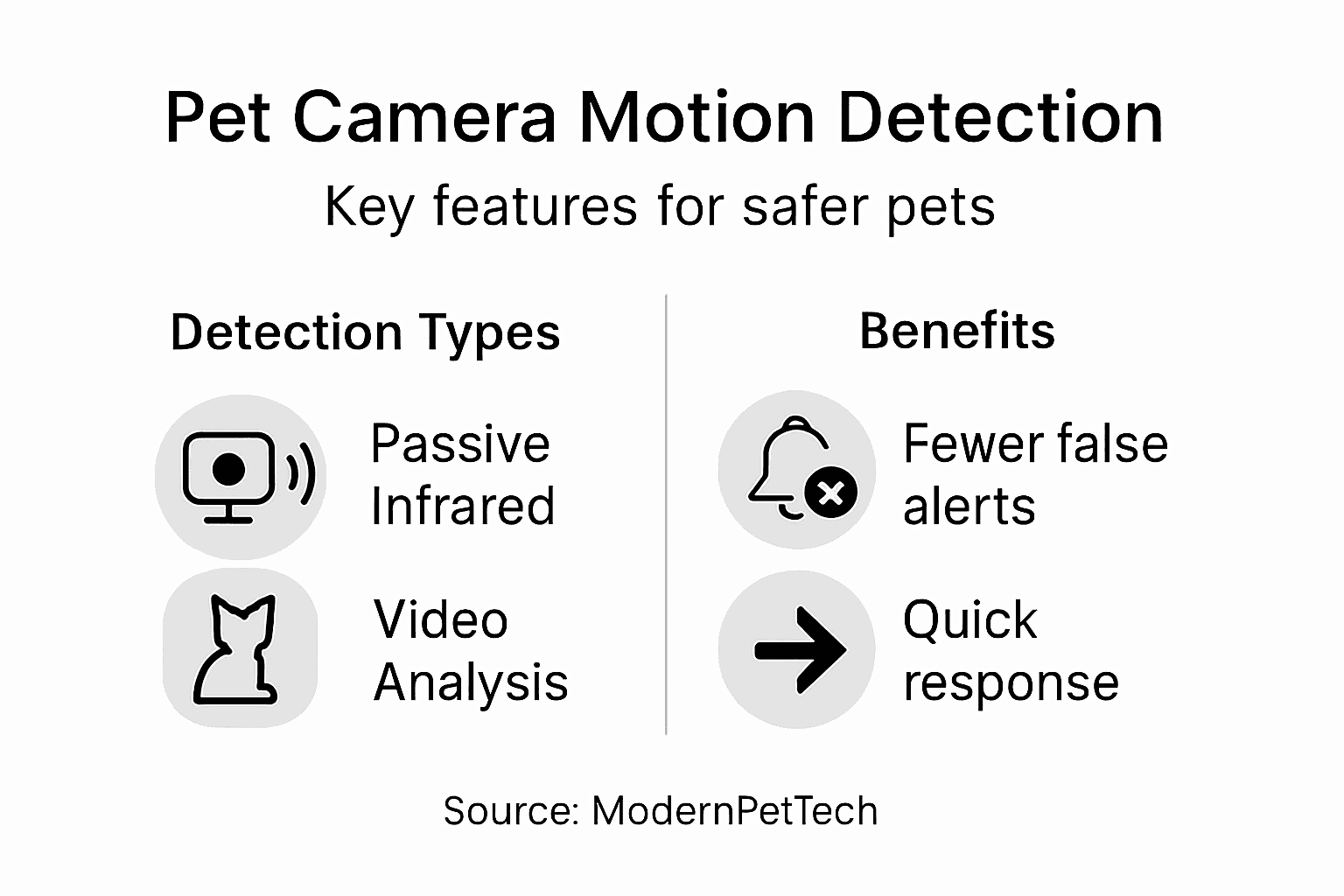
Motion detection falls into two main categories: active and passive. Passive systems detect changes without sending out signals, while active systems emit energy and measure responses. Most pet cameras use passive technology for efficiency.
Passive Infrared Detection
Passive infrared (PIR) sensors detect heat signatures from moving objects. Your pet’s body warmth creates a thermal signature that triggers alerts when moving.
PIR sensors work well for:
- Detecting warm-blooded animals reliably
- Operating without false alerts from stationary objects
- Consuming minimal battery power
- Working in complete darkness
The downside? PIR alone can’t identify what moved. A blowing curtain or sunlight shift might trigger alerts. That’s why most modern pet cameras combine PIR with video analysis.
Video-Based Motion Detection
Video-based systems analyze actual camera footage to spot movement. The camera compares consecutive frames, identifying pixel changes as motion.
This method offers better accuracy because it shows exactly what moved. You see the alert and can verify it happened. Video detection works in any lighting condition and catches smaller movements PIR might miss.
Advanced video-based motion detection uses algorithms that learn your pet’s normal behavior, reducing false alerts from environmental changes significantly.
Hybrid Approaches
The best pet cameras combine multiple technologies. A typical setup pairs passive infrared with video analysis. When PIR detects heat movement, the camera verifies it through video before alerting you.
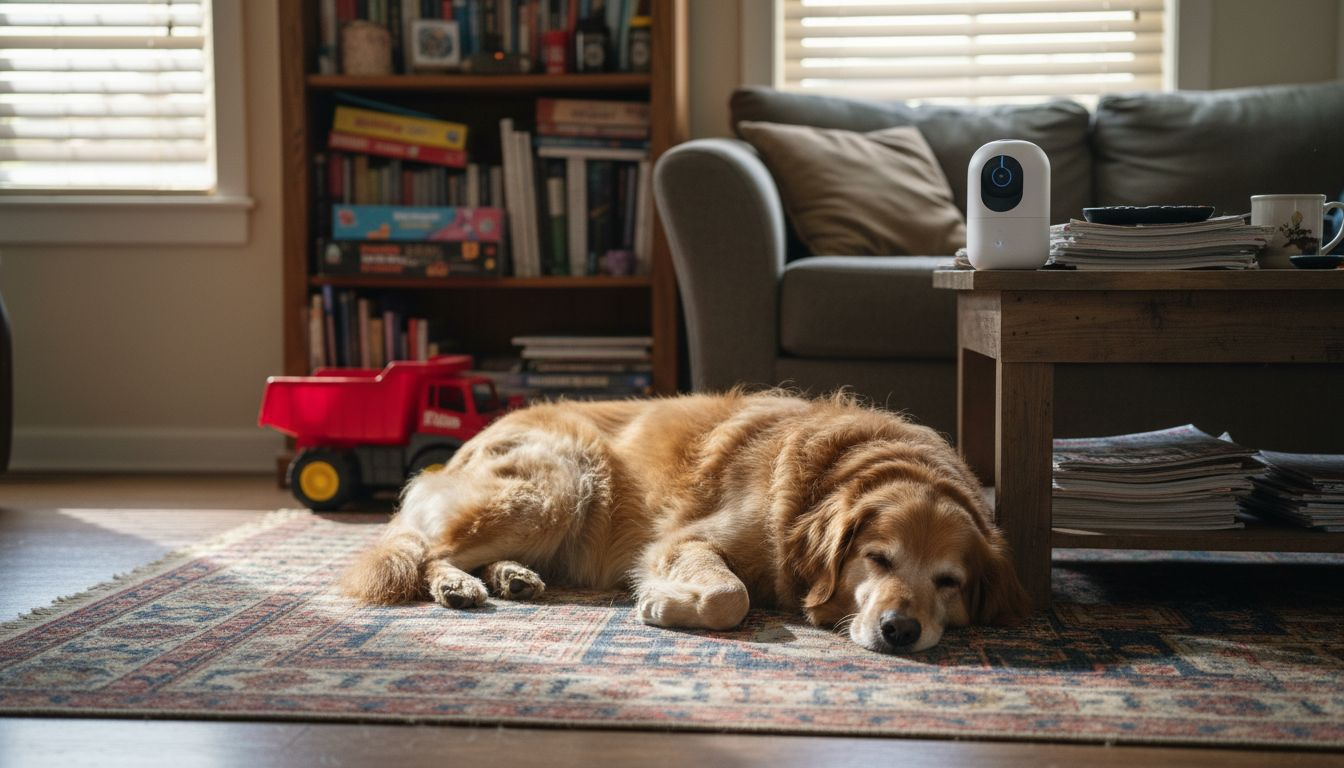
This hybrid method gives you accuracy without wasting your battery or flooding you with notifications. You get alerts when your dog actually moves, not when shadows shift.
Here’s a quick comparison of motion detection technologies used in pet cameras:
| Technology Type | How It Detects Motion | Accuracy Level | Battery Use |
|---|---|---|---|
| Passive Infrared (PIR) | Detects body heat changes | Moderate, some false alerts | Low power consumption |
| Video-Based Analysis | Compares video frames for movement | High, visually confirms activity | Moderate power use |
| Hybrid (PIR + Video) | Combines heat and video analysis | Very high, filters noise | Efficient, optimized performance |
| Event-Based Sensors | Responds instantly to changes | Advanced, minimal false alerts | Extremely efficient |
Combining passive infrared sensors with video-based detection creates the most reliable alerts, filtering out environmental noise while catching real pet movement.
Advanced Sensor Technology
Cutting-edge pet cameras are starting to use event-based vision sensors that respond instantly to movement with minimal power use. These sensors capture motion changes in real-time, enabling faster notifications and better tracking.
While these advanced sensors aren’t yet standard in consumer pet cameras, they represent where the technology is heading. As cameras improve, expect faster response times and fewer false alerts.
Pro tip: Check your camera’s motion detection settings and look for options to adjust sensitivity levels or create detection zones; this helps you focus alerts on your pet’s favorite areas while ignoring high-traffic hallways or windows.
How Motion Detection Works for Pet Monitoring
When your pet camera detects motion, a series of processes happen instantly behind the scenes. Understanding this workflow helps you appreciate how quickly your camera notifies you and why some cameras respond faster than others.
The process starts with continuous video frame analysis. Your camera captures video constantly, comparing each new frame to the previous one. When pixels change significantly, the system flags it as potential motion.
However, not every pixel change means your pet moved. Shadows shift, lights flicker, and curtains blow. This is where smart filtering comes in.
Real-Time Detection Process
Here’s what happens when motion occurs:
- Camera captures video frames continuously
- Motion detection algorithms compare consecutive frames for changes
- System analyzes pixel differences using optical flow technology
- Algorithm determines if movement is significant enough to trigger an alert
- Camera sends notification to your phone with video clip or snapshot
This entire process takes milliseconds. From the moment your dog moves to receiving a notification on your phone, only seconds pass.
How Cameras Identify Your Pet
Modern pet cameras use object detection algorithms like YOLO to recognize pets specifically. Instead of alerting you to any motion, the camera learns what your pet looks like.
This technology enables the camera to distinguish between your dog moving and a leaf blowing past the window. The system identifies four-legged shapes, fur patterns, and movement characteristics unique to pets.
Smart filtering reduces false alerts dramatically. Your camera won’t notify you about every shadow or light change. You only get alerts when your pet actually moves.
Reducing False Alerts
False alerts frustrate pet owners. Nothing’s worse than getting ten notifications per day from your cat’s camera only to find a curtain fluttering.
Advanced cameras use computer vision techniques to differentiate pets from other moving objects. Pre-trained models learn what your specific pet looks like and how it moves.
This machine learning approach gets smarter over time. The camera learns your home’s lighting patterns, typical movements, and your pet’s normal behavior.
Cameras using artificial intelligence to recognize your pet reduce false alerts by up to 90 percent, ensuring you only get notifications that matter.
Speed Matters for Safety
Fast motion detection response time protects your pet. When your dog shows signs of distress, you need to know immediately. Premium pet cameras process motion detection in under one second, giving you quick awareness of emergencies.
Budget cameras might take several seconds, delaying your response. For separation anxiety situations, that delay matters.
Pro tip: Test your camera’s motion detection by walking in front of it and noting how quickly you receive notifications; cameras responding within 2-3 seconds offer better real-time monitoring for emergencies and behavioral observation.
Key Benefits and Common Drawbacks Explained
Motion detection transforms how you monitor your pet, but it’s not without limitations. Understanding both sides helps you set realistic expectations and use the technology effectively.
The Real Benefits
Motion detection offers genuine advantages for pet owners managing separation anxiety and home security:
- Real-time alerts notify you instantly when your pet moves, enabling quick response to emergencies
- Remote monitoring lets you check on your dog from work, the gym, or anywhere with internet
- Energy efficiency means cameras consume less power by recording only when motion occurs
- Behavioral insights help you understand what your pet does during the day when you’re gone
- Security layer protects your home by alerting you to unexpected movement
- Peace of mind reduces anxiety about leaving your dog alone for hours
These benefits stack together. You’re not just getting alerts. You’re gaining visibility into your pet’s daily life and your home’s security simultaneously.
Common Drawbacks You’ll Encounter
Motion detection has real limitations worth understanding before purchase. Motion detection systems commonly trigger false alarms from environmental factors like shifting shadows, blowing curtains, or changing light conditions.
Other challenges include:
- False alerts from non-target movement drain your attention and battery
- Limited range means cameras miss motion outside their field of view
- Sensitivity issues require constant adjustment as lighting changes throughout the day
- Privacy concerns arise when motion detection activates recording in shared spaces
- Setup complexity demands proper camera placement and configuration for accuracy
Budget cameras struggle most with false alerts. You might receive dozens of notifications daily, making the feature more annoying than helpful.
Balancing Benefits Against Drawbacks
The key is choosing technology that matches your specific needs. Motion detection benefits like remote monitoring require balancing alert accuracy with detection range to avoid overwhelming notifications.
Premium pet cameras with artificial intelligence minimize false alerts while maintaining responsiveness. They learn your home’s unique lighting patterns and your pet’s movement habits.
Higher-quality motion detection systems reduce false alarms by recognizing your pet specifically, making alerts meaningful instead of constant notifications.
Budget cameras work fine for basic monitoring if you tolerate occasional false alerts. Premium models justify their cost through smarter filtering and faster response times.
Consider your situation. Working from home? Basic motion detection works fine. Commuting daily? Invest in AI-powered detection to reduce alert fatigue.
Pro tip: Start by enabling motion detection in specific zones rather than the entire camera view; focus on your pet’s favorite spots like their bed or food bowl to capture meaningful activity while minimizing false alerts from doorways and windows.
Comparing AI-Driven and Standard Motion Alerts
Not all motion detection works the same way. The difference between standard and AI-powered alerts dramatically impacts your daily experience with pet cameras. Understanding these differences helps you choose the right technology for your situation.
Standard Motion Detection
Standard motion detection uses basic pixel comparison to identify changes. The camera looks at each frame and flags any significant pixel differences as motion.
This approach is straightforward but imprecise. Here’s what you get:
- Simple algorithms that process quickly with minimal processing power
- Alerts triggered by any pixel change, regardless of source
- False alarms from shadows, light reflections, and weather
- Frequent notifications from environmental movement unrelated to your pet
- Lower cost since the technology is older and less complex
Standard detection works for basic monitoring, but alert fatigue becomes a real problem. You’ll receive notifications about curtains moving, dust particles, and sunlight shifting across walls.
AI-Driven Motion Detection
AI-driven motion detection uses deep learning to understand what’s actually happening in your video. Instead of just detecting pixel changes, the system recognizes objects and their behaviors.
AI-driven motion detection frameworks integrate both static image and motion information to classify movements intelligently. The camera learns the difference between your dog moving and a leaf blowing past.
AI systems provide:
- Smart recognition that identifies your pet specifically
- Context awareness that understands whether movement matters
- Reduced false alerts by filtering out irrelevant motion
- Behavioral classification that tells you what your pet is doing
- Learned patterns that improve over time as the system observes your home
The difference shows immediately. With AI, you get alerts about your actual pet. Without it, you get alerts about everything.
Real-World Impact
Consider a sunny afternoon. Standard detection triggers alerts every time clouds pass and change the light. AI detection ignores the light changes and only alerts when your dog moves.
AI-driven alerts differ from standard ones by applying learned models to discern types of motion and contextual relevance. Your camera becomes intelligent about what deserves your attention.
Here’s the practical outcome: Standard detection might send you 40 alerts daily. AI-powered detection sends 4, all of which actually show your pet doing something.
See how standard and AI-driven motion detection differ in real-world impact:
| Feature | Standard Detection | AI-Driven Detection |
|---|---|---|
| Alerts Per Day | 30-40, mostly environmental | 3-5, relevant pet activity |
| False Alarm Rate | High, frequent distractions | Low, precise filtering |
| Recognition Ability | Any motion triggers alert | Identifies pets and ignores irrelevant movement |
| Typical Cost | Lower upfront | Higher, justified by accuracy |
AI-driven motion detection reduces false alarms by up to 95 percent while maintaining the ability to catch actual pet movements, transforming alerts from noise into meaningful notifications.
The Cost Consideration
AI cameras cost more upfront, but the value justifies it. You’re not just getting better alerts. You’re eliminating alert fatigue, saving battery life, and getting meaningful insights into your pet’s behavior.
Standard cameras work fine if you rarely check alerts. If motion detection is your primary monitoring method, AI is worth the investment.
Pro tip: Choose AI-powered motion detection if you work full-time and rely on alerts to monitor your dog; the reduced false alarms prevent notification fatigue and ensure you actually respond when your pet needs attention.
Unlock Smarter Pet Safety with Advanced Motion Detection
Motion detection in pet cameras offers a powerful way to keep your furry friend safe and reduce the stress of separation anxiety. If you struggle with false alerts or want to make sure you only get notified when it really matters, understanding AI-driven motion detection and hybrid sensor technology is key. These innovations help filter out distractions like shifting shadows or curtains so you can focus on what matters most your pet’s wellbeing and your peace of mind.
Explore how leading pet cameras combine video analysis with passive infrared sensors to deliver fast and accurate alerts. Learn about top-rated products that feature two-way communication, treat dispensing, and night vision by visiting our comprehensive Pet Cameras page. Discover detailed insights and product comparisons to find the best fit for your home and pet’s unique needs in our Guides & Comparisons section.

Take control of your pet’s safety today. Visit ModernPetTech now to empower your monitoring with smart alerts that cut through noise and keep you connected. Don’t wait until an emergency happens act now to choose the right technology designed to protect your beloved companion with confidence.
Frequently Asked Questions
What is motion detection in pet cameras?
Motion detection in pet cameras is a technology that alerts you when your pet moves by analyzing video frames for changes and sending notifications to your phone.
How does artificial intelligence improve motion detection in pet cameras?
Artificial intelligence enhances motion detection by recognizing your pet’s movements and filtering out irrelevant motion, significantly reducing false alerts compared to standard motion detection systems.
What are the different types of motion detection technologies used in pet cameras?
Pet cameras typically use passive infrared (PIR) sensors, video-based systems, or a hybrid approach that combines both to accurately detect motion and minimize false alerts.
How can I reduce false alerts from my pet camera?
To reduce false alerts, enable motion detection zones focused on your pet’s primary activities and adjust sensitivity settings to filter out non-relevant environmental movements.
Recommended
- How to Use Night Vision Cameras for Pet Monitoring
- Role of Cameras in Home Security for Pet Owners
- Night Vision in Pet Cameras: Enhancing Pet Safety
- Secure Pet Camera Workflow for Safer Home Monitoring
- 7大须龙玩具选择推荐,提升宠物活力与幸福感全指南
