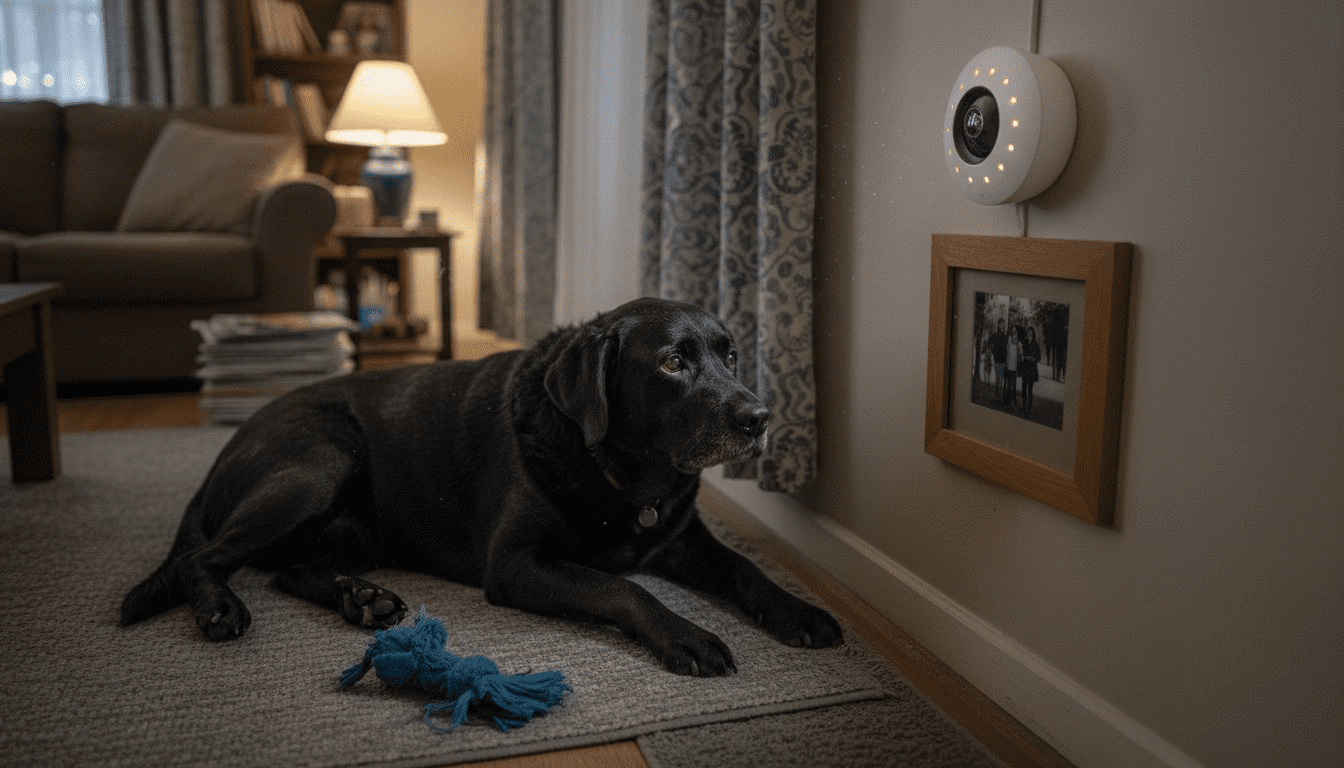
Nearly one in three American pet owners worry about leaving their pets alone at night, putting safety and emotional well-being at risk. For those who value advanced monitoring, night vision technology in pet cameras delivers round-the-clock peace of mind and helps address separation anxiety. Discover how effective night vision enables tech-savvy pet parents to keep watch in total darkness, spot issues early, and maintain a secure environment for every furry companion.
Table of Contents
- Night Vision in Pet Cameras Defined
- Infrared vs. Color Night Vision Explained
- How Night Vision Cameras Actually Work
- Benefits for Anxious or Active Pets
- Key Features and Common Pitfalls
- Comparing Top Night Vision Pet Cameras
Key Takeaways
| Point | Details |
|---|---|
| Night Vision Technology | Enables pet owners to monitor pets in low-light conditions, utilizing infrared illumination or light amplification. |
| Infrared vs. Color Night Vision | Infrared excels in complete darkness, while color night vision provides richer details in low light. |
| Monitoring Anxious or Active Pets | Offers real-time insights into pets’ emotional and behavioral states, helping owners address issues effectively. |
| Key Features of Pet Cameras | Prioritize high infrared range, resolution, and data encryption for optimal monitoring and privacy protection. |
Night Vision in Pet Cameras Defined
Night vision technology represents a critical advancement in pet camera technology, enabling pet owners to monitor their furry companions in low-light or complete darkness. Night vision devices work by amplifying available light or using specialized infrared illumination invisible to the human eye, creating clear video even when ambient lighting is minimal.
The core mechanism behind night vision in pet cameras involves advanced sensor technology that captures electromagnetic radiation outside the visible spectrum. Infrared illumination allows cameras to project invisible light that effectively illuminates a room without disturbing the pet’s natural environment. Most modern pet cameras use infrared LED technology, which emits light wavelengths between 850 and 940 nanometers – completely imperceptible to animals and humans.
Typically, night vision pet cameras offer multiple visibility ranges, with professional-grade models providing clear images up to 30 feet away in total darkness. These systems convert infrared light into electrical signals, which are then processed into high-contrast black and white images that capture precise details of pet movements, behaviors, and potential safety concerns. This technology ensures pet owners can maintain visual contact and monitoring capabilities regardless of time of day or lighting conditions.
Pro tip: When selecting a pet camera with night vision, prioritize models offering at least 15-20 feet of infrared range and a resolution of 720p or higher to ensure optimal visibility.
Infrared vs. Color Night Vision Explained
Understanding the nuanced differences between infrared and color night vision is crucial for pet owners seeking optimal monitoring capabilities. Infrared night vision technologies operate by using invisible light wavelengths to capture black and white images in complete darkness, providing a stealth monitoring solution that doesn’t disturb pets or reveal the camera’s presence.
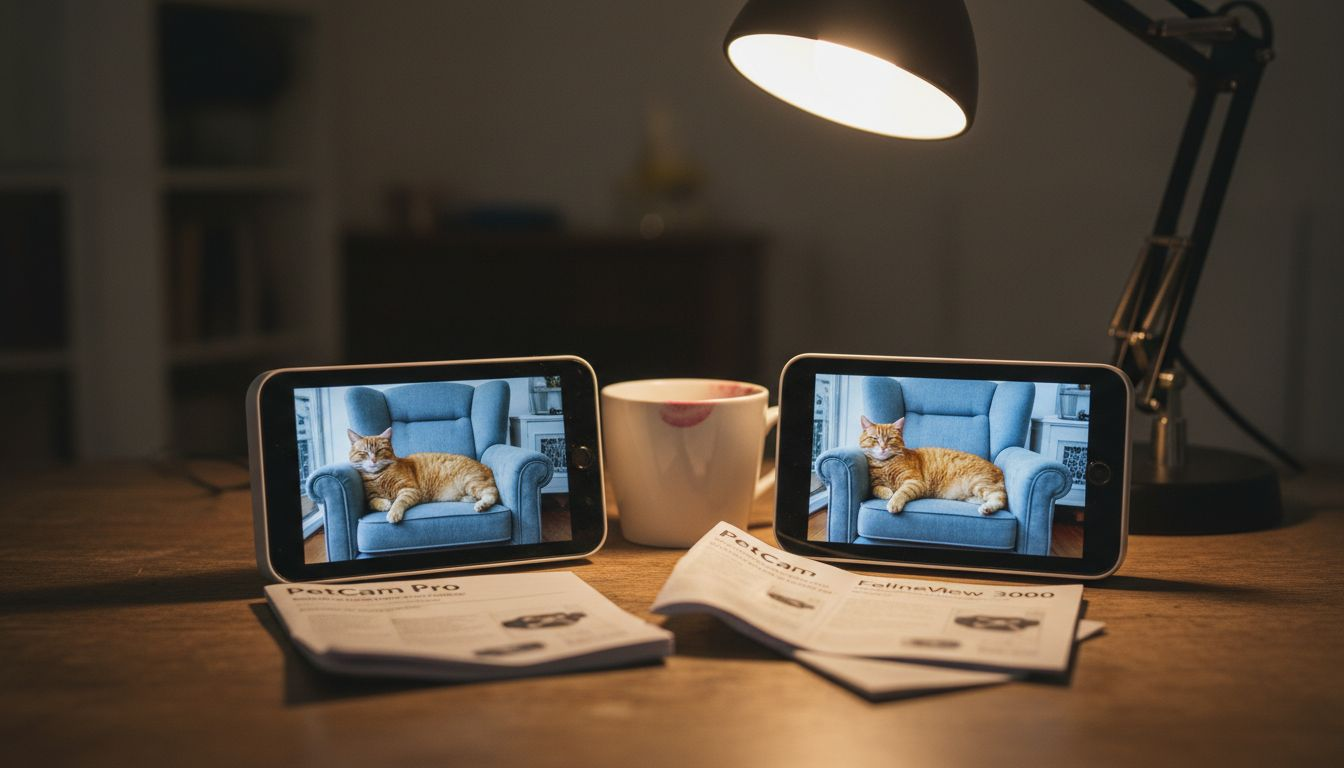
Color night vision, by contrast, uses more advanced sensor technologies that capture images with full color detail even in low-light environments. Night vision camera sensors typically employ sensitive light-gathering mechanisms that amplify minimal ambient light, allowing for color preservation when traditional infrared systems would switch to monochrome. This technology becomes particularly valuable when distinguishing specific colors or details becomes critical – such as identifying a pet’s exact coat color or detecting subtle environmental changes.
The choice between infrared and color night vision depends on specific monitoring needs. Infrared excels in complete darkness and offers maximum discretion, while color night vision provides richer visual context but may require minimal ambient light to function effectively. Professional-grade pet cameras often incorporate hybrid systems that can switch between infrared and color modes based on available lighting conditions, offering pet owners maximum flexibility in monitoring their furry companions.
Pro tip: For comprehensive pet monitoring, consider cameras with dual infrared and color night vision capabilities that can automatically adjust based on ambient light levels.
How Night Vision Cameras Actually Work
Pet cameras with night vision leverage sophisticated technologies to capture clear images in low-light environments. Night vision camera technologies typically employ three primary mechanisms: thermal imaging, infrared illumination, and image intensification. Each technology serves a unique purpose in transforming invisible light into viewable images that allow pet owners to monitor their furry companions around the clock.
Infrared illumination systems operate by emitting invisible infrared light through specialized LED arrays. These LEDs project light wavelengths undetectable to human and animal eyes, which then reflect off surfaces and are captured by ultra-sensitive camera sensors. The reflected infrared light is converted into a clear monochromatic image, enabling pet owners to see detailed movements and activities even in complete darkness. This technology ensures that the monitoring process remains unobtrusive, without creating any disruptive light that might startle or disturb pets.
Advanced night vision cameras often combine multiple technologies for comprehensive monitoring. Thermal imaging, for instance, detects heat signatures, which becomes particularly useful in scenarios with absolutely no ambient light. Image intensification technology amplifies minimal existing light, further enhancing visibility. Professional-grade pet cameras may incorporate these different technologies into hybrid systems, allowing seamless transitions between modes based on environmental lighting conditions and providing pet owners with the most comprehensive monitoring experience possible.
Pro tip: When selecting a night vision pet camera, prioritize models that offer multiple light detection technologies for the most reliable and adaptable monitoring capabilities.
Here’s a concise comparison of night vision technologies found in pet cameras:
| Technology Type | How It Works | Best For | Limitation |
|---|---|---|---|
| Infrared Night Vision | Uses IR LEDs, produces monochrome images | Complete darkness monitoring | No color detail |
| Color Night Vision | Amplifies tiny ambient light, shows color | Identifying colors/details | Needs some light present |
| Thermal Imaging | Detects heat signatures from objects | Pitch-dark, no light needed | No visible detail, just heat |
| Image Intensification | Boosts existing light for clearer images | Low-light environments | Ineffective in total dark |
Benefits for Anxious or Active Pets
Night vision technology in pet cameras provides transformative monitoring solutions for pets struggling with anxiety, separation issues, or high-energy behaviors. Benefits of pet cameras become particularly crucial for animals that experience heightened stress when left alone, allowing owners to observe and understand their pet’s emotional and physical state throughout the day and night.
For anxious pets, continuous monitoring offers unprecedented insights into their behavior patterns. Night vision capabilities enable owners to track subtle stress indicators like excessive pacing, destructive behaviors, or signs of distress that might occur during low-light hours. By providing real-time visual access, these cameras help identify potential triggers, such as environmental noises or specific situations that generate anxiety, ultimately supporting more targeted behavioral interventions and emotional support strategies.
Active and high-energy pets benefit equally from advanced night vision monitoring. Pet monitoring devices with enhanced visibility can help track nighttime activity levels, ensuring pets remain safe and engaged during hours when traditional supervision becomes challenging. This technology becomes especially valuable for pets with medical conditions, senior animals requiring extra attention, or working dogs that maintain complex activity schedules beyond standard daylight hours.
Pro tip: Position your night vision pet camera at a strategic angle that covers your pet’s primary living and resting areas to maximize monitoring effectiveness.
Key Features and Common Pitfalls
Key features of pet cameras represent critical considerations for pet owners seeking comprehensive monitoring solutions. The most advanced systems combine multiple technological capabilities, including high-resolution video capture, expansive field of view, reliable infrared night vision, motion detection with instant alerts, and two-way audio communication that allows real-time interaction with pets from remote locations.
Night vision performance requires careful evaluation, as not all systems deliver equivalent quality. Security camera night vision technologies vary significantly in their ability to provide clear, consistent imagery. Common pitfalls include limited infrared range, potential image distortion, and inconsistent performance across different lighting conditions. Professional-grade cameras typically offer adjustable infrared LED intensity, high-sensitivity sensors, and advanced image processing algorithms that mitigate these potential limitations.
Privacy and data security represent another critical consideration for pet camera users. While these devices offer unprecedented monitoring capabilities, they simultaneously introduce potential vulnerabilities around personal data protection. Owners should prioritize cameras with encrypted data transmission, secure cloud storage options, and transparent privacy policies that clearly outline how recorded information is managed, stored, and potentially shared.
Pro tip: Always test your pet camera’s night vision capabilities in multiple lighting scenarios before finalizing placement, ensuring comprehensive and reliable monitoring.
This table summarizes essential features to look for in a night vision pet camera:
| Feature | Description | Business Impact |
|---|---|---|
| Infrared Range | Distance IR light covers | Enables wide-area nighttime monitoring |
| Video Resolution | Number of pixels in image | Improves detail for behavioral analysis |
| Motion Detection | Triggers alerts on movement | Enhances safety, alerts owners quickly |
| Data Encryption | Secures stored and sent footage | Protects privacy, lowers breach risk |
Comparing Top Night Vision Pet Cameras
Top night vision pet cameras represent sophisticated technological solutions designed to provide comprehensive pet monitoring across various environments and behavioral needs. Modern pet cameras go beyond simple video recording, integrating advanced features like high-definition 1080p video, color night vision capabilities, motion and bark detection, and interactive elements such as two-way audio communication and treat dispensing mechanisms.
The most advanced models distinguish themselves through innovative technological integrations. Professional-grade cameras now offer AI-powered activity tracking, 360-degree room coverage, and intelligent alert systems that can distinguish between normal pet movements and potential security concerns. Security camera features increasingly emphasize dynamic monitoring capabilities like patrol modes and pan-tilt-zoom functionalities, enabling pet owners to obtain comprehensive visual insights into their animal’s activities and well-being.
When evaluating night vision performance, critical factors include infrared range, image resolution, and low-light sensitivity. Top-tier pet cameras typically provide clear imaging up to 30 feet in total darkness, utilizing infrared LED technologies that capture detailed monochromatic or color images without disturbing the pet’s natural environment. Sophisticated models also incorporate advanced sensor technologies that can automatically adjust illumination intensity based on ambient lighting conditions, ensuring consistent visual clarity.
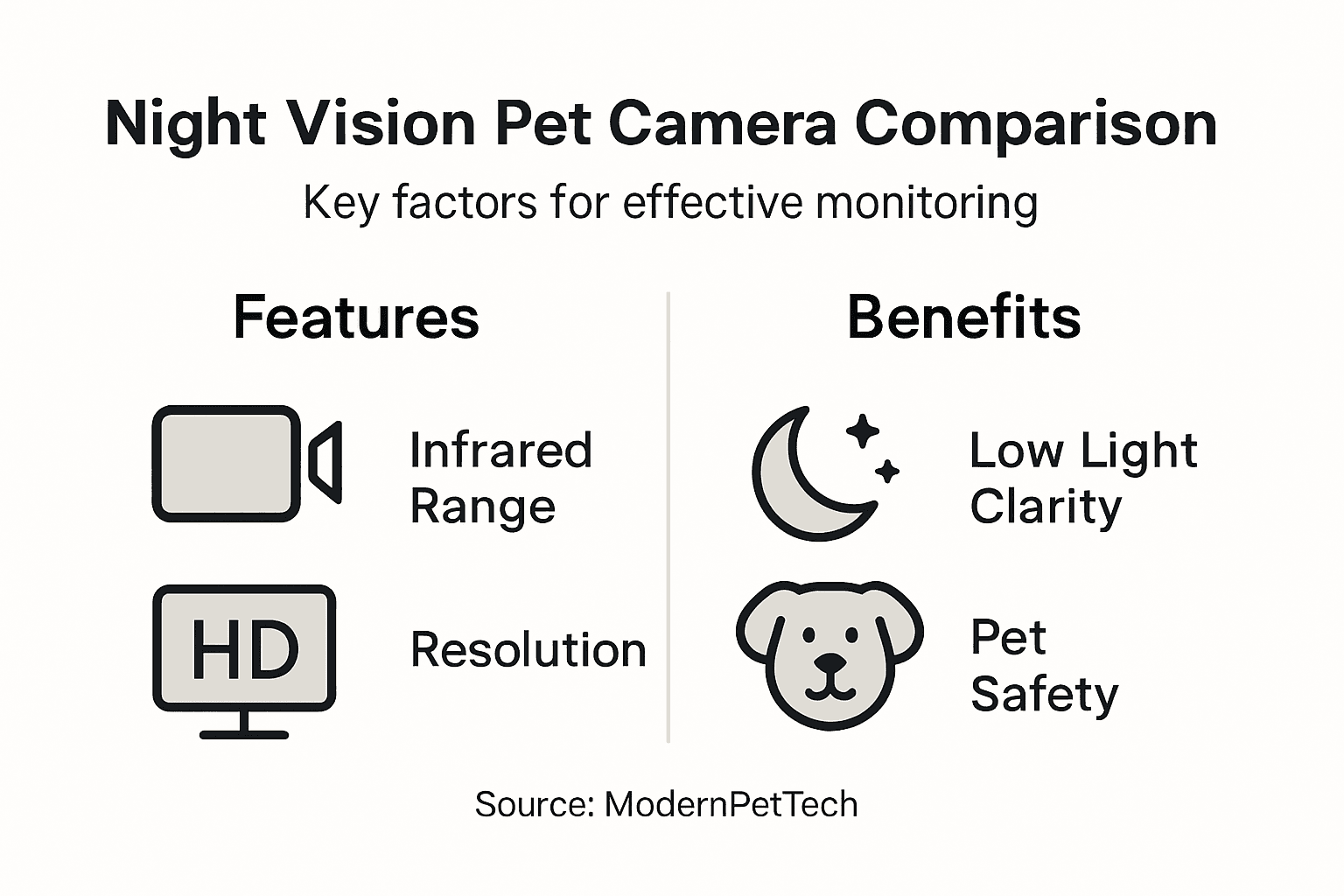
Pro tip: Select pet cameras with minimum 720p resolution and infrared range exceeding 20 feet to ensure comprehensive nighttime monitoring capabilities.
Discover the Best Night Vision Pet Cameras for Your Furry Friend
Monitoring your pet effectively at night can be challenging without the right technology. The article highlights key pain points such as poor visibility in low-light conditions and the need for reliable infrared or color night vision features to keep your pet safe, calm, and secure. If you want to prevent separation anxiety and catch every detail during those dark hours, understanding night vision capabilities is essential.

Explore expertly reviewed pet cameras with advanced night vision on Pet Cameras – ModernPetTech. Get insights into models offering infrared illumination and full-color night vision that adapt to your pet’s environment. For side-by-side comparisons and detailed feature breakdowns, visit our Guides & Comparisons – ModernPetTech section. Don’t wait until darkness leaves you in the dark about your pet’s wellbeing. Visit ModernPetTech now to find the perfect night vision camera that keeps your beloved companion safe anytime, anywhere.
Frequently Asked Questions
What is night vision in pet cameras?
Night vision in pet cameras utilizes infrared technology to capture clear images in low-light or complete darkness, allowing pet owners to monitor their pets at any time.
How does infrared night vision differ from color night vision in pet cameras?
Infrared night vision captures black and white images using invisible light, making it ideal for complete darkness, while color night vision amplifies ambient light to provide colorful images in low-light environments.
What features should I look for in a night vision pet camera?
When selecting a night vision pet camera, prioritize features like infrared range (15-20 feet or more), resolution of at least 720p, motion detection capabilities, and two-way audio for real-time interaction.
How does night vision technology benefit anxious or active pets?
Night vision technology allows pet owners to observe their pets’ behaviors during low-light hours, helping identify signs of anxiety or monitor activity levels, which can lead to targeted interventions and better care.
Recommended
- 7 Essential Features in a Cat Camera Every Pet Owner Needs
- Pet Camera Setup Explained: Boosting Safety and Connection
- Indoor vs Outdoor Pet Cameras: Choosing What Fits Your Home
- Benefits of Pet Cameras: Safer, Happier Pets at Home
- The Essential Guide to the Importance of Pet Safety – iPupPee

1 thought on “Night Vision in Pet Cameras: Why It Matters”