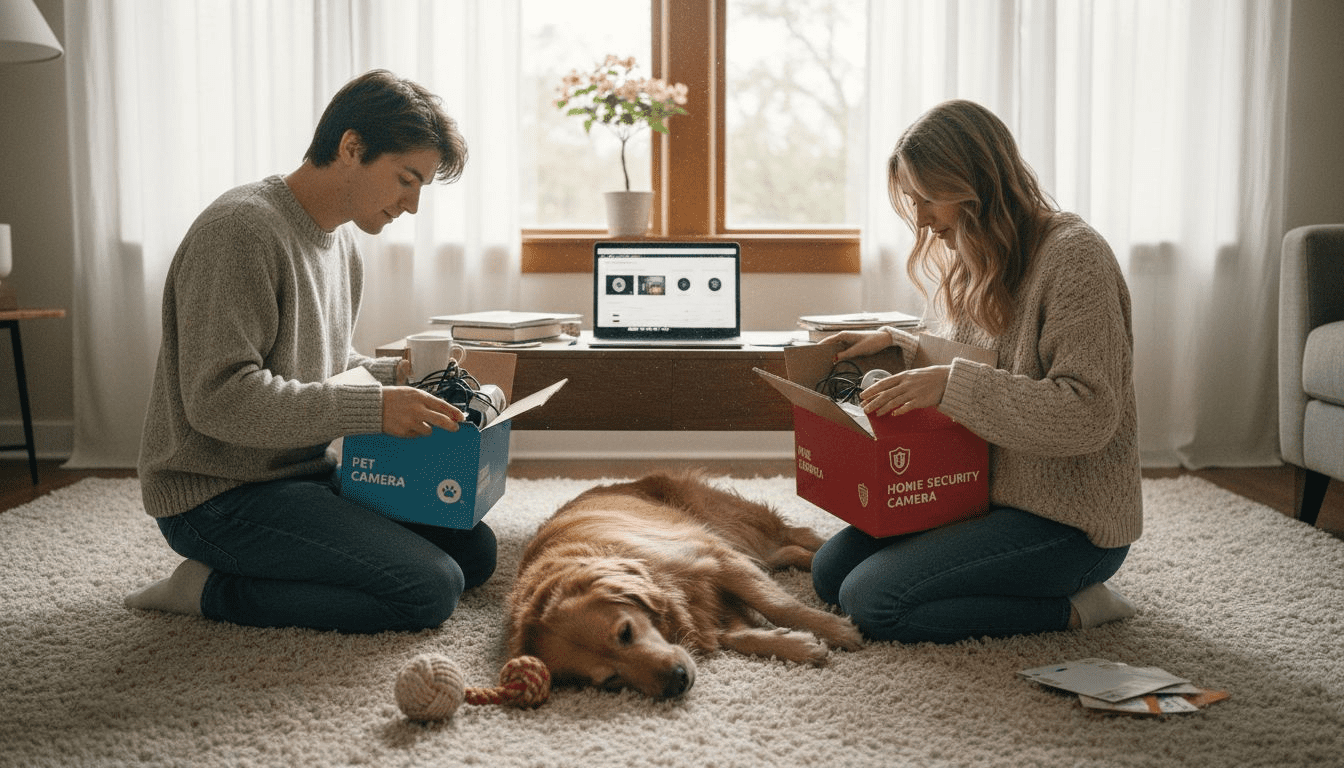
Leaving your beloved pet home alone in the United States can cause real worry, especially if you want both comfort for your animals and protection for your property. Choosing between pet cameras and security cameras often feels confusing, since these devices look similar but offer very different benefits. Understanding their distinct features helps tech-savvy pet owners reduce separation anxiety and improve home security, making life simpler and safer for both pets and people.
Table of Contents
- Defining Pet Cameras And Security Cameras
- Distinct Features And Core Functions Compared
- Use Cases: Pet Anxiety, Safety, And Home Security
- Costs, Installation, And Privacy Considerations
- Top Mistakes And Choosing The Right Solution
Key Takeaways
| Point | Details |
|---|---|
| Understanding Purpose | Pet cameras focus on pet interaction and comfort, while home security cameras are designed for property protection and crime deterrence. |
| Feature Distinctions | Key features like two-way audio and treat dispensers are unique to pet cameras; home security cameras lack these interactive capabilities. |
| Cost and Installation | Pet cameras are generally more affordable and user-friendly, whereas home security camera systems often require professional installation and incur higher ongoing costs. |
| Privacy Considerations | Evaluate encryption standards and privacy policies when choosing either camera type, as both handle video data differently and may pose privacy risks. |
Defining Pet Cameras and Security Cameras
Pet cameras and home security cameras serve fundamentally different purposes, even though they might look similar at first glance. Understanding the distinction between these two device types is crucial before deciding which one (or both) makes sense for your home and your pets. Pet cameras are specifically designed with your animals in mind, prioritizing their comfort, interaction, and behavioral monitoring. Home security cameras, on the other hand, focus on protecting your property, deterring criminal activity, and capturing evidence of unauthorized access. While there is some overlap in what these devices can do, their core functions, features, and how manufacturers build them reflect their distinct missions.
What Pet Cameras Actually Do
Pet cameras are built around one central idea: staying connected to your pet when you cannot be physically present. These devices let you watch your dog, cat, or other pet in real time through a smartphone app or web interface. Beyond passive viewing, most pet cameras include two-way audio, allowing you to talk to your pet and hear what is happening in the room. Many models also feature treat dispensers, letting you reward good behavior remotely or just brighten your pet’s day while you are at work. Night vision is standard on quality pet cameras, ensuring you can monitor your pet even in complete darkness. The technology focuses on reducing separation anxiety, enabling training from a distance, and capturing adorable moments you might otherwise miss.
Pet cameras typically upload video to cloud servers for storage and remote access, which raises important considerations around privacy and data security. The privacy concerns around smart home cameras collecting identifiable footage highlight the need to carefully evaluate how manufacturers handle your video data. Look for devices that offer encrypted video transmission and clear privacy policies. Motion alerts notify you when your pet moves around, helping you detect any unusual activity or signs of distress. The video quality in pet cameras balances clarity with bandwidth efficiency, since the footage needs to stream smoothly even if your internet connection is not lightning fast.
What Home Security Cameras Do
Home security cameras exist to protect your property and deter criminal activity. They monitor entry points, driveways, yards, and interior spaces to capture evidence if a break in occurs or theft happens. These cameras prioritize wide viewing angles, extended recording capabilities, and integration with security systems that can trigger alarms or alert monitoring services. The video quality is typically optimized for identifying people and license plates, not for watching pet behavior up close. Many home security cameras use local storage or 24/7 cloud recording rather than on demand streaming.
While home security cameras can technically monitor your pets, they are not designed with pet interaction in mind. They lack two way audio, treat dispensers, and the specific features that help address separation anxiety. However, they do provide an extra layer of monitoring that can catch unusual activity in your home. It is worth noting that pet cameras can become involved in scams related to lost pets, so security and verification of device access is important for both types of cameras.
Key Differences at a Glance
| Feature | Pet Camera | Home Security Camera |
|---|---|---|
| Primary purpose | Monitor and interact with pets | Protect property and deter crime |
| Two-way audio | Yes, designed for pet communication | Yes, but for security purposes |
| Treat dispenser | Common feature | Not available |
| Night vision | Yes, pet focused | Yes, property focused |
| Video angle | Often narrower, focused on pet area | Wide angle, covers entry points |
| Cloud storage | Event based or subscription | 24/7 continuous or extensive |
| Motion alerts | Pet movement detection | Perimeter breach detection |
| Ease of setup | Pet owner friendly | Often requires professional installation |
| Cost | Generally $100-400 | Ranges widely, can be expensive per camera |
Some tech-savvy pet owners benefit from combining both types. A pet camera in your living room lets you interact with your dog during the day, while a security camera by your front door captures any unexpected visitors or packages being delivered. This hybrid approach gives you the best of both worlds: real-time pet monitoring plus comprehensive home protection.
Pro tip: Start by identifying your primary goal (pet monitoring, home security, or both), then choose cameras specifically designed for that purpose rather than trying to make one device do everything.
Distinct Features and Core Functions Compared
When you dig into the actual mechanics of how pet cameras and home security cameras work, the differences become even clearer. These devices are engineered from the ground up for their specific purposes, which means they prioritize completely different features. Pet cameras prioritize interaction, engagement, and peace of mind about your pet’s wellbeing. Home security cameras prioritize deterrence, evidence capture, and property protection. This fundamental difference shapes everything from the sensors they use to the way they store and transmit video data.
Interactive Features That Set Pet Cameras Apart
The biggest distinction between these two camera types comes down to two-way audio and treat dispensing. Pet cameras are purpose-built for real-time interaction with your pet. When your dog hears your voice coming through the speaker, it provides immediate comfort and strengthens your bond even when you’re miles away. The treat dispenser feature lets you reward your pet for good behavior or simply brighten their day with a surprise snack. These aren’t gimmicks; they serve psychological purposes by reducing separation anxiety and helping pets feel less alone.
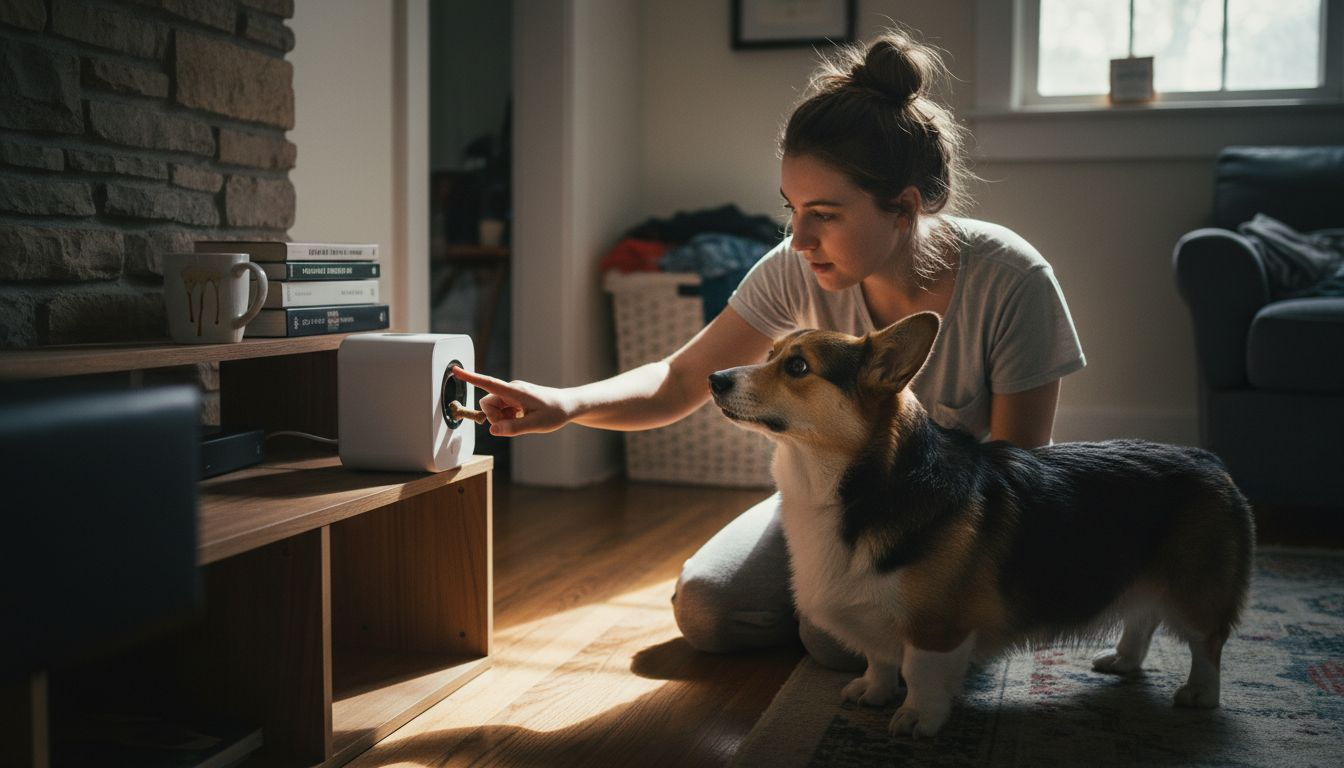
Most pet cameras also include activity tracking and behavior monitoring. The system learns your pet’s typical movement patterns and alerts you to unusual activity. If your normally active dog suddenly seems lethargic, or your cat is acting strangely, you get notified. Some models track sleep patterns, playtime frequency, and eating habits, giving you insights into your pet’s health and wellbeing. Home security cameras simply do not include these features because they’re not designed to observe behavioral nuances in animals.
The viewing angle on pet cameras is typically narrower and optimized for a single room or specific area where your pet spends time. This focused approach means better video quality for the areas that matter to you. Home security cameras, by contrast, use wide-angle lenses to monitor large perimeters and multiple entry points simultaneously.
How Home Security Cameras Operate Differently
Home security cameras are built for continuous monitoring and evidence capture. They prioritize recording quality optimized for identifying people, vehicles, and license plates. The video needs to be clear enough to serve as evidence in a police investigation or insurance claim. This means excellent low-light performance, high resolution at distance, and video encoding that preserves fine details.
The storage and recording strategy differs dramatically. Home security systems often use 24/7 continuous recording or cloud-based backup systems that retain footage for weeks or months. Pet cameras typically use event-based recording, capturing video only when motion is detected or when you manually view the feed. This approach saves bandwidth and storage costs, which matters when your primary goal is staying connected to your pet, not maintaining an archive of your entire day.
Most home security cameras integrate with alarm systems and professional monitoring services. When motion is detected at your front door at 2 AM, the system can trigger sirens, alert police, or notify a monitoring center. Pet cameras have no such security infrastructure because they’re not designed to protect property from intruders.
The Critical Security and Privacy Distinction
Both camera types collect video data, but they handle it very differently. Research has exposed security vulnerabilities in home security cameras where electromagnetic emissions from internal circuitry could potentially be intercepted. This highlights why security matters for both types of devices. Pet cameras upload video to cloud servers for remote access, which requires strong encryption and clear privacy policies. Home security cameras often use more robust security protocols because they’re protecting against intentional attacks rather than just casual data breaches.
The privacy implications differ too. A pet camera captures your pet in your living room. A home security camera might capture visitors, package deliveries, or even passersby on your property. Advanced privacy-focused technology like anonymization systems shows how manufacturers are developing solutions to reduce personal data exposure while maintaining monitoring functionality. When evaluating either type of camera, understand exactly what data gets collected, where it’s stored, who can access it, and how long it’s retained.
Feature Comparison at a Glance
Pet Camera Strengths:
- Two-way audio for real-time interaction
- Treat dispensing for remote rewards
- Behavior and activity tracking
- Optimized for single-room monitoring
- Event-based recording saves storage
- Designed for pet comfort and engagement
Home Security Camera Strengths:
- Wide-angle coverage of property perimeter
- Continuous 24/7 recording capability
- Integration with alarm systems
- High resolution for identifying details
- Professional monitoring service integration
- Designed to deter and capture criminal activity
The overlap exists, but the core functions remain distinct. You could technically use a home security camera to watch your pet, but you’d lose all the interactive features that make pet monitoring effective. Conversely, using a pet camera for home security would leave blind spots and lack the deterrent factor that professional security systems provide.
Pro tip: If you want comprehensive coverage, install a pet camera in the rooms where your pet spends most time, and place a home security camera at entry points; this layered approach gives you both pet interaction and property protection.
Use Cases: Pet Anxiety, Safety, and Home Security
The real value of pet cameras and home security cameras becomes apparent when you consider what they actually solve for in everyday life. Tech-savvy pet owners aren’t just looking for cool gadgets, they’re solving specific problems: managing separation anxiety when they leave for work, ensuring their pets stay safe, and protecting their homes from intrusions. The two camera types address these needs differently, and understanding which tool solves which problem helps you make the right investment for your situation.
Addressing Pet Anxiety and Behavioral Issues
Separation anxiety in dogs and cats is real and often heartbreaking. Your pet might bark excessively, destroy furniture, have accidents indoors, or exhibit stress behaviors when left alone. Research shows that pet cameras assist in monitoring animal behavior and reducing anxiety when pets are left alone, contributing directly to their welfare. A pet camera with two-way audio lets you respond immediately when your dog starts panicking. You hear the distress, speak calmly through the speaker, and your dog recognizes your voice and settles down. This is genuinely effective at preventing destructive behavior and reducing stress hormones in your pet’s system.
The treat dispenser feature provides positive reinforcement. When your pet exhibits calm behavior while you’re away, you can reward them remotely with a treat. Over time, your pet associates alone time with good things happening rather than anxiety spiraling. Some owners use pet cameras during work hours not to spy on their pets, but to actively train them to tolerate solitude better. You catch the moment your dog settles down after initial agitation and immediately dispense a treat. Repeat this pattern over weeks, and many anxious pets genuinely improve.
Home security cameras offer no value for this use case. They don’t have two-way audio or treat dispensing. They’re not designed to respond to pet behavior. A home security camera sitting in your living room might technically record your anxious dog’s destructive behavior, but it does nothing to prevent or address the problem.
Pet Safety During Emergencies and Daily Situations
Imagine your smoke alarm goes off while you’re at work, or a fire starts in a neighboring building. You need to know immediately if your pet is safe or if you need emergency responders to get them out. Pet cameras with real-time alerts notify you the moment something unusual happens. You can see the situation, call emergency services with accurate information, and potentially save your pet’s life.
Even in non-emergency scenarios, pet safety cameras matter. Your indoor cat somehow gets outside. Your dog escapes the backyard. Your pet has a medical episode like a seizure while you’re gone. A pet camera captures what happened, and you have video evidence to show a veterinarian or use to search for your lost pet. The importance of including pets in emergency preparedness highlights why having visibility into your pet’s wellbeing is critical.
Home security cameras can contribute to pet safety in certain scenarios, particularly if they monitor outdoor areas where your pet might escape to. A home security camera watching your backyard might capture your dog digging under the fence or alert you to a gate left open. However, home security cameras are designed primarily for property protection, not pet welfare monitoring.
Comprehensive Home Security and Deterrence
While pet cameras focus inward on your animal companions, home security cameras look outward at threats to your property and family. A home security camera at your front entrance deters package thieves and burglars. The visible camera alone reduces criminal activity by 26 to 30 percent according to security research. If a crime does occur, the footage provides evidence for police investigations and insurance claims.
Home security cameras integrate with alarm systems. Motion detected at your back door at 2 AM triggers alerts, sirens, and potentially police dispatch. Your smartphone buzzes with an alarm notification and a snapshot of the intruder. This layered approach creates genuine security infrastructure that protects your entire home. Pet cameras simply cannot provide this function because they lack the integration with professional security systems and lack the wide-angle coverage needed for property perimeter monitoring.
Real-World Scenarios That Clarify the Difference
Scenario 1: Your dog has severe separation anxiety and destroys the house when left alone. Solution: Pet camera with two-way audio and treat dispenser.
Scenario 2: You want to know if your home is secure while you’re away on vacation. Solution: Home security camera system with cloud backup and professional monitoring.
Scenario 3: You want both to check on your anxious dog AND monitor your property for intruders. Solution: Pet camera inside your home for pet interaction, home security camera outside for property protection.
Most tech-savvy pet owners find themselves in Scenario 3, which is why many choose to implement both systems. They solve complementary problems and work together to create a safer, more secure home where your pets feel less anxious and your property gets protected.
Pro tip: Start with a pet camera in the room where your pet spends the most time, then add outdoor home security cameras at entry points; this strategic layering addresses both pet anxiety and home security without overlap or wasted coverage.
Here’s a summary of when each camera type is ideal based on your primary goal:
| Scenario | Best Camera Type | Key Benefit |
|---|---|---|
| Reducing pet anxiety | Pet camera | Direct interaction and comfort |
| Monitoring property security | Home security camera | Deterrence and evidence capture |
| Tracking pet behavior changes | Pet camera | Activity alerts and health insights |
| Detecting break-ins or intrusions | Home security camera | Immediate alerts and police notifications |
| Wanting both pet and property coverage | Combination of both | Holistic monitoring and peace of mind |
Costs, Installation, and Privacy Considerations
Money matters, and so does convenience. When comparing pet cameras to home security cameras, the financial and logistical aspects differ significantly. Pet cameras are designed for straightforward consumer installation with minimal technical expertise required. Home security systems often demand professional installation, ongoing monitoring fees, and larger upfront investments. Beyond cost, privacy concerns loom large with both device types, though they manifest differently depending on where your video data goes and who can access it.
Understanding the Price Differences
Pet cameras typically cost between $100 and $400 for a quality device with solid video, two-way audio, and treat dispensing. Some basic models run cheaper, while premium options with advanced features like 4K video or AI-powered pet recognition cost more. The important part is that most pet cameras are one-time purchases with optional monthly cloud storage subscriptions ranging from $5 to $15 per month. That subscription is completely optional if you prefer local storage or don’t need extended video history.
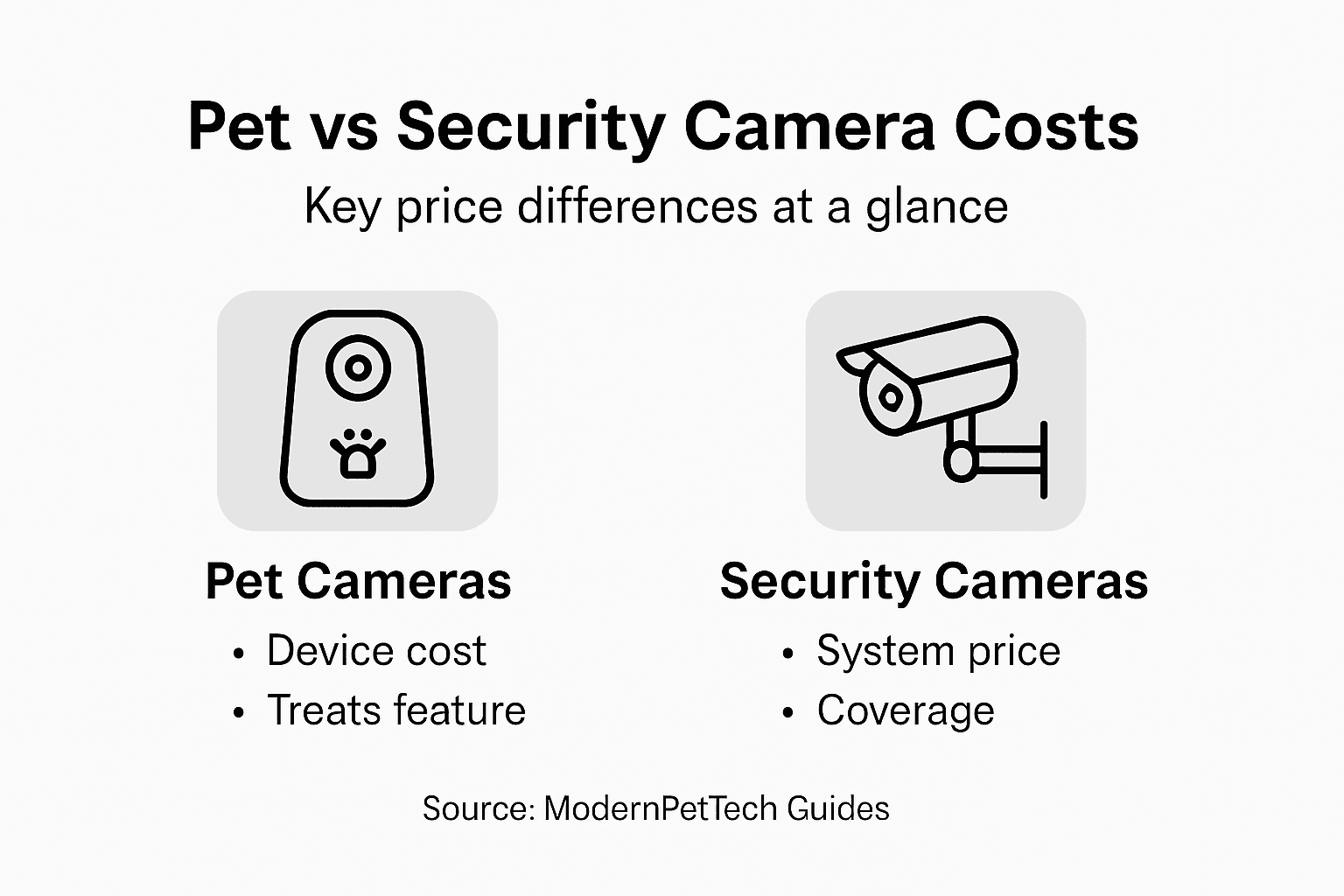
Home security camera systems carry much higher price tags. A basic system with cameras for front door, back door, and driveway easily runs $500 to $2000 in equipment costs. Professional installation adds another $500 to $2000 depending on your home’s layout and wiring complexity. Then there are ongoing costs: professional monitoring services typically charge $15 to $50 per month, cloud storage subscriptions add another $10 to $30 monthly, and maintenance or system updates may incur additional fees. Over five years, a complete home security system can easily cost $5000 to $10000 total.
For tech-savvy pet owners, the financial difference is substantial. If your primary goal is monitoring your anxious dog or cat, a pet camera is dramatically more affordable. If you need comprehensive home protection, the investment in security cameras makes sense despite the higher cost.
The table below contrasts installation and ongoing costs for pet and home security cameras:
| Cost Factor | Pet Camera | Home Security Camera |
|---|---|---|
| Equipment price range | $100–$400 | $500–$2,000+ |
| Typical setup time | 10–20 minutes | Several hours or professional install |
| Monthly subscription | Optional, $5–$15 | Common, $15–$50+ |
| Total 5-year cost estimate | $200–$700 | $5,000–$10,000 |
| Ease of DIY setup | Simple app-based | Complex, may need pro help |
Installation Complexity and Setup Time
Pet cameras are designed for user installation. You unbox the device, download the app, connect it to your WiFi network, and start monitoring your pet. The entire process takes 10 to 20 minutes for most people. No drilling holes, no running cables through walls, no professional electrician required. This simplicity is intentional because manufacturers know their target audience wants to set things up themselves quickly.
Home security systems require significantly more planning and expertise. You need to determine optimal camera placement for maximum coverage, run ethernet cables or ensure strong WiFi signal throughout your property, potentially drill through exterior walls, and integrate with alarm panels and monitoring services. Many homeowners hire professional installers, which adds cost but ensures proper coverage and integration with security systems.
If you’re renting an apartment or want a solution you can remove without leaving marks, pet cameras are your answer. If you’re building comprehensive home protection into your property, professional installation of security cameras makes sense despite the complexity.
Privacy Concerns That Demand Attention
Both pet cameras and home security cameras send video data somewhere, and understanding where that data goes is critical. Pet cameras typically upload video to cloud servers operated by the manufacturer or their cloud provider. This creates a privacy consideration: your video footage of your pet is stored on someone else’s servers. Research highlighting privacy risks with smart home cameras sending raw video to cloud servers emphasizes the need for strong encryption and clear privacy policies.
When evaluating any pet camera, verify the following:
- Does the manufacturer encrypt video in transit and at rest?
- Who has access to your video footage?
- How long does the manufacturer retain your videos?
- Can you delete videos immediately after viewing?
- Is the privacy policy clear and easy to understand?
Home security cameras raise different privacy concerns. Because they often monitor your property perimeter and entry points, they might capture neighbors, delivery people, or passersby. Unauthorized access to home security footage creates greater potential for surveillance overreach. Many home security systems require you to sign agreements about data handling, cloud storage, and third-party access. Professional monitoring services may retain copies of footage for their records.
One emerging solution involves privacy-preserving technology that processes video locally on your device rather than sending raw footage to cloud servers. Some pet cameras and security systems now offer this capability, anonymizing people as stick figures while preserving motion detection and alerts. This technology bridges the gap between functionality and privacy.
Privacy Planning and Data Security
When installing monitoring devices, treating them as part of your emergency preparedness planning means considering data security alongside physical security. Create strong, unique passwords for all camera accounts. Enable two-factor authentication wherever available. Review your privacy settings monthly. Understand what happens if a company gets hacked or goes out of business.
Key Privacy Checklist:
- Verify encryption standards (look for 256-bit AES or equivalent)
- Review data retention policies carefully
- Check if local storage options exist
- Confirm password strength requirements
- Understand how footage is handled if the company is acquired
- Test two-factor authentication before relying on it
For pet owners, the privacy equation is simpler because you’re primarily recording your own home and pet. For comprehensive home security, the privacy surface area expands because you’re potentially recording public spaces adjacent to your property.
Making the Financial Decision
If you need pet monitoring for an anxious dog and are willing to accept cloud storage of your pet’s video, a pet camera is the obvious financial choice. If you need whole-home security with professional monitoring integration, the higher investment in security cameras is justified. If you want both, budget accordingly: expect roughly $200 to $400 for a quality pet camera plus $1500 to $5000 for a home security system, depending on your property size and desired coverage.
Pro tip: Start by researching privacy policies and encryption standards before comparing prices, as the cheapest camera option means nothing if your video data isn’t properly protected.
Top Mistakes and Choosing the Right Solution
People make predictable mistakes when selecting pet cameras and home security cameras. These errors often stem from not clearly defining their actual needs before shopping, then buying the wrong device for their situation. Understanding common pitfalls helps you avoid wasting money on equipment that doesn’t solve your real problems. The difference between a smart purchase and a regrettable one often comes down to asking the right questions upfront.
Mistake 1: Confusing the Two Device Types and Their Purposes
The biggest mistake tech-savvy pet owners make is assuming a home security camera can double as a pet camera or vice versa. You buy a home security system thinking you’ll monitor your anxious dog while also protecting your property. Then you realize the home security cameras lack two-way audio, treat dispensing, and pet-specific features. Your dog still destroys the house when you’re gone because you can’t interact with them through the camera. You’ve invested thousands and solved neither problem effectively.
Conversely, some people buy a pet camera thinking it will secure their home. A pet camera pointed at your living room does nothing to deter burglars or monitor your front door. You have clear video of your cat napping but zero visibility into potential security threats.
The solution is simple: define your primary goal first. Is it pet monitoring, home security, or both? Once you know what you’re trying to solve, you can select appropriate equipment.
Mistake 2: Underestimating Coverage Needs and Overlooking Feature Requirements
Common mistakes when choosing security cameras include underestimating coverage area and ignoring image quality needs. Many people buy a single pet camera thinking it covers their entire home when they really need multiple cameras. Or they choose a camera with poor night vision, then can’t see their pet clearly when the lights are off.
For pet cameras specifically, failing to verify that your chosen model includes essential pet-specific features like two-way audio or treat dispensing is a costly mistake. You think you’re buying a premium pet camera only to discover the two-way audio sounds like a robot from 1995, making your anxious dog more stressed rather than less.
For home security, underestimating your property’s actual coverage needs means blind spots where criminals can enter undetected. You might install cameras at your front and back doors but forget about side windows or the garage entry point.
Before buying anything, walk through your home or property and identify exactly where you need visibility. For pet monitoring, where does your pet spend the most time? For security, what are all the potential entry points? Map this out on paper. This prevents impulse purchases based on marketing hype rather than actual needs.
Mistake 3: Neglecting Privacy and Security Considerations
Many people focus entirely on price and features while completely ignoring how the camera handles their video data. This is particularly risky given research showing that privacy implications deserve adequate consideration when selecting cameras, with many devices streaming raw footage to cloud servers, increasing exposure to data breaches.
You buy the cheapest pet camera available only to discover later that the manufacturer got hacked and your intimate home video footage is now floating around the internet. Or you choose a home security system without verifying that their encryption standards are actually robust. A camera is only valuable if you trust it to keep your data secure.
Before purchasing, always verify:
- What encryption standard does the manufacturer use?
- How is footage transmitted from camera to cloud?
- Can you view the full privacy policy?
- Does the company have a history of security breaches?
- Are there local storage options that don’t require cloud upload?
Mistake 4: Ignoring Integration and Compatibility Issues
Another common oversight involves failing to consider whether the camera integrates with your existing systems. If you already have a home automation setup through a specific platform, buying a camera that doesn’t work with that ecosystem creates frustration. You end up managing multiple apps instead of having unified control.
For home security, selecting a camera system that doesn’t integrate with professional monitoring services means you lose the deterrent factor and emergency response capability. You’re spending money on equipment that doesn’t connect to the infrastructure that actually protects your home.
Before purchasing, verify compatibility with your existing smart home platform or security system. Check whether professional monitoring services support the equipment you’re considering.
Mistake 5: Not Testing Before Committing
Many retailers offer return policies within 30 days. Use this window to actually test the camera in your specific environment. Check video quality in your home’s actual lighting conditions. Test the two-way audio to ensure it sounds clear. Verify that the mobile app works smoothly with your internet connection. Night vision quality varies dramatically between models, so test it in your actual environment before deciding.
The Framework for Choosing the Right Solution
Step 1: Define Your Core Objective
- Pet monitoring, home security, or both?
- What specific problem are you solving?
Step 2: Map Your Coverage Needs
- For pets, identify where they spend time
- For security, identify all entry points and vulnerable areas
Step 3: Prioritize Essential Features
- Pet cameras: two-way audio, treat dispensing, night vision, motion alerts
- Security cameras: wide-angle coverage, continuous recording, integration with alarms
Step 4: Evaluate Privacy and Security
- Review encryption standards
- Check privacy policy and data retention practices
- Verify company security track record
Step 5: Test Before Committing
- Use return periods to verify performance
- Test in actual environmental conditions
- Confirm mobile app functionality
Step 6: Consider the Complete Cost
- Equipment cost plus ongoing subscriptions
- Installation costs if professional setup needed
- Maintenance or upgrade costs
When you follow this framework, you avoid the common mistakes that derail purchasing decisions. You buy equipment that actually solves your problems rather than checking boxes on a feature list.
Pro tip: Create a written decision matrix ranking your top 2-3 options across categories like price, features, privacy standards, and compatibility; comparing them side-by-side on paper prevents emotional decisions and ensures you’re optimizing for what actually matters to your situation.
Find the Perfect Balance Between Pet Comfort and Home Security
If you are torn between monitoring your pet’s wellbeing and protecting your home, you are not alone. The article highlights how pet cameras focus on reducing separation anxiety and enabling remote interaction through features like two-way audio and treat dispensing. At the same time, home security cameras provide wide-angle surveillance and professional monitoring to deter intruders and secure your property. Your key goals might include ensuring your pet feels safe and happy while also safeguarding your home against unexpected threats.
At ModernPetTech we understand these challenges. Explore our detailed Guides & Comparisons to discover how specific pet cameras can help you connect with your furry friend remotely and ease their anxiety. Dive into our in-depth Pet Cameras section where we review devices optimized for pet behavior monitoring, giving you peace of mind about your companion’s health and happiness.
Don’t wait to create a safer, happier home today. Visit ModernPetTech now to find the camera solution tailored to your needs and make an informed choice that benefits both your pet and your property.
Frequently Asked Questions
What is the primary difference between a pet camera and a home security camera?
Pet cameras are designed specifically for monitoring and interacting with pets, focusing on features like two-way audio and treat dispensers. Home security cameras prioritize protecting property, providing surveillance and evidence capture for security purposes.
Can a home security camera effectively monitor my pets?
While a home security camera can technically monitor your pets, it lacks specialized features like two-way audio and treat dispensers, making it less effective for addressing pet behavior and anxiety.
How do pet cameras help reduce separation anxiety in pets?
Pet cameras with two-way audio allow owners to communicate with their pets in real-time and provide remote rewards using treat dispensers, helping to calm anxious pets and alter their behavior positively while alone.
What privacy considerations should I keep in mind when using a pet camera?
When using a pet camera, ensure it has strong encryption for video transmission and a clear privacy policy about data storage and retention. It’s essential to understand who can access your footage and how long it is saved.
Recommended
- Pet Camera Security Benefits for Modern Pet Owners
- Role of Cameras in Home Security for Pet Owners
- How to Choose Pet Camera for Safer Remote Monitoring
- Pet Camera Setup Explained: Boosting Safety and Connection
- Why Interactive Feeders Matter for Pet Behavior – Pawfect Picks
