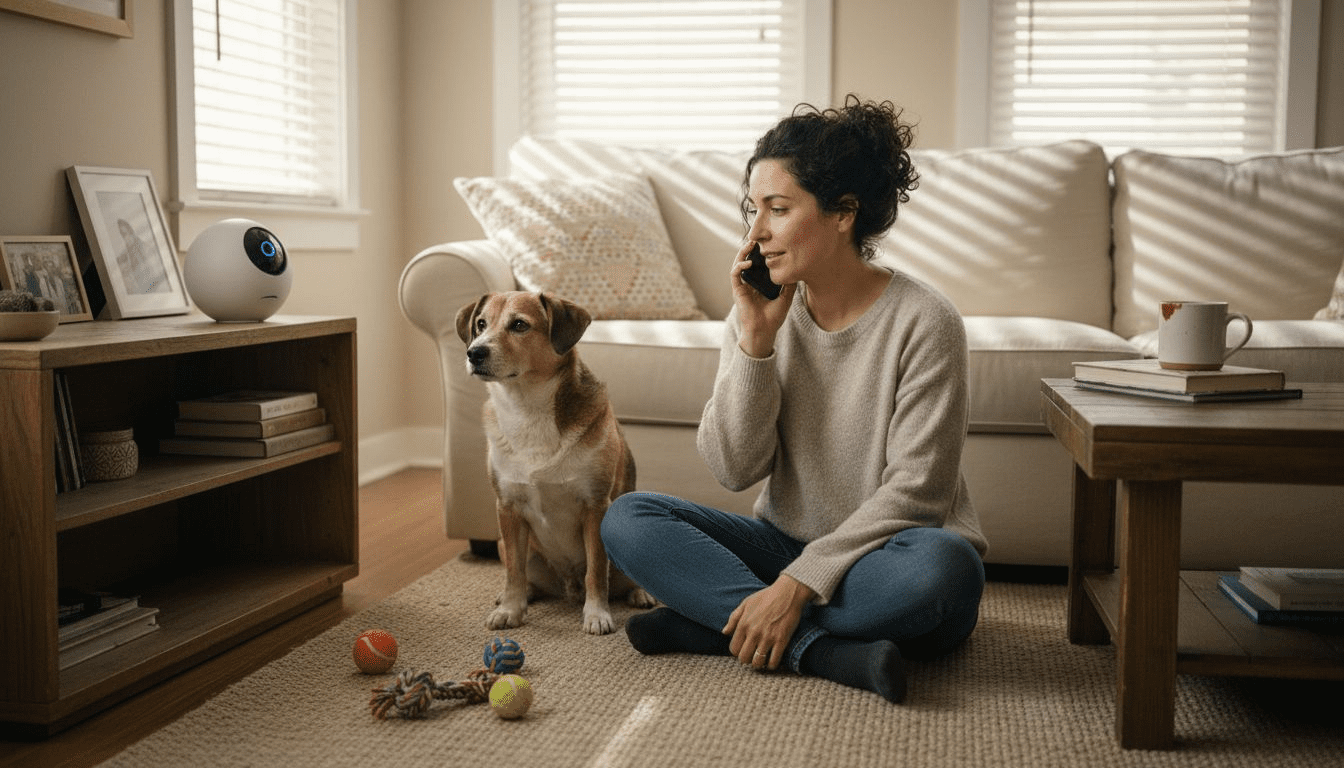
Leaving home for work or travel often means worrying about how your pet is holding up alone. For American pet owners who crave meaningful ways to stay connected, smart pet cameras with voice interaction offer a real solution. These devices are more than passive monitors—they use live audio features to let you comfort, train, and engage with your furry friend anytime, from anywhere. Discover how voice communication bridges the distance and eases separation anxiety, creating peace of mind for both you and your pet.
Table of Contents
- Defining Voice Interaction in Pet Cams
- How Two-Way Audio Technology Operates
- Types of Voice Communication Features Available
- Benefits of Voice Interaction for Pets and Owners
- Privacy Risks and Limitations to Consider
Key Takeaways
| Point | Details |
|---|---|
| Voice Interaction Enhances Bonding | Pet cams with two-way audio enable real-time communication, reducing separation anxiety for both pets and owners. |
| Technology Requirements Matter | High-quality microphones, low latency, and stable internet connections are crucial for effective voice interaction and pet responsiveness. |
| Privacy Considerations Are Important | Users should understand potential privacy risks associated with audio data and select devices with strong encryption and clear data policies. |
| Training and Monitoring Benefits | Voice interaction allows for immediate training corrections and monitoring of pet well-being, improving outcomes for both owners and pets. |
Defining Voice Interaction in Pet Cams
Voice interaction in pet cams is the ability to send audio messages to your pet from anywhere using your smartphone or computer. It’s a two-way communication feature that lets you hear your pet and talk to them in real-time, even when you’re across the country.
This technology transforms how you manage separation anxiety and maintain your connection with your furry friend. Instead of worrying silently, you can actively engage with your pet through sound.
What Voice Interaction Actually Does
Voice interaction goes beyond simple monitoring. It allows you to:
- Speak directly to your pet through the pet cam’s built-in speaker
- Hear your pet’s sounds, barks, or meows through your phone’s audio feed
- Use your voice to calm anxious pets during stressful situations
- Reinforce training commands when you’re not physically present
- Check in with your pet throughout your workday
The technology relies on human-animal communication principles, where your voice serves as an auditory signal that pets recognize and respond to. Dogs and cats associate your voice with safety, comfort, and attention—making remote communication surprisingly effective.
How It Works Technically
Modern pet cameras use microphones and speakers to transmit audio in both directions. Your voice travels from your phone through the internet to the camera’s speaker, where it plays in your pet’s environment. Simultaneously, the camera’s microphone picks up sounds and sends them back to your app.
This real-time exchange creates genuine two-way interaction. You’re not just leaving recorded messages—you’re having moments of actual connection.
Voice interaction transforms pet monitoring from passive observation into active engagement and comfort.
Why It Matters for Your Pet’s Wellbeing
Pets experience real stress when separated from their owners. The ability to hear your voice provides immediate reassurance. Your dog won’t feel completely abandoned during work hours, and your cat gets to hear familiar sounds that reduce anxiety.
This feature also supports training efforts. When your pet misbehaves while you’re away, you can address the behavior immediately through voice commands rather than correcting it hours later. Timing is everything in pet training.
Understanding how to use two-way audio with pets helps you maximize this benefit and create meaningful interactions despite physical distance.
The Difference From Other Audio Features
Not all pet cameras offer true voice interaction. Some only provide one-way audio (you can speak but not hear your pet). Others have limited microphone sensitivity or speaker quality that makes communication unclear.
Authentic voice interaction requires:
- High-quality microphones that pick up subtle sounds
- Clear speakers that pets can hear at various distances
- Low latency so audio transmits almost instantly
- Reliable app connectivity for consistent performance
These specifications matter. Cheap audio quality frustrates both you and your pet.
Pro tip: Test the microphone sensitivity before purchasing by asking the retailer or checking user reviews specifically mentioning whether pets respond to the voice feature and how clearly owners hear their pets.
How Two-Way Audio Technology Operates
Two-way audio in pet cams works like a telephone conversation between you and your pet’s environment. Your voice travels one direction while your pet’s sounds travel back simultaneously, creating real-time interaction instead of one-sided communication.
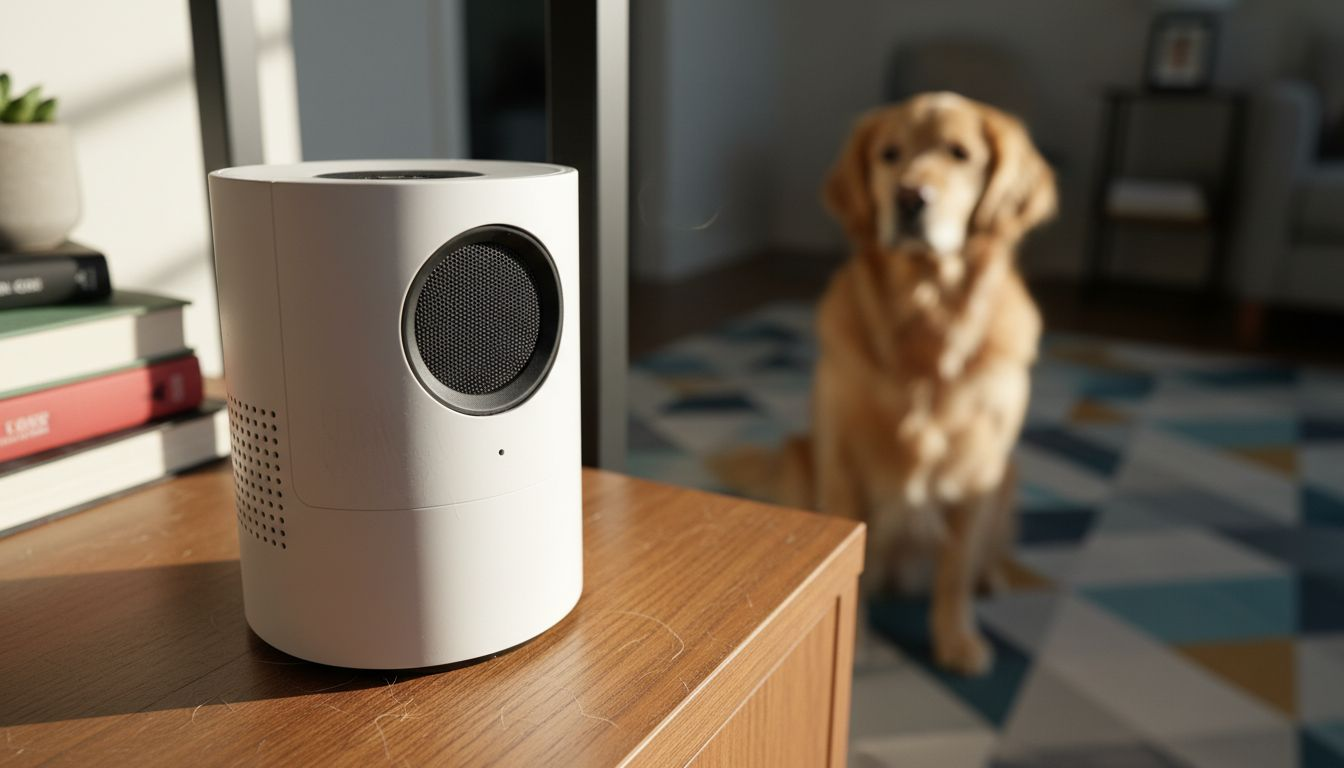
Understanding the mechanics helps you troubleshoot issues and get the most from your device. It’s not magic—it’s straightforward technology with a few moving parts working together.
The Basic System Architecture
Every pet camera with voice interaction contains four essential components working in coordination:
- Microphone – Captures sounds in your pet’s room and transmits them to your phone
- Speaker – Plays your voice so your pet can hear you clearly
- Internet connection – Carries audio data between camera and your app
- Audio processing – Filters noise and manages signal quality
These components form what’s called a round-trip communication system that enables continuous audio exchange. Your microphone and the camera’s speaker work together, while the camera’s microphone and your phone’s speaker handle the return path.
Full Duplex vs. Half Duplex
Most modern pet cameras use full duplex communication, meaning both directions transmit simultaneously. You can talk while hearing your pet in real-time, just like a normal phone call.
Some budget models use half duplex, which requires taking turns—you speak, then listen, then speak again. This creates awkward delays that feel unnatural.
Full duplex provides the better experience for genuine pet interaction.
How Audio Data Travels
When you speak into your phone, your voice converts to digital signals. These signals compress, travel through your home WiFi, then across the internet to the camera. The camera’s speaker converts them back to sound waves your pet can hear.
The return path works identically. Sound in your pet’s room becomes digital data that reaches your phone and becomes audio again.
Effective two-way audio requires stable internet connection and proper microphone placement—both critical for clear communication with your pet.
Network Requirements and Delays
Two-way audio depends on reliable bandwidth. Your internet must handle simultaneous upload and download without stuttering. Poor WiFi causes audio dropouts or lag, making conversations feel delayed and frustrating.
Bandwidth needs:
- Minimum: 1 Mbps upload and download
- Recommended: 3+ Mbps for crystal-clear audio
- Ideal: 5+ Mbps for buffer-free performance
Network latency matters too. Excessive delays disrupt the natural feel of communication. Protocol synchronization ensures minimal delay between when you speak and when your pet hears you.
Noise Cancellation and Audio Processing
Pet camera software filters background noise to improve clarity. Without this, you’d hear every ambient sound—traffic, HVAC systems, other pets. Advanced models prioritize human and pet vocalizations while suppressing environmental noise.
This processing happens in real-time on the device, requiring decent processor power. Cheaper cameras skimp on this feature, resulting in scratchy, difficult-to-understand audio.
Pro tip: Position your pet camera away from air vents, fans, and direct WiFi interference sources like microwaves to ensure clear audio transmission and minimize noise cancellation processing demands.
Types of Voice Communication Features Available
Pet cameras offer different voice interaction options depending on the model and price point. Not all voice features are created equal, and understanding the differences helps you choose the right camera for your specific needs.
Some features give you simple one-way communication, while others enable rich two-way interaction. Let’s break down what’s actually available.
Live Audio Streaming
Live audio streaming lets you hear your pet in real-time through your phone. The camera’s microphone picks up barks, meows, whines, and ambient sounds, sending them directly to your app.
This is passive listening—you hear what’s happening but can’t respond. It’s useful for monitoring your pet’s emotional state or detecting distress signals when you’re away.
Most pet cameras include this feature as a baseline. It requires minimal processing power and bandwidth compared to two-way communication.
Two-Way Voice Calling
Two-way voice calling is the premium feature. You speak into your phone, and your pet hears your voice through the camera’s speaker. Simultaneously, you hear them through your phone.
This creates genuine conversation-like interaction. You can comfort an anxious pet, issue training commands, or just chat with your furry friend during lunch breaks.
Two-way calling demands:
- Stable internet connection
- Higher bandwidth usage
- Better microphone and speaker hardware
- Noise cancellation processing
This feature separates quality pet cameras from basic models.
Pre-Recorded Message Playback
Some cameras let you record voice messages ahead of time and play them whenever needed. You might record “Good dog!” or your name, then trigger these messages remotely.
Pre-recorded messages help during training without requiring you to be actively engaged. They’re useful when you’re unavailable or want consistent audio cues for your pet.
However, pets recognize the difference between your live voice and recorded messages. This feature works best as a supplement to live interaction, not a replacement.
Bark Detection Alerts
Bark detection uses voice conversion technologies and natural language processing to identify when your dog barks and alert you immediately.
The camera’s software analyzes audio patterns and distinguishes barking from other sounds. When it detects barking, you receive a notification on your phone.
This is especially valuable for addressing excessive barking quickly or knowing when separation anxiety peaks. You can respond with voice commands immediately.
Voice Modulation and Enhancement
Advanced systems can modify your voice to sound more commanding or soothing. Some cameras adjust voice tone or pitch automatically based on context.
Voice modulation helps training efforts. A commanding tone might reinforce obedience, while a soothing voice calms anxiety.
The best voice communication feature combines live two-way audio with bark detection and noise cancellation for complete remote interaction.
Comparing Common Feature Combinations
Here’s what different price tiers typically offer:
Budget models:
- Live audio streaming only
- Basic microphone and speaker
- No bark detection
Mid-range models:
- Two-way voice calling
- Bark detection alerts
- Standard noise cancellation
Premium models:
- Full two-way calling with low latency
- Advanced bark detection
- Superior noise reduction
- Pre-recorded message playback
- Voice modulation options
Pro tip: Test the microphone sensitivity and speaker volume at the store or via video demo before purchasing—these determine whether your pet actually hears and responds to your voice commands.
Here’s a comparison of audio features found in pet cameras across different price points:
| Audio Feature | Basic Models | Mid-Range Models | Premium Models |
|---|---|---|---|
| Live Audio Streaming | Standard quality | Standard quality | Enhanced clarity |
| Two-Way Voice Communication | Rare or limited | Available | Full-duplex, low lag |
| Bark/Meow Detection | Not included | Included | Advanced analysis |
| Pre-Recorded Message Playback | Not included | Occasionally offered | Frequently available |
| Voice Modulation Options | Not available | Uncommon | Customizable effects |
| Noise Cancellation | Minimal or absent | Moderate | Superior filtering |
Benefits of Voice Interaction for Pets and Owners
Voice interaction through pet cameras creates a bridge between you and your pet, even when miles separate you. The benefits flow both directions—your pet experiences genuine comfort while you gain real peace of mind.
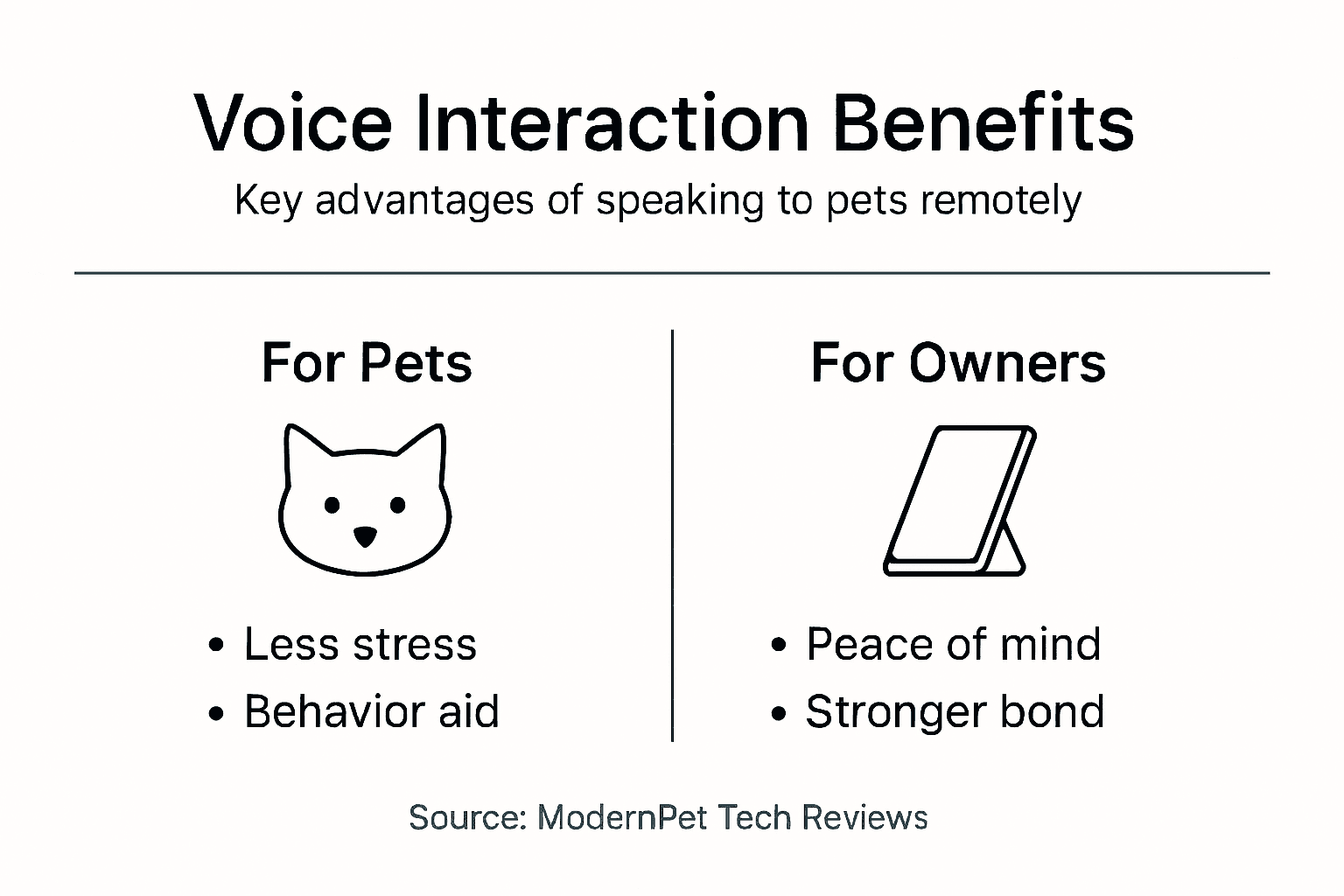
This isn’t just convenient technology. It fundamentally changes how you manage pet care during your workday and strengthens your relationship despite physical distance.
How Voice Interaction Reduces Pet Anxiety
Separation anxiety affects millions of American pets. When you leave, your dog or cat may develop destructive behaviors, excessive vocalization, or stress-related health issues. Your voice directly counteracts this stress.
When your pet hears you speak through the camera, their nervous system recognizes a familiar, trusted sound. This reduces pet stress and loneliness during absence, creating a calming effect that can last for hours.
Your presence, even through audio, signals safety. Pets don’t distinguish between hearing you in person versus through a speaker—they just know you’re there.
Maintaining Your Bond Remotely
Work travel and long shifts used to mean disconnection. Now you can chat with your pet during lunch, comfort them when they’re stressed, or simply maintain emotional contact throughout your day.
These moments strengthen bonding. Your pet learns that even when you leave, you haven’t abandoned them. You’re still accessible, still engaged in their life.
This consistency builds trust over months and years. Pets whose owners stay emotionally connected develop better behavior and fewer anxiety-related issues.
Benefits for Pet Owners
Your mental health matters too. Separation anxiety isn’t one-sided—many owners worry constantly about their pets. Voice interaction provides genuine reassurance.
You can:
- Check in with your pet whenever anxiety hits
- Hear your pet’s actual response to your voice
- Verify your pet is safe and comfortable
- Address behavioral issues in real-time
- Reduce guilt associated with working long hours
This peace of mind is worth far more than the camera’s cost.
Supporting Behavioral Training
Training requires timing and consistency. With responsive engagement that mimics natural social behaviors, you can correct unwanted behaviors immediately rather than hours later.
When your dog jumps on the furniture, you catch it happening and address it with voice commands. This immediate feedback accelerates learning far better than delayed corrections.
Voice commands work especially well for attention-seeking behaviors. Many dogs bark or destroy things simply because they want your attention. Responding with your voice often satisfies this need.
Monitoring Your Pet’s Wellbeing
Voice interaction isn’t just one-way. You listen too. Over time, you recognize your pet’s normal sounds and quickly notice when something’s wrong.
Changes in vocalization, unusual lethargy, or distress signals become obvious. You can call a veterinarian or rush home if needed.
This early warning system catches health issues before they become serious.
Voice interaction creates a continuous emotional connection that reduces anxiety for both pets and owners while supporting better training outcomes.
Pro tip: Start with short voice interactions during short absences, gradually increasing duration so your pet learns that hearing your voice means you’ll return, not that you’re abandoning them.
Privacy Risks and Limitations to Consider
Voice interaction in pet cams brings genuine benefits, but it also introduces real privacy concerns you need to understand. Your voice recordings, your pet’s sounds, and your home’s audio environment all get captured and transmitted over the internet.
Before purchasing a pet camera with voice features, know what risks you’re accepting and how to minimize them.
Unauthorized Access and Data Breaches
Voice data stored on cloud servers attracts bad actors. Hackers target pet camera companies specifically because they often have weaker security than major tech platforms. A breach exposes your voice recordings and potentially reveals when you’re home or away.
Privacy risks in voice interaction technologies include unauthorized access and potential data leakage. This threat is real and documented. Your audio recordings could be accessed by someone without your permission.
Pet camera manufacturers vary widely in security standards. Budget brands sometimes skimp on encryption, leaving data vulnerable during transmission and storage.
Limited User Control Over Data
Most pet camera apps don’t give you clear visibility into what happens with your voice data. Companies often retain recordings longer than necessary, share data with third parties, or use it to train artificial intelligence models.
You may not realize your pet’s barks and your voice are being analyzed by external companies. Insufficient user data control creates vulnerability to unauthorized voice recordings being accessed by third parties. You click “agree” during setup but rarely know what you’ve actually consented to.
Read privacy policies carefully. They’re dense, but they reveal whether your data gets shared, sold, or retained indefinitely.
Lack of Transparency About Data Usage
Many manufacturers don’t clearly explain how they use voice data. Are they training AI? Selling analytics? Sharing with advertisers? The answer often hides in legal fine print.
Common data practices to watch:
- Retention of all recordings indefinitely
- Sharing data with third-party analytics companies
- Using voice samples to improve recognition algorithms
- Accessing data for marketing purposes
- Selling aggregated data to other companies
You deserve clarity about what happens with your audio before you press record.
Technical Limitations and False Alarms
Voice interaction has practical limits. Microphone sensitivity varies—some cameras miss your commands because ambient noise drowns them out. Others trigger false alerts from similar sounds.
This creates frustration and erodes trust in the system. If your pet doesn’t respond because they can’t hear you clearly, voice interaction loses its value.
Network Dependency Issues
Voice interaction requires stable, fast internet. Weak WiFi causes audio lag, dropouts, or complete failure. You can’t comfort your anxious pet if the connection keeps disconnecting.
Home WiFi coverage isn’t guaranteed everywhere. A camera in your bedroom may work fine, but another in the living room struggles with signal strength.
Strong encryption and transparent privacy policies are non-negotiable for any pet camera that records your voice.
Distance and Responsiveness Limitations
Your pet’s response time depends on audio latency. High latency (delay between speaking and hearing) makes conversation feel awkward. Pets notice delays too—they may not recognize your voice if it comes too slowly.
International travel makes this worse. Connecting to cameras across continents introduces noticeable lag that breaks the interaction experience.
Pro tip: Before committing to a pet camera with voice interaction, verify the manufacturer uses end-to-end encryption, publishes their data retention policy clearly, and allows you to delete recordings on demand.
The following table summarizes common privacy risks and practical strategies to address them:
| Privacy Risk | Likely Scenario | How to Minimize Exposure |
|---|---|---|
| Unauthorized Access | Hackers breach cloud servers | Choose cameras with data encryption |
| Data Retention Uncertainty | Recordings stored indefinitely | Select products with clear policies |
| Third-Party Data Sharing | Voice data sold or used for analytics | Review and limit data permissions |
| Device Eavesdropping | Audio picked up unintentionally | Disable microphone when not needed |
| Poor User Controls | Unclear data deletion options | Prefer apps with easy data removal |
Stay Connected with Your Pet Through Advanced Voice Interaction Technology
Separation anxiety and missed moments of connection can create stress for pets and owners alike. This article highlights how voice interaction in pet cams solves these challenges by enabling real-time two-way communication. You can comfort, train, and engage your furry friend remotely using reliable audio technology with clear microphones, low latency, and noise cancellation. These capabilities address the frustration of not being able to hear or be heard by your pet during long days away from home.
Discover the best solutions that combine these essential features by exploring our curated reviews and comparisons of smart Pet Cameras.
Ready to enhance your remote pet care with trusted devices that reduce anxiety and keep your bond strong? Visit ModernPetTech now to access expert Guides & Comparisons and in-depth Reviews designed to help you make confident choices for your pet’s wellbeing.
Frequently Asked Questions
What is voice interaction in pet cams?
Voice interaction in pet cams allows you to send audio messages to your pet in real-time using your smartphone or computer, enabling two-way communication.
How does two-way audio technology work in pet cams?
Two-way audio technology works by using microphones and speakers to transmit audio in both directions, creating a conversation-like interaction between you and your pet.
What benefits does voice interaction provide for pet wellbeing?
Voice interaction can significantly reduce anxiety in pets by providing reassurance through familiar voices, supporting training efforts, and enhancing the emotional connection between pets and their owners.
What should I look for in a pet cam to ensure effective voice interaction?
When choosing a pet cam, look for high-quality microphones and speakers, low latency for real-time communication, and reliable network connectivity to ensure clear and effective voice interaction.
Recommended
- How to Use Two-Way Audio With Pets for Remote Interaction
- Two-Way Audio: Enhancing Pet Camera Interaction
- Pet Monitoring Workflow for Effective Remote Interaction
- Optimize Pet Camera Features for Smarter Pet Monitoring
- 掌握爬宠驯养技巧实现胡子龙互动亲和力
