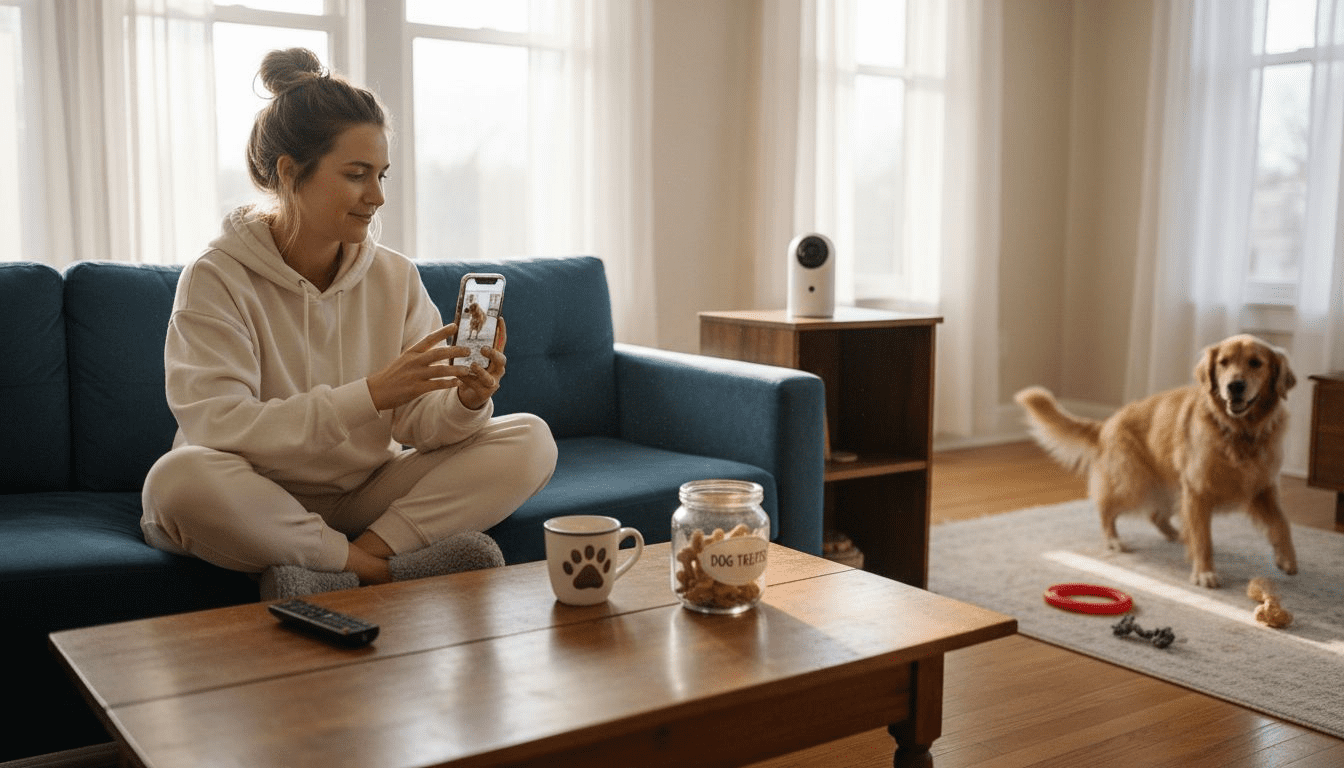
Leaving your furry companion home alone in the United States often brings a mix of worry and guilt, especially if separation anxiety is a real concern. As smart technology keeps advancing, pet cameras are giving American pet owners a way to stay emotionally close no matter where they are. With features like live video streaming, two-way audio, and treat dispensers, these devices offer much more than traditional security—delivering genuine interaction and helping both pets and owners feel connected. Stay tuned to discover which features matter most when choosing the best camera for your household.
Table of Contents
- What Is A Pet Camera And How It Works
- Types Of Pet Cameras And Key Features
- Reducing Pet Anxiety And Enhancing Security
- Comparing Pet Cameras To Alternatives
- Safety, Privacy Risks, And Buying Tips
Key Takeaways
| Point | Details |
|---|---|
| Purpose of Pet Cameras | Pet cameras enhance the emotional connection with pets and provide monitoring for their well-being while owners are away. |
| Core Features | Key features include HD video quality, two-way audio, and motion detection alerts, which facilitate real-time interaction and monitoring. |
| Reducing Anxiety | Pet cameras can significantly reduce separation anxiety in pets by allowing owners to communicate and reward them remotely. |
| Security Precautions | It’s essential to prioritize security features and best practices, such as strong passwords and data encryption, to protect privacy when using pet cameras. |
What Is a Pet Camera and How It Works
A pet camera is a Wi-Fi-connected device that lets you monitor and interact with your pets remotely through your smartphone, tablet, or computer. Unlike traditional security cameras focused solely on surveillance, pet cameras are designed specifically to strengthen the bond between you and your animals while they’re home alone.
These devices combine several technologies to create a seamless monitoring experience. At their core, pet cameras use live video streaming capabilities paired with two-way audio so you can both see and hear what’s happening in real-time. Most models connect to your home Wi-Fi network and send video feeds directly to an app on your phone, allowing you to check in on your pet anytime, anywhere.
Core Components
Pet cameras typically include these essential elements:
- Camera lens – captures clear, real-time video of your pet’s environment
- Built-in microphone and speaker – enables two-way communication so you can hear your pet and speak to them
- Wi-Fi connectivity – sends data between the camera and your mobile device
- Mobile app – the interface where you view video and receive alerts on your phone
- Cloud storage – records video for later review (optional on some models)
How the Technology Works
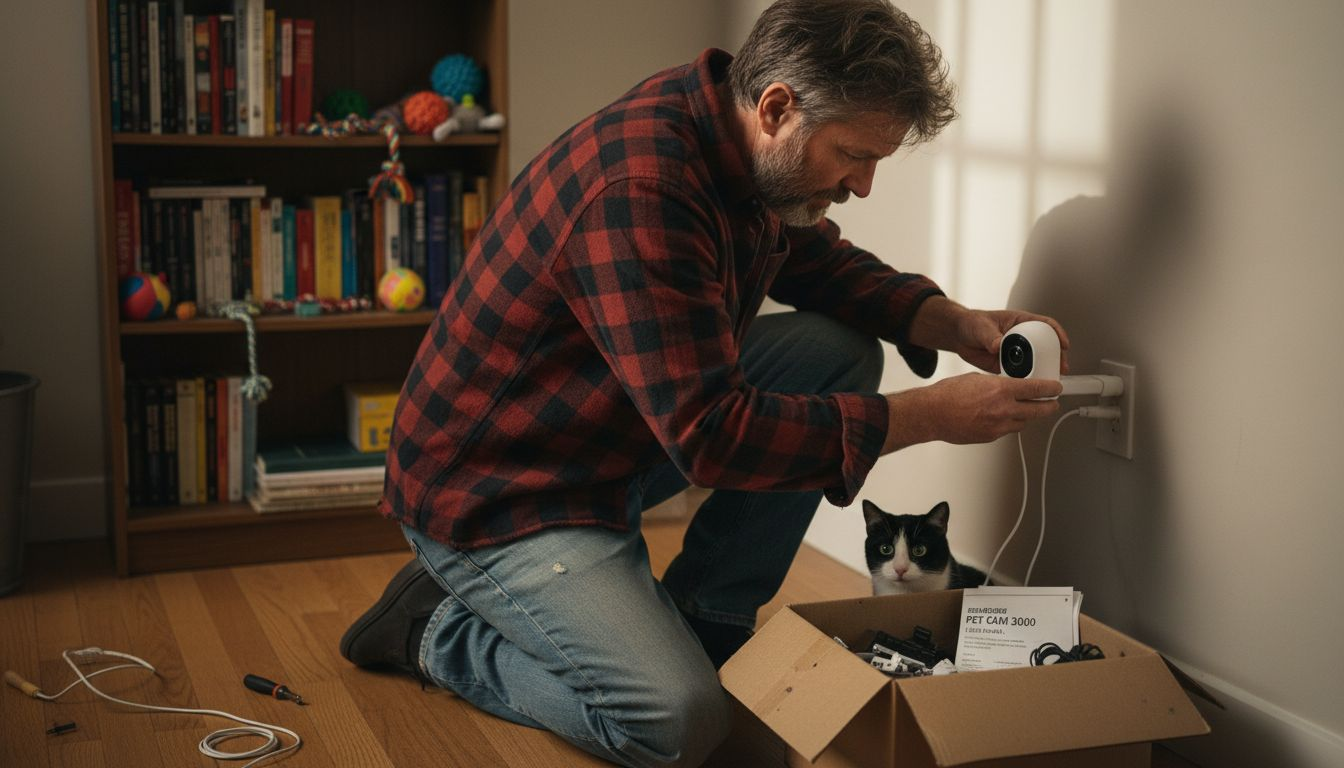
The process is straightforward. You mount the camera in a room where your pet spends time, connect it to your home Wi-Fi network, and download the companion app. The camera continuously records video and transmits it through your Wi-Fi to the cloud, which then streams to your phone or computer.
When motion is detected, the camera sends notification alerts to your device immediately. You can then open the app to see live video, listen through the camera’s microphone, and speak through its speaker to your pet. Some models even include treat-dispensing capabilities, allowing you to reward your pet remotely.
Why This Matters for Pet Owners
The connection runs deeper than just surveillance. Studies show that pets provide companionship that reduces stress and anxiety for their owners. When you’re separated from your pet during work or travel, a pet camera closes that emotional distance.
You can watch your dog’s reactions throughout the day, check on your cat’s behavior, and respond instantly if something seems wrong. For pets with separation anxiety, the ability to speak to them and dispense treats provides immediate comfort.
Pet cameras transform remote monitoring from surveillance into genuine connection, letting you stay emotionally present even when physically apart.
Pro tip: Position your camera at eye level with your pet to capture the most engaging view of their behavior and reactions when you talk to them.
Types of Pet Cameras and Key Features
Pet cameras come in various styles designed for different situations and pet behaviors. Understanding the different types helps you choose the right camera for your home and your pet’s specific needs.
Camera Types
Pet cameras range from simple stationary units to advanced interactive models. Here are the main categories:
- Stationary indoor cameras – mounted in fixed locations, ideal for monitoring a specific room or area
- Pan-and-tilt cameras – rotate horizontally and vertically so you can track your pet’s movement
- Wheeled or robotic cameras – move around autonomously on floors to follow your pet
- Outdoor cameras – weatherproof units for monitoring pets in yards or outdoor spaces
- Interactive cameras – include treat dispensers, laser toys, and two-way audio for active engagement
The pet technology market continues to expand with new form factors as manufacturers respond to owner demands for better engagement options.
Essential Features to Look For
Regardless of camera type, certain features consistently enhance your ability to monitor and connect with your pets. These core capabilities are trending upward because they genuinely improve the owner-pet experience.
Video and audio capabilities:
- HD video quality – clear, crisp footage that captures your pet’s details and expressions
- Night vision – infrared technology for monitoring pets in dim or dark rooms
- Two-way audio – microphone and speaker so you can hear and speak to your pet
- Wide field of view – captures more of the room without requiring pan-and-tilt
Interactive and alert features:
- Treat dispenser – reward your pet remotely during the day
- Motion and sound detection – alerts you immediately when activity occurs
- App connectivity – live streaming to your smartphone from anywhere
- Smart home compatibility – integrates with your existing smart devices
The combination of two-way audio and motion alerts transforms a pet camera from a passive monitoring tool into an active engagement device that reduces separation anxiety.
Many pet owners underestimate how much motion and sound alerts contribute to peace of mind. Instead of constantly checking your phone, you receive notifications when something matters—your dog barking, your cat knocking something over, or unusual activity.
Treat dispensers deserve special attention if your pet struggles with anxiety. Being able to dispense a treat while speaking calming words creates a powerful connection that eases stress during your absence.
Pro tip: Prioritize two-way audio and motion detection over fancy extras like laser toys—these core features deliver the most meaningful impact on reducing separation anxiety and staying connected.
Reducing Pet Anxiety and Enhancing Security
Pet anxiety during separation is a genuine concern for millions of pet owners. When you work long hours or travel, your pet experiences stress from being alone. Pet cameras address this directly by maintaining a connection that calms your pet and gives you peace of mind.
How Pet Cameras Reduce Separation Anxiety
The science is clear: interacting with pets reduces anxiety for both humans and animals. When you’re separated from your pet, a camera bridges that gap by enabling real-time communication.
Two-way audio is the key feature here. When your dog hears your voice through the camera speaker, their nervous system responds positively. They recognize that you’re still present, just remotely. This calms them during the most stressful hours of the day.
Treat dispensers amplify this effect. Combine your voice with an immediate reward, and your pet learns that your absence doesn’t mean abandonment. Instead, it means connection and comfort are just a camera interaction away.
Security Beyond Peace of Mind
Pet cameras serve double duty as safety monitors. Beyond emotional connection, they detect hazards and unusual behavior before problems escalate.
These monitoring capabilities include:
- Emergency detection – spot accidents, injuries, or unusual behavior immediately
- Environmental monitoring – notice if temperatures become dangerous or items fall hazardously
- Activity tracking – recognize changes in behavior that signal illness or distress
- Theft prevention – record footage if someone attempts to enter your home
Pet cameras enhance safety during emergencies by allowing you to monitor your pet’s wellbeing in real-time. If a fire alarm sounds while you’re away, you can immediately see if your pet is in danger and contact emergency services with current information.
The combination of emotional connection through two-way communication and active safety monitoring makes pet cameras essential for multi-dimensional pet protection.
Many pet owners don’t realize how much behavioral information a camera provides. You spot that your cat has been vomiting, that your dog hasn’t eaten, or that an injury has occurred. Early detection means faster intervention and better outcomes.
Pro tip: Set up your camera in the area where your pet spends most time during your absence, position it to capture both their resting area and any potential hazard zones like stairs or outdoor access points.
Comparing Pet Cameras to Alternatives
When deciding how to monitor and care for your pet remotely, you have several options. Each approach serves different purposes, and understanding how pet cameras compare to alternatives helps you make the right choice for your situation.
Pet Cameras vs. Pet Sitters
Hiring a pet sitter provides human interaction and hands-on care that cameras cannot replicate. However, pet cameras offer distinct advantages that complement or replace traditional sitters depending on your needs.
Pet sitters excel at:
- Physical tasks like feeding, medication, and waste cleanup
- Walking and exercise for dogs
- One-on-one companionship during their visit
- Handling emergencies that require immediate physical intervention
Pet cameras deliver benefits sitters cannot:
- Continuous monitoring – 24/7 observation instead of scheduled visits
- Instant interaction – speak to your pet anytime, not just during visit windows
- Cost efficiency – significantly cheaper than daily sitter visits
- Real-time alerts – immediate notification of problems
Pet cameras provide continuous remote monitoring alongside convenience and interactivity that traditional sitters cannot match. Many pet owners use both: a sitter for essential physical care and a camera for daily connection and monitoring.
Pet Cameras vs. Microchips and Trackers
Microchips and GPS trackers solve a completely different problem. These devices help reunite you with a lost pet, but they don’t provide real-time monitoring or interaction.
Microchips:
- Permanent identification implanted under the skin
- Help shelters and vets identify lost pets
- Provide no real-time location or behavior information
- Only useful after a pet goes missing
GPS Trackers:
- Real-time location tracking via collar attachment
- Useful for finding escaped pets
- Don’t show what your pet is doing, only where they are
- Battery dependent and require ongoing subscriptions
Microchips and trackers serve different purposes than pet cameras because they focus on location and identification, not communication or observation. Pet cameras address the actual problem of separation anxiety by enabling two-way interaction throughout the day.
Pet cameras fill a unique gap that no other pet technology addresses: real-time emotional connection and behavioral monitoring when you’re apart.
The best approach often combines all three. Microchip your pet for safety, use a tracker if your pet tends to escape, and install a camera for daily connection and peace of mind. Each serves its own critical purpose.
Here’s how common pet monitoring solutions differ by their main benefits and limitations:
| Solution Type | Main Benefit | Limitation | Ideal Use Case |
|---|---|---|---|
| Pet Camera | Real-time interaction | No physical care | Daily check-ins and engagement |
| Pet Sitter | In-person care and feeding | Limited visit duration | Medical needs or special tasks |
| GPS Tracker | Tracks location if escaped | No video or interaction | Outdoor or escape-prone pets |
| Microchip | Permanent identification | No real-time data | Recovery after pet is lost |
Pro tip: Use pet cameras as your primary tool for separation anxiety and daily monitoring, then add other technologies only if your pet’s specific behavior patterns require additional safeguards.
Safety, Privacy Risks, and Buying Tips
Pet cameras connect to the internet and transmit video and audio data, creating potential security vulnerabilities. Understanding these risks and taking preventative steps protects both your privacy and your pet’s safety.
Privacy and Security Risks
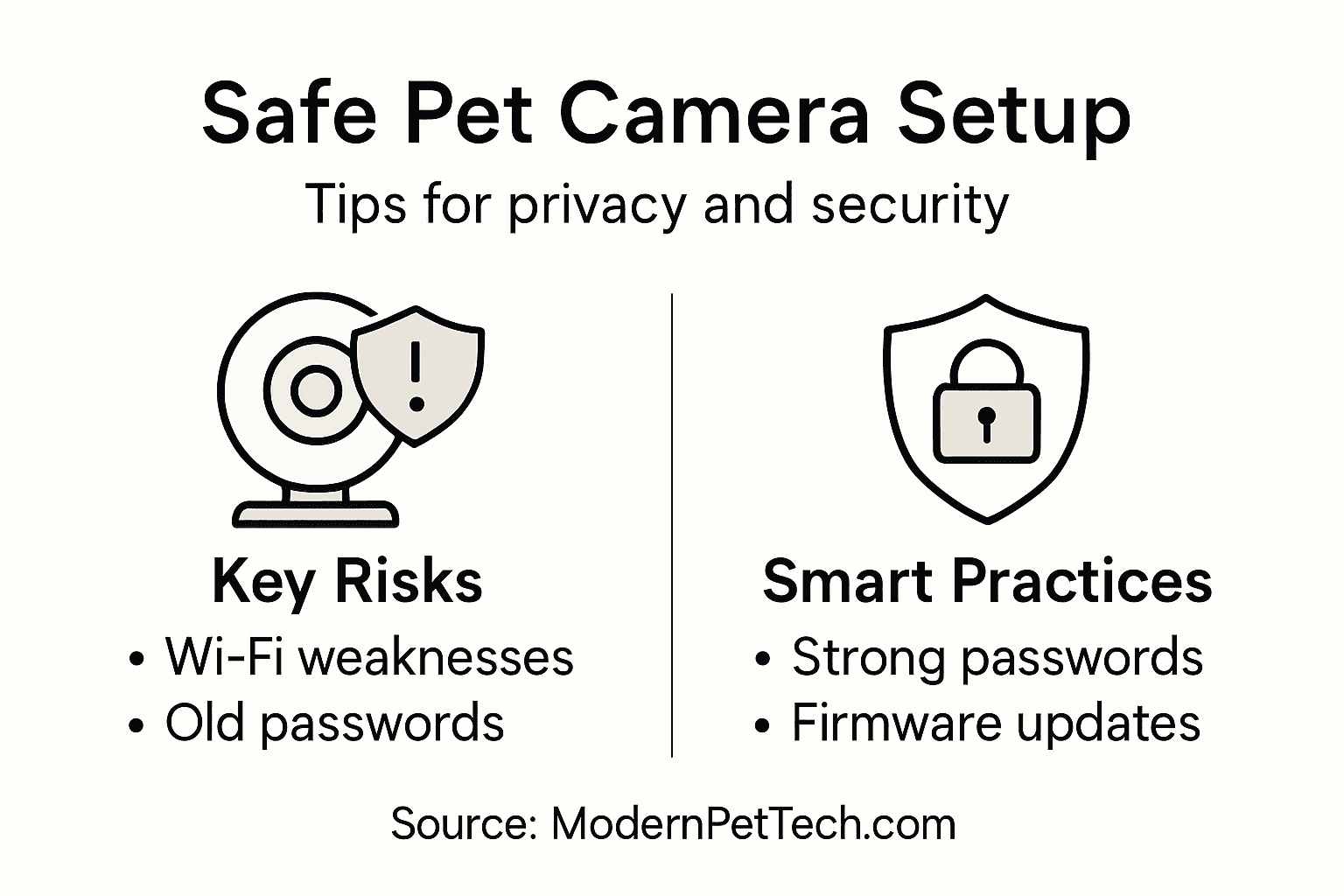
When you purchase a pet camera, you’re inviting a connected device into your home. Hackers can potentially access video feeds, audio recordings, and footage stored in the cloud if the device lacks proper security measures.
Common risks include:
- Unauthorized video access – hackers accessing live feeds or recorded footage
- Data interception – unencrypted data transmitted over your Wi-Fi network
- Weak authentication – easily guessed passwords allowing account takeover
- Outdated firmware – unpatched security vulnerabilities in device software
- Privacy policy violations – manufacturers selling or misusing your data
Privacy concerns arise with smart pet cameras because they connect to the internet and transmit sensitive video and audio. This creates a responsibility on your end to choose devices and practices that minimize exposure.
Essential Security Practices
Taking basic security steps eliminates most common vulnerabilities. These practices protect your footage and your home from unauthorized access.
Immediate actions:
- Use a strong, unique password for your camera app—never reuse passwords from other accounts
- Enable two-factor authentication if the manufacturer offers it
- Secure your home Wi-Fi network with a strong password and modern encryption
- Update device firmware as soon as updates become available
- Check privacy settings and disable data sharing if the option exists
Securing home Wi-Fi networks and using strong passwords are critical steps that prevent unauthorized camera access. Regular firmware updates patch security vulnerabilities before hackers exploit them.
Buying Tips for Tech-Savvy Owners
When evaluating pet cameras, prioritize security features alongside functionality. Not all cameras offer the same level of protection.
Key buying considerations:
- Data encryption – verify the manufacturer encrypts video in transit and at rest
- Regular software updates – choose manufacturers with a track record of timely updates
- Transparent privacy policy – read exactly how the company handles and stores your data
- Local storage options – devices offering local backup reduce cloud dependency
- Reputable manufacturer – established companies invest more in security than unknown brands
Security is not a feature you can add later—it’s built into the device at manufacture. Choose wisely from the start.
Manytech-savvy owners overlook privacy policies in favor of features. Don’t make this mistake. A camera with great night vision but sketchy data handling practices creates more problems than it solves.
Below is a quick reference to help you assess pet camera security before buying:
| Security Focus | Why It Matters | What To Check |
|---|---|---|
| Data Encryption | Protects cloud/app footage | Does the device use encryption? |
| Regular Updates | Fixes vulnerabilities often | Manufacturer’s update history |
| Privacy Policy | Clarifies data handling | Transparent, accessible policy |
| Local Storage Option | Reduces hack risk | Presence of SD card slot |
Pro tip: Before purchasing, search the manufacturer’s name plus “security breach” or “privacy complaint” to see if they’ve had documented issues, then review their specific privacy policy to understand exactly how your footage is stored and used.
Stay Connected and Confident with the Best Pet Cameras
Separation from your beloved pet can create anxiety for both of you. This article highlights how pet cameras offer more than just surveillance. They provide real-time interaction through two-way audio, motion alerts, and treat dispensing to strengthen your bond and calm your pet when you are apart. If you want to explore devices that combine these crucial features with superior video quality and reliable smart alerts, Pet Cameras – ModernPetTech: Treat-Dispensing Pet Camera Reviews is your go-to resource.
Discover detailed Reviews and in-depth Guides & Comparisons at ModernPetTech.com. Now is the perfect time to choose the right technology to reduce separation anxiety, enhance your pet’s safety, and enjoy peace of mind. Visit modernpettech.com and take the next step toward a happier, healthier relationship with your pet today.
Frequently Asked Questions
What is a pet camera and how does it work?
A pet camera is a Wi-Fi-connected device that allows you to monitor and interact with your pets remotely via a smartphone, tablet, or computer. It features live video streaming and two-way audio, enabling real-time communication and monitoring of your pet’s activities while you’re away.
How can a pet camera help reduce separation anxiety in pets?
Pet cameras reduce separation anxiety by allowing owners to connect with their pets through two-way audio and even treat dispensing. Hearing your voice through the camera can provide comfort to your pet, reinforcing the bond between you and reducing feelings of loneliness during your absence.
What features should I look for in a pet camera?
When choosing a pet camera, consider video quality (HD resolution), two-way audio, night vision, motion detection alerts, and treat dispensing capabilities. A wide field of view and mobile app connectivity are also essential for monitoring your pet effectively.
How do pet cameras compare to pet sitters for monitoring pets?
While pet sitters provide hands-on care and companionship, pet cameras offer continuous monitoring and real-time interactions without the costs associated with regular visits. They allow you to check on your pet anytime, making them a valuable tool for reducing separation anxiety and maintaining a connection when you are away.
Recommended
- Benefits of Pet Cameras: Safer, Happier Pets at Home
- Pet Camera Setup Explained: Boosting Safety and Connection
- Pet Camera Integration: Reducing Separation Anxiety
- 7 Key Pet Camera Integration Benefits for Pet Owners
- Veiledning for eldre hunder: Slik gir du optimal omsorg — Dr-Clauder Norge

2 thoughts on “Pet Cameras: Improving Connection With Your Pets”