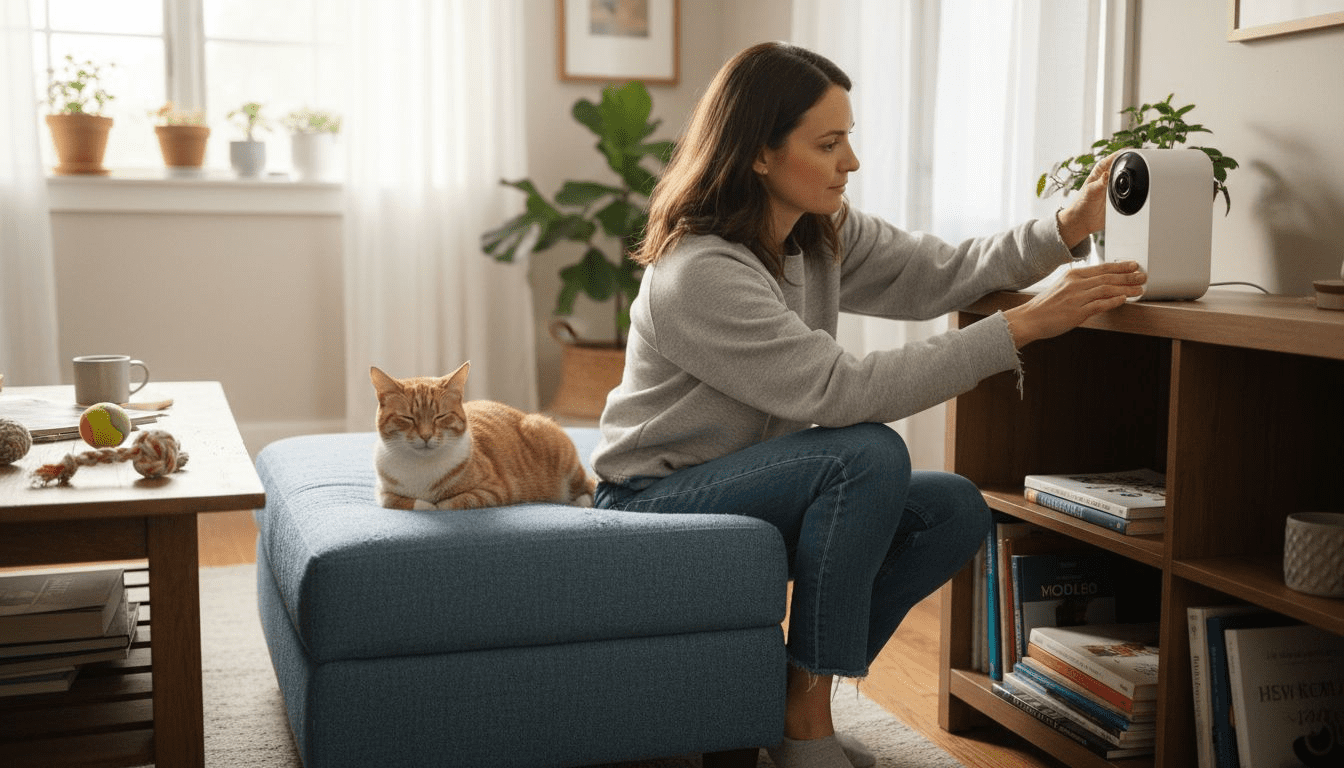
Nearly half of American pet owners worry about their pets’ well-being while they work away from home. The growing need for smart pet cameras is reshaping daily routines for tech-savvy dog and cat lovers who want to ease separation anxiety and boost safety. From advanced interaction features to live alerts, smarter devices offer more control and comfort when you can’t be there in person.
Table of Contents
- 1. Choose The Right Smart Pet Camera For Your Needs
- 2. Set Up Device Placement For Optimal Coverage
- 3. Utilize Two-Way Communication To Soothe Pets
- 4. Leverage Smart Alerts For Timely Notifications
- 5. Ensure Strong Wi-Fi For Reliable Connectivity
- 6. Engage Pets With Treat Dispensing Features
- 7. Protect Privacy And Secure Your Monitoring System
Quick Summary
| Takeaway | Explanation |
|---|---|
| 1. Choose High-Quality Cameras | Opt for smart pet cameras with HD video, wide angles, and essential features like night vision for effective monitoring. |
| 2. Strategically Place Cameras | Position devices in key pet areas at eye level to maximize visibility and minimize blind spots for optimal monitoring. |
| 3. Use Two-Way Communication | Engage with your pet using soft, clear speech and consistent phrases to reduce anxiety and maintain connection during separations. |
| 4. Set Up Smart Alerts | Configure alerts for movement and sounds to stay informed about your pet’s activities and any potential issues in real time. |
| 5. Ensure Reliable Wi-Fi | Maintain strong internet connectivity by placing your router centrally and checking its performance regularly for uninterrupted monitoring. |
1. Choose the Right Smart Pet Camera for Your Needs
Selecting the perfect smart pet camera requires thoughtful consideration beyond basic video monitoring. Technology has transformed how we care for our pets remotely, enabling unprecedented connection and safety monitoring.
Understanding your specific needs is crucial when exploring pet monitoring solutions. Stanford researchers emphasize selecting technologies that provide function beyond basic observation, which means looking for cameras with advanced interaction capabilities.
When evaluating smart pet cameras, consider these critical factors:
Key Selection Criteria:
- Video Quality: High definition resolution matters for clear monitoring
- Field of View: Wide angles ensure comprehensive room coverage
- Night Vision: Essential for tracking pet activities in low light conditions
- Two Way Audio: Allows direct communication with your pet
- Motion Detection: Provides instant alerts about pet movements
The Ohio State University Indoor Pet Initiative recommends assessing your specific home environment and pet behavior when choosing monitoring technology. Some cameras work better for active dogs, while others suit more sedentary cats.
Technology integration is another important consideration. Look for cameras compatible with your existing smart home ecosystem, enabling seamless monitoring and control through smartphone apps or voice assistants.
Pro tip: Before purchasing, check the camera’s mobile app reviews and compatibility with your specific smartphone model to ensure smooth setup and performance.
2. Set Up Device Placement for Optimal Coverage
Strategic camera placement can transform your pet monitoring experience from basic observation to comprehensive care. Understanding how and where to position your smart pet camera determines the quality of insights you will gain about your pet’s daily activities.
The Ohio State University’s pet initiative emphasizes the critical importance of device placement for effective pet monitoring, recommending a thoughtful approach to camera positioning that maximizes visibility and minimizes blind spots.
Strategic Placement Guidelines:
- Room Selection: Focus on areas where pets spend most time
- Height Positioning: Mount cameras at eye level for best perspective
- Avoid Direct Sunlight: Prevent glare and image washout
- Clear Line of Sight: Ensure no furniture obstructs camera view
Consider your home’s unique layout when planning camera placement. Large open spaces might require multiple devices to provide comprehensive coverage. Observe your pet’s typical movement patterns and identify key zones like sleeping areas, play spaces, and frequently visited locations.
Technical considerations matter as much as physical placement. Ensure your camera has strong wireless signal strength and is positioned near power outlets or has reliable battery backup. Some smart cameras offer wide angle lenses that can reduce the number of devices needed.
Pro tip: Conduct a test recording during different times of day to verify your camera captures the most important areas and adjust placement accordingly.
3. Utilize Two-Way Communication to Soothe Pets
Two-way communication technology transforms pet monitoring from passive observation to active interaction. These innovative features allow pet owners to connect with their furry companions remotely, providing comfort and reducing separation anxiety.
CDC guidelines highlight the significant calming effects of interactive communication during pet separation, emphasizing how technology can help maintain emotional connections between pets and owners.
Key Two-Way Communication Strategies:
- Speak Softly and Clearly: Use a calm reassuring tone
- Brief Interactions: Short check-ins prevent overstimulation
- Consistent Vocal Patterns: Use familiar words and phrases
- Monitor Pet’s Response: Watch for signs of comfort or stress
Modern pet cameras offer advanced audio features that go beyond simple monitoring. Some devices allow you to not just hear your pet but also dispense treats, play sounds, or even rotate camera angles to track their movements.
Psychological research suggests that effective two-way communication principles can significantly reduce pet anxiety during owner absence. This technology bridges physical distance, providing reassurance and maintaining the emotional bond.
Pro tip: Practice using your two-way communication device during short absences to help your pet gradually become comfortable with the technology and your remote interactions.
4. Leverage Smart Alerts for Timely Notifications
Smart alerts represent a revolutionary approach to pet monitoring, transforming how owners stay connected with their pets during separation. These intelligent notifications provide real-time insights into your pet’s activities and potential safety concerns.
Research from MIT demonstrates how smart sensors can enable sophisticated wireless communication for timely interventions, a principle directly applicable to advanced pet monitoring technologies.
Smart Alert Configuration Options:
- Movement Detection: Alerts for unusual pet activity
- Sound Monitoring: Notifications for excessive barking or distress sounds
- Location Tracking: Alerts if pet enters restricted areas
- Health Indicators: Notifications about potential unusual behaviors
AI-driven monitoring systems utilize machine learning algorithms to improve alert accuracy and responsiveness, ensuring pet owners receive meaningful and precise information about their animal companions.
Configuring smart alerts requires understanding your specific pet’s behavior and home environment. Some advanced systems learn and adapt to your pet’s routine, providing increasingly nuanced and personalized notifications over time.
Pro tip: Test and calibrate your device’s alert sensitivity to prevent notification fatigue while maintaining meaningful monitoring.
5. Ensure Strong Wi-Fi for Reliable Connectivity
Reliable Wi-Fi connectivity is the backbone of effective pet monitoring technology. Without a robust network, smart pet cameras become frustratingly unreliable, potentially leaving you disconnected from your furry companion when you need monitoring most.
Stanford researchers have highlighted the critical role of stable Wi-Fi infrastructure in supporting continuous device performance, emphasizing how network quality directly impacts monitoring effectiveness.
Wi-Fi Performance Considerations:
- Router Placement: Position router centrally in home
- Bandwidth Requirements: Ensure minimum 25 Mbps upload speed
- Frequency Band: Use 5 GHz for faster, more stable connections
- Signal Strength: Minimize physical obstructions between router and devices
Infrastructure upgrades demonstrated by institutions like the Southwestern Indian Polytechnic Institute underscore the importance of strategic network design, a principle equally applicable to home pet monitoring setups.
Most modern pet monitoring systems require consistent high speed internet to stream video, transmit audio, and send real time alerts. Consider investing in a mesh network system if your home has multiple dead zones or challenging architectural layouts.
Pro tip: Perform a monthly internet speed test and reboot your router to maintain optimal performance for your pet monitoring devices.
6. Engage Pets with Treat Dispensing Features
Treat dispensing features transform pet monitoring from passive observation to active interaction, providing a dynamic way to connect with and support your pet during separation. These innovative technologies offer more than just remote feeding.
UC Davis Veterinary Medicine emphasizes the importance of strategic treat usage in pet training and behavior management, highlighting how smart devices can support positive reinforcement techniques.
Treat Dispensing Interaction Strategies:
- Reward Good Behavior: Reinforce calm or quiet behaviors
- Mental Stimulation: Challenge pets with treat puzzles
- Training Support: Use treats to encourage desired actions
- Anxiety Reduction: Provide comfort during alone time
The Ohio State University Indoor Pet Initiative recommends interactive devices as critical components of environmental enrichment, emphasizing how treat dispensing features can significantly improve pet welfare.
Modern smart cameras allow precise treat portion control, enabling owners to manage nutritional intake while providing engaging remote interactions. Some advanced systems even learn your pet’s preferences and schedule treats accordingly.
Pro tip: Calibrate treat sizes carefully and integrate dispensing with consistent training commands to maximize behavioral benefits.
7. Protect Privacy and Secure Your Monitoring System
Smart pet monitoring technologies offer incredible convenience, but they also introduce potential privacy risks that require careful management. Understanding and implementing robust security measures is crucial to protecting both your personal information and your pet’s digital safety.
NYU Tandon research reveals significant privacy vulnerabilities in smart home devices, emphasizing the critical need for proactive security strategies in pet monitoring systems.
Essential Privacy Protection Steps:
- Strong Password Creation: Use complex, unique passwords
- Two Factor Authentication: Enable additional login security
- Regular Firmware Updates: Install manufacturer security patches
- Network Segmentation: Use separate network for smart devices
- Review Data Sharing Settings: Limit information distribution
Harvard Online courses highlight the importance of understanding data protection best practices, particularly in technologies that capture personal home environments.
Additionally, review the manufacturer’s privacy policy carefully. Some devices collect more data than necessary, tracking not just pet activities but potentially recording ambient sounds or movements within your home.
Pro tip: Periodically audit your device’s connected accounts and revoke unnecessary permissions to minimize potential security risks.
Below is a comprehensive table summarizing the key points and recommendations discussed throughout the article on choosing, using, and benefiting from smart pet cameras.
Take Your Pet Monitoring to the Next Level with Expert Insights and Top Tech
If you want to master the best practices for keeping your pet safe and happy when you are away, understanding the right smart pet camera features is key. From setting up two-way communication to leveraging treat dispensing and smart alerts, every detail matters for reducing separation anxiety and ensuring your pet feels comforted.
Explore the latest in pet monitoring technology with Pet Cameras – ModernPetTech to find devices offering high-quality video, night vision, and real-time alerts tailored to your pet’s unique needs. For guidance on choosing the perfect product and comparing top brands like Furbo and Petcube, visit our detailed Guides & Comparisons – ModernPetTech. Don’t wait to enhance your remote interactions and home security through smart solutions available now at modernpettech.com. Start making every moment count with your pet today.
Frequently Asked Questions
How do I choose the right smart pet camera for my home?
Choosing the right smart pet camera involves assessing your specific needs. Consider factors like video quality, field of view, and features such as night vision and two-way audio to ensure optimal monitoring. Prioritize your pet’s behavior and environment to find the best match.
What’s the best way to place my pet camera for maximum coverage?
To achieve maximum coverage, place your pet camera in a strategic location where your pet spends the most time. Mount it at eye level and ensure there are no obstructions, avoiding direct sunlight to prevent glare. Test different placements for optimal angles and visibility.
How can I effectively use two-way communication with my pet?
Use two-way communication features by speaking softly and clearly to your pet during brief check-ins. Familiarize them with your voice and use consistent phrases to provide comfort. Monitor their reactions to adjust your interaction style and build their confidence with the technology.
What types of smart alerts should I set up for my pet monitoring system?
Set up alerts for movement detection, excessive barking, and location changes to stay informed about your pet’s activities. Customize notifications based on your pet’s routine to receive tailored insights. Regularly review these alerts for effectiveness and adjust settings as necessary.
How can I ensure my pet monitoring setup has reliable Wi-Fi?
Ensure reliable Wi-Fi by positioning your router centrally in your home and minimizing obstructions for strong signals. Consider upgrading to a mesh network system if you experience connectivity issues in certain areas. Regularly test your internet speed to maintain optimal performance for your pet monitoring devices.
What steps can I take to protect my pet monitoring system’s privacy?
Protect your monitoring system’s privacy by creating strong, unique passwords and enabling two-factor authentication. Regularly update your device firmware and review data-sharing settings to limit unnecessary information distribution. Conduct audits of connected accounts periodically to enhance security.
Recommended
- Why Use Pet Monitoring – Enhancing Pet Wellbeing Remotely
- 7 Examples of Pet Monitoring Devices for Engaged Pets
- Pet Security Camera Installation Guide for Safe Monitoring
- Pet Camera Setup Explained: Boosting Safety and Connection
- Dog Alert Device Usage: Practical Guide for Owners and Handlers 2025

7 thoughts on “7 Pet Monitoring Best Practices for Tech-Savvy Owners”