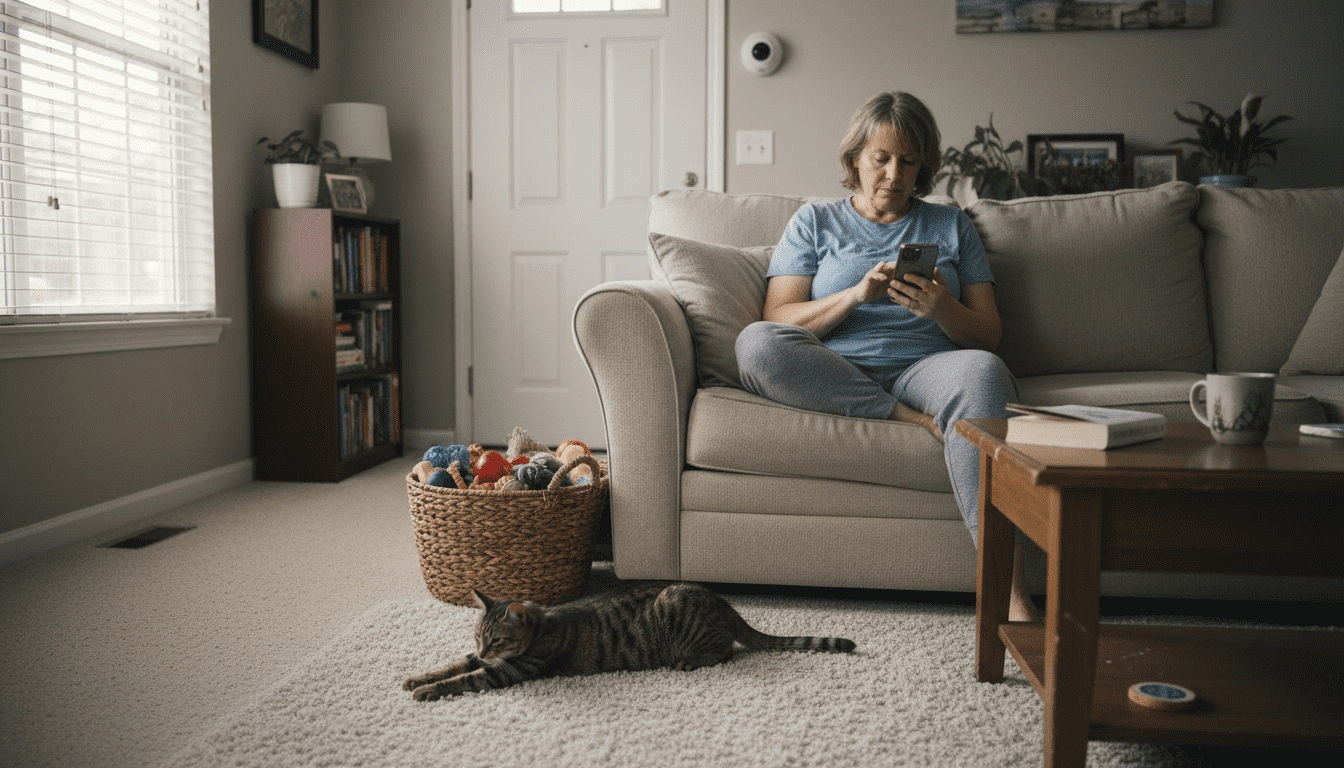
Nearly half of American homes now use smart cameras to safeguard both their families and their pets. For tech-savvy pet owners, staying connected to your furry companions while away brings real comfort and peace of mind. With modern security cameras offering features like motion detection, two-way audio, and real-time video, you can easily monitor your pet’s safety and behavior while making sure your home stays secure.
Table of Contents
- Defining Security Cameras In Pet-Friendly Homes
- Types Of Home Cameras And Key Differences
- Smart Features For Pet Monitoring And Safety
- Legal Considerations For Camera Use At Home
- Balancing Security, Privacy, And Pet Wellbeing
Key Takeaways
| Point | Details |
|---|---|
| Importance of Strategic Placement | Position cameras in common areas to avoid intruding on private spaces and ensure effective monitoring of pets. |
| Smart Features Enhance Safety | Look for cameras with AI capabilities and two-way audio to improve communication and monitoring for pet owners. |
| Understanding Legal Boundaries | Familiarize yourself with privacy laws regarding camera placement to respect individual rights and avoid legal issues. |
| Balancing Security and Comfort | Create a pet monitoring system that maintains trust by ensuring transparency and minimizing constant surveillance. |
Defining Security Cameras in Pet-Friendly Homes
Home security cameras in pet-friendly environments represent more than simple surveillance tools. They are sophisticated monitoring systems designed to provide comprehensive protection and peace of mind for pet owners. Modern security cameras serve dual purposes: safeguarding the home against potential intrusions while simultaneously offering real-time insights into pet behavior and wellness.
The fundamental role of these cameras goes beyond traditional security measures. They enable pet owners to monitor legal privacy boundaries while maintaining a watchful eye on their furry companions. Strategic camera placement becomes critical, ensuring comprehensive home coverage without compromising personal privacy zones such as bedrooms or bathrooms. This careful positioning allows owners to track pet activities, detect potential hazards, and ensure their animals remain safe during unattended periods.
Security cameras in pet-friendly homes typically offer several key monitoring capabilities. These include motion detection, two-way audio communication, night vision technology, and remote streaming capabilities. By integrating smart features, these devices transform from passive recording tools into interactive pet care and home protection systems. Owners can receive instant alerts about unusual activities, communicate with pets remotely, and even dispense treats or provide comfort during extended absences.
Pro tip: Position cameras at strategic angles covering entry points and primary pet activity areas to maximize both security and pet monitoring effectiveness.
Types of Home Cameras and Key Differences
Home security cameras have evolved significantly, offering pet owners a diverse range of monitoring solutions tailored to specific needs. Various camera types address different security requirements for homes with pets, each providing unique features and benefits. Understanding these variations helps pet owners make informed decisions about protecting their homes and furry companions.
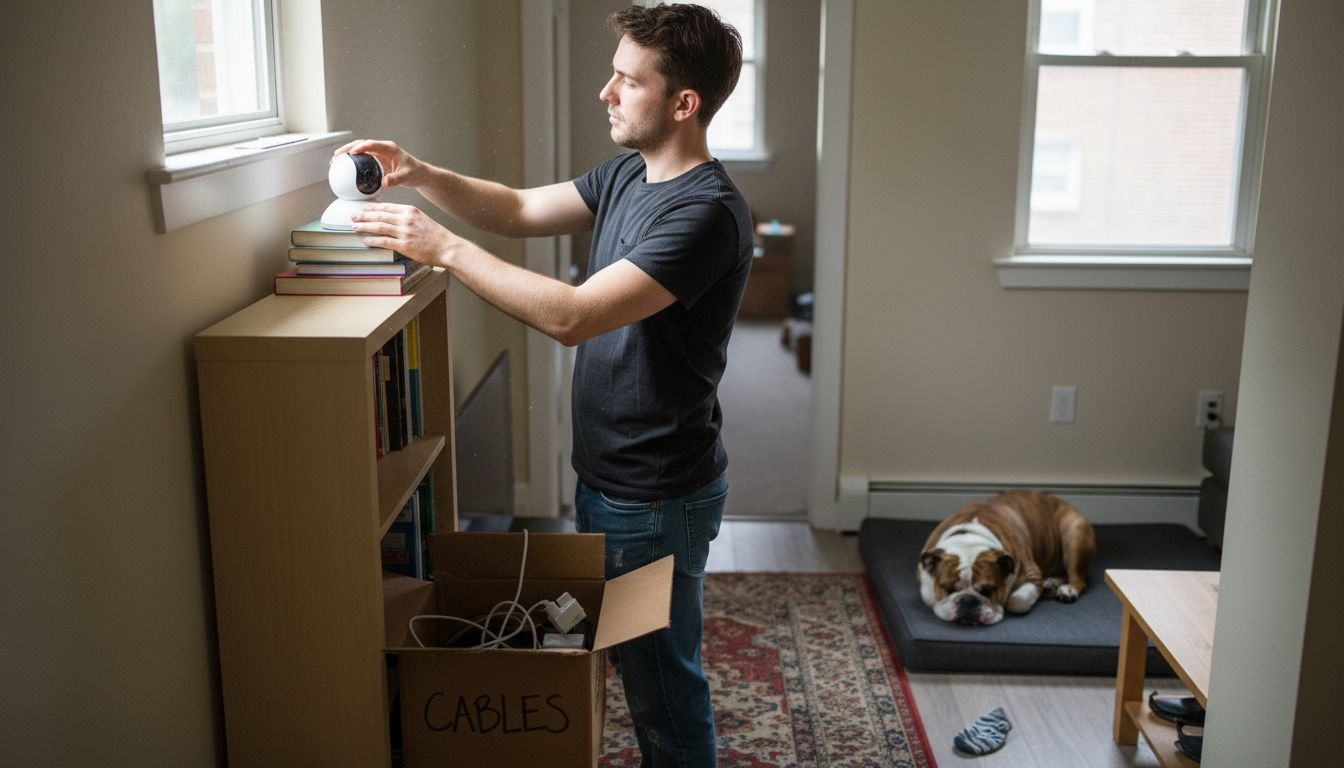
The primary categories of home security cameras include indoor, outdoor, wired, and wireless models. Indoor cameras excel at monitoring pet behavior and home interior spaces, providing clear views of living areas where pets spend most of their time. Outdoor cameras focus on perimeter protection, tracking potential intruders and monitoring external pet play areas. Wired cameras offer stable, consistent connections with reliable power sources, while wireless cameras provide greater installation flexibility and easier setup across different home layouts.
Each camera type brings distinct advantages for pet owners. Video doorbell cameras add an extra layer of security by combining visitor monitoring with two-way communication, allowing owners to interact with delivery personnel or unexpected guests remotely. Wireless cameras enable pet owners to reposition monitoring points easily, adapting to changing home environments. Advanced models now integrate motion detection, night vision, and smart alerts that can distinguish between pet movements and potential security threats, providing comprehensive home monitoring solutions.
Here’s a comparison of common home security camera types and their suitability for pet-friendly homes:
| Camera Type | Best For | Key Benefit for Pet Owners | Consideration |
|---|---|---|---|
| Indoor | Living rooms, pet play areas | Tracks pet activity indoors | Must avoid private spaces |
| Outdoor | Yards, entrances | Monitors pets and intruders | Requires weatherproof design |
| Wired | Permanent, stable set-ups | Reliable power and connection | Installation can be complex |
| Wireless | Flexible placement, apartments | Easily repositioned as needed | May need regular recharging |
| Video Doorbell | Entry and visitor monitoring | Interact with visitors safely | Limited indoor pet viewing |
Pro tip: Choose a camera system with multiple mounting options to ensure optimal coverage of your pet’s favorite areas and home entry points.
Smart Features for Pet Monitoring and Safety
Pet owners today benefit from advanced security camera technologies that transform home monitoring into intelligent pet care systems. Smart cameras with AI-powered features have revolutionized how we protect and interact with our animal companions, offering unprecedented insights into their daily lives and safety.
Key smart features now standard in modern pet monitoring systems include advanced motion detection that can distinguish between pet movements and potential security threats. These sophisticated algorithms reduce false alarms by recognizing pet-specific motion patterns, ensuring owners receive only relevant notifications. Two-way audio communication allows pet parents to speak directly to their animals, providing comfort and behavioral guidance even when miles away. High-definition video streaming with night vision capabilities ensures clear monitoring regardless of lighting conditions, giving owners a comprehensive view of their pet’s environment.
The most advanced pet monitoring cameras integrate multiple intelligent features to create comprehensive safety networks. AI-driven analytics can now detect unusual pet behaviors that might indicate health issues, stress, or potential emergencies. Real-time mobile notifications instantly alert owners to significant events, from unexpected movements to potential security breaches. Some systems even include temperature monitoring, ensuring pets remain safe in consistent environmental conditions. These intelligent features transform home security cameras from simple recording devices into active pet care and protection tools.
The following table summarizes advanced smart features that enhance both pet monitoring and home security:
| Smart Feature | Impact on Pet Monitoring | Added Home Security Benefit |
|---|---|---|
| AI Motion Detection | Recognizes pet vs. human movement | Reduces false alarms for owners |
| Two-Way Audio | Enables real-time pet communication | Deters intruders remotely |
| Night Vision | Monitors pets in low light | Enhances night-time surveillance |
| Mobile Alerts | Instant notifications for activity | Immediate response to threats |
| Temperature Sensors | Tracks room safety for pets | Warns of fire or HVAC failures |
Pro tip: Select a pet camera system that offers multiple smart detection modes and customizable alert settings to match your specific home and pet monitoring needs.
Legal Considerations for Camera Use at Home
Home security cameras for pet monitoring require careful navigation of complex legal landscapes. Privacy laws governing camera use vary significantly across different states, making it crucial for pet owners to understand their specific legal boundaries before installing monitoring systems.
The fundamental legal principle centers on respecting privacy expectations within residential spaces. This means cameras can be legally installed in common areas like living rooms, kitchens, and hallways, but are strictly prohibited in private spaces such as bedrooms and bathrooms. Consent becomes a critical factor, especially when guests or other household members are present. Some states mandate explicit disclosure of camera presence, requiring homeowners to inform visitors about active surveillance equipment. Audio recording presents an additional layer of legal complexity, with many jurisdictions requiring two-party consent for recording conversations.
Specific legal considerations for pet owners include positioning cameras to avoid capturing inadvertent private moments and ensuring transparent communication with household members. Some jurisdictions have strict rules about hidden cameras, mandating that monitoring devices be clearly visible and not concealed. Professional legal consultation can provide localized guidance, as camera use laws can differ dramatically between states. Pet owners must balance their desire for home security and pet monitoring with respect for individual privacy rights, making informed and ethical choices about camera placement and usage.
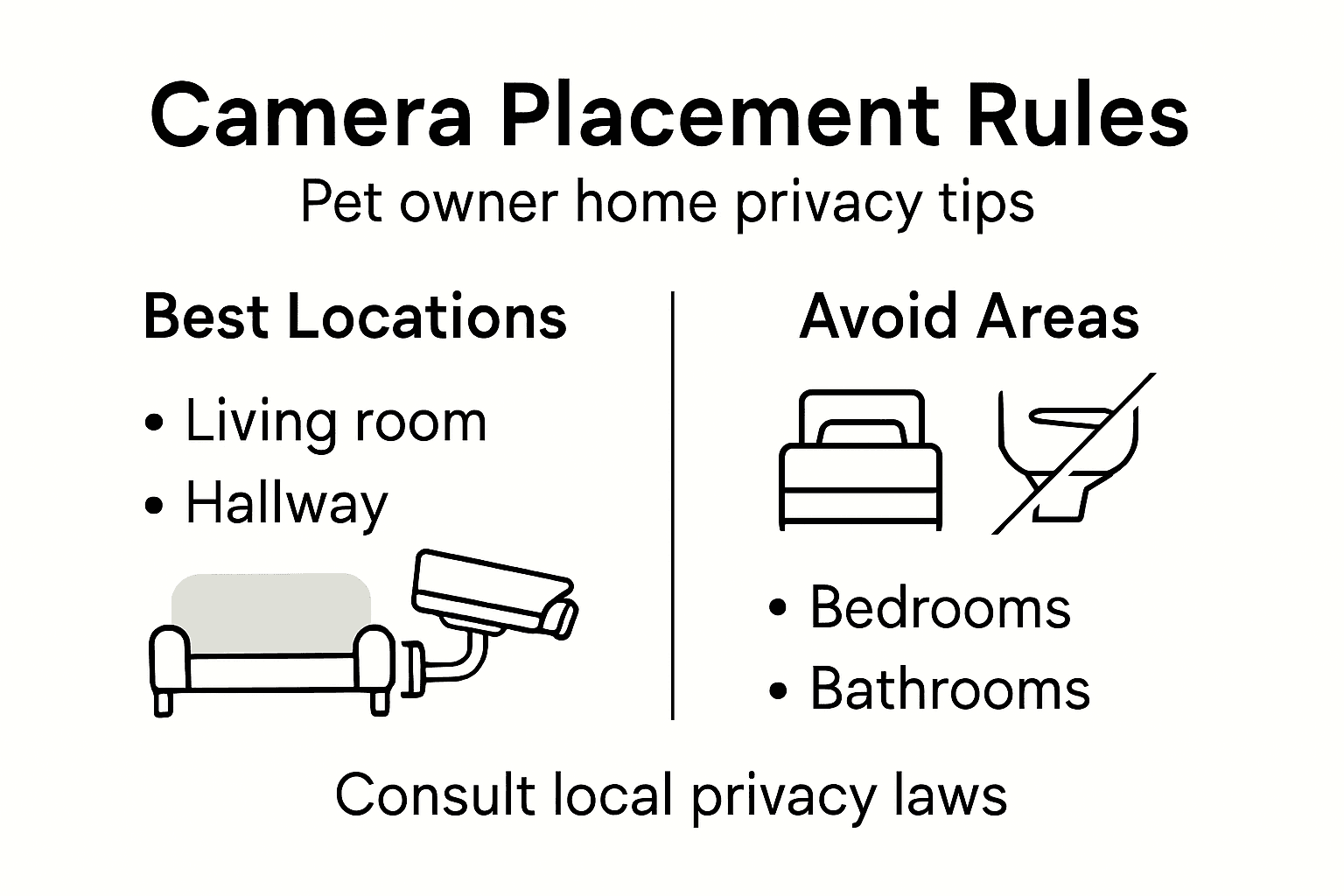
Pro tip: Consult local legal resources and consider placing cameras only in open, shared spaces to minimize potential privacy law violations.
Balancing Security, Privacy, and Pet Wellbeing
Pet owners face a nuanced challenge in creating home monitoring systems that protect both their animals and personal boundaries. Ethical home surveillance practices require careful consideration to ensure cameras enhance safety without compromising comfort or dignity for pets and humans alike.
The key to successful pet monitoring lies in strategic camera placement and intentional use. Cameras should be positioned to provide comprehensive home coverage while avoiding intrusive surveillance of private spaces. This means focusing on common areas where pets spend most of their time, such as living rooms, kitchens, and pet play zones. Transparent communication with household members becomes crucial, ensuring everyone understands the purpose and placement of monitoring devices. Advanced cameras with customizable alert systems can help reduce unnecessary stress, allowing pet owners to track important activities without creating a sense of constant surveillance.
Technology offers sophisticated solutions for balancing security and pet wellbeing. Modern pet cameras can distinguish between routine movements and potential security threats, providing targeted monitoring that respects both privacy and safety. Features like sound detection, temperature monitoring, and two-way audio enable pet owners to check on their animals’ welfare without creating an invasive environment. The goal is creating a supportive monitoring system that provides peace of mind while maintaining a sense of trust and comfort for all home inhabitants.
Pro tip: Position cameras at eye level in shared spaces and discuss their purpose openly with all household members to maintain transparency and trust.
Enhance Your Home Security and Pet Care with Smart Cameras
If you want to protect your home while keeping a close eye on your pets, understanding the right security cameras is essential. The article highlights key challenges such as balancing privacy, capturing accurate pet activity, and reducing false alarms using features like AI motion detection and two-way audio. At ModernPetTech, we specialize in helping pet owners navigate this complex landscape by providing expert reviews and insights on the latest pet camera technology.
Explore our detailed Pet Cameras section to discover devices that combine security with pet-friendly features such as treat dispensing and night vision. For a comprehensive overview, check out our Guides & Comparisons that break down smart camera functionalities tailored to your pet’s unique needs. Start making informed decisions today and create a safer, more connected environment for your furry friends with ModernPetTech.
Frequently Asked Questions
What are the benefits of using security cameras in homes with pets?
Security cameras provide pet owners with the ability to monitor their pets’ behavior, detect potential hazards, and ensure their safety when left alone. They also enhance home security by deterring intruders.
How should I position security cameras in a pet-friendly home?
Position cameras at strategic angles covering entry points and primary pet activity areas while avoiding private spaces like bedrooms and bathrooms. This maximizes both security and pet monitoring effectiveness.
What features should I look for in a pet monitoring camera?
Look for cameras with features like motion detection, two-way audio communication, night vision, remote streaming capabilities, and smart alerts that differentiate between pet movements and intruders.
Are there legal considerations I should be aware of when installing security cameras?
Yes, privacy laws vary by location, so it’s important to install cameras in common areas and inform household members about their placement. Avoid placing cameras in private spaces and consult local laws for specific regulations.
Recommended
- Pet Camera Setup Explained: Boosting Safety and Connection
- Benefits of Pet Cameras: Safer, Happier Pets at Home
- Indoor vs Outdoor Pet Cameras: Choosing What Fits Your Home
- Pet Security Camera Installation Guide for Safe Monitoring
- Top caméras ludiques nature – Comparaison des 7 meilleures en 2025 – The Zoofamily

3 thoughts on “Role of Cameras in Home Security for Pet Owners”