
Securing every moment your pet is home alone matters more than ever to the modern American pet owner. With over sixty-five percent of American households owning pets, reliable and accessible cloud storage for pet cameras is quickly becoming a staple for home security. Understanding how cloud technology stores and protects your camera footage gives you peace of mind and empowers you to choose features and plans tailored to both your lifestyle and your furry friend’s safety.
Table of Contents
- Defining Cloud Storage for Pet Cameras
- Types of Cloud Plans and Features
- How Cloud Access and Alerts Work
- Privacy, Security, and Data Compliance
- Costs, Limitations, and Local Alternatives
Key Takeaways
| Point | Details |
|---|---|
| Cloud Storage Benefits | Cloud storage allows pet owners to access and store video footage remotely, ensuring important moments are preserved without local storage limitations. |
| Plan Features Vary | Different tiers (Basic, Standard, Premium) offer varying video retention, motion alerts, and AI capabilities, catering to diverse user needs. |
| Privacy and Security Measures | Advanced security features, including encryption and access controls, are vital for protecting user’s personal data and complying with legal standards. |
| Cost Considerations | Monthly subscription fees for cloud storage can add up; users should weigh these against the benefits and consider local storage alternatives for more control. |
Defining Cloud Storage for Pet Cameras
Cloud storage represents a revolutionary technology that transforms how pet owners capture, store, and access video recordings from their home monitoring devices. At its core, cloud storage enables remote data management through internet-connected servers, allowing seamless video preservation beyond local device limitations.
Unlike traditional recording methods that relied on physical memory cards or local hard drives, cloud storage provides pet owners with flexible, secure video archiving. The technology works by automatically uploading camera footage to remote, virtualized infrastructure managed by cloud providers. These logical pools of digital storage can retain multiple days or weeks of pet camera recordings, ensuring that critical moments are never lost due to limited local storage capacity.
The fundamental architecture of cloud storage for pet cameras involves several key technological components. Cloud computing services enable scalable, on-demand storage that can adapt to varying video recording needs. This means pet owners can easily adjust their storage plans based on the number of cameras, recording frequency, and desired retention periods. Modern cloud storage systems also incorporate advanced security protocols, encryption technologies, and multi-device synchronization to protect sensitive home monitoring data.
Pro tip: Always choose a cloud storage solution that offers end-to-end encryption and allows you to control access permissions for maximum privacy protection.
Types of Cloud Plans and Features
Cloud storage plans for pet cameras range widely, offering pet owners multiple options to match their specific monitoring needs. Cloud computing services provide flexible architectures that enable diverse storage configurations, allowing users to select plans based on critical factors like video retention, storage capacity, and access requirements.
Typically, cloud plans are categorized into three primary tiers: Basic, Standard, and Premium. Basic plans often include limited storage (typically 24-72 hours of video retention), minimal motion detection alerts, and standard encryption. Standard plans expand capabilities with longer video history (usually 7-14 days), enhanced motion tracking, and more sophisticated alert customization. Premium plans represent the most comprehensive option, offering extended video retention (up to 30 days), advanced AI-powered detection, multi-camera support, and top-tier security features.
The technical infrastructure behind these plans involves sophisticated cloud computing delivery networks that support scalable, on-demand resource allocation. These systems dynamically adjust storage capacity, processing power, and bandwidth based on individual user requirements. Key differentiating features often include the number of cameras supported, video resolution preservation, sharing capabilities, and the granularity of access controls for multiple users or family members.
Pro tip: Always compare cloud storage plans based on your specific monitoring needs, prioritizing features like video retention length, alert customization, and multi-device access over raw storage volume.
Here’s a summary of main differences between cloud storage plan tiers for pet cameras:
| Plan Tier | Video Retention | Motion Alerts | AI Features | Multi-Camera Support |
|---|---|---|---|---|
| Basic | 24-72 hours | Standard | None | Single device only |
| Standard | 7-14 days | Enhanced customization | Limited | Few devices |
| Premium | Up to 30 days | Complex, customizable | Advanced, AI-powered | Many devices |
How Cloud Access and Alerts Work
Cloud-based pet camera systems leverage advanced artificial intelligence for video surveillance to provide real-time monitoring and intelligent alert mechanisms. These sophisticated systems transform traditional video recording into an interactive, responsive experience that keeps pet owners continuously connected to their home environments.
The core of cloud access functionality involves complex machine vision algorithms that analyze video streams in real-time. Intelligent detection systems can distinguish between routine movements and potentially significant events, such as a pet experiencing distress, an unexpected visitor, or unusual household activities. When the system identifies a triggering event, it immediately generates a customized alert, which is pushed to the user’s smartphone, tablet, or other connected devices through secure cloud networks.
Cloud robotics and automation enable these systems to perform advanced computational tasks remotely, ensuring that alert generation and data processing occur efficiently without requiring significant local device processing power. The distributed architecture allows for continuous data streaming, advanced analytics, and instant notification delivery. Users can typically customize alert sensitivity, specify detection zones within their home, and even set up different notification preferences for various times of day or specific camera locations.
Pro tip: Configure your pet camera’s alert settings during different times of the day to balance between comprehensive monitoring and avoiding notification fatigue.
Privacy, Security, and Data Compliance
Pet camera cloud storage systems must adhere to rigorous privacy-enhancing technologies that protect users’ sensitive information and home monitoring data. These sophisticated security frameworks go beyond basic encryption, implementing comprehensive strategies to safeguard personal and household privacy across digital platforms.

The core of data protection involves multiple layers of security mechanisms. Encryption protocols transform video data into unreadable code during transmission and storage, ensuring that unauthorized individuals cannot access or interpret the information. Advanced cloud storage systems typically employ end-to-end encryption, which means that video streams are scrambled from the moment they leave the camera until they are viewed by the authorized user. Access controls play a critical role, allowing users to specify precise permissions, control data sharing, and manage who can view their pet camera recordings.
Federal data protection laws in the United States establish strict guidelines for cloud storage providers, mandating robust security practices. These regulations require comprehensive administrative and technical safeguards that protect user data integrity. Key compliance requirements include maintaining secure data centers, implementing regular security audits, providing transparent data handling policies, and ensuring users have clear mechanisms to control their personal information. Cloud storage providers must also offer features like two-factor authentication, regular password resets, and detailed activity logs to enhance overall system security.
Pro tip: Regularly review and update your cloud storage account’s privacy settings, and always use strong, unique passwords to maximize your pet camera system’s security.
Costs, Limitations, and Local Alternatives
Cloud storage pricing models for pet cameras typically range from free basic plans to premium subscriptions costing $5-$30 monthly. These plans vary widely in storage capacity, video retention periods, and advanced features like AI-powered motion detection. Most pet owners find that mid-tier plans offering 7-14 days of video history provide the best balance between functionality and affordability.
Cloud storage solutions come with inherent limitations that pet owners must carefully consider. Internet dependency represents the most significant constraint, as continuous video streaming and access require stable, high-speed internet connections. Bandwidth limitations can cause video buffering, reduced image quality, or intermittent access. Additionally, ongoing subscription costs can accumulate, making cloud storage potentially more expensive over time compared to one-time local storage investments.
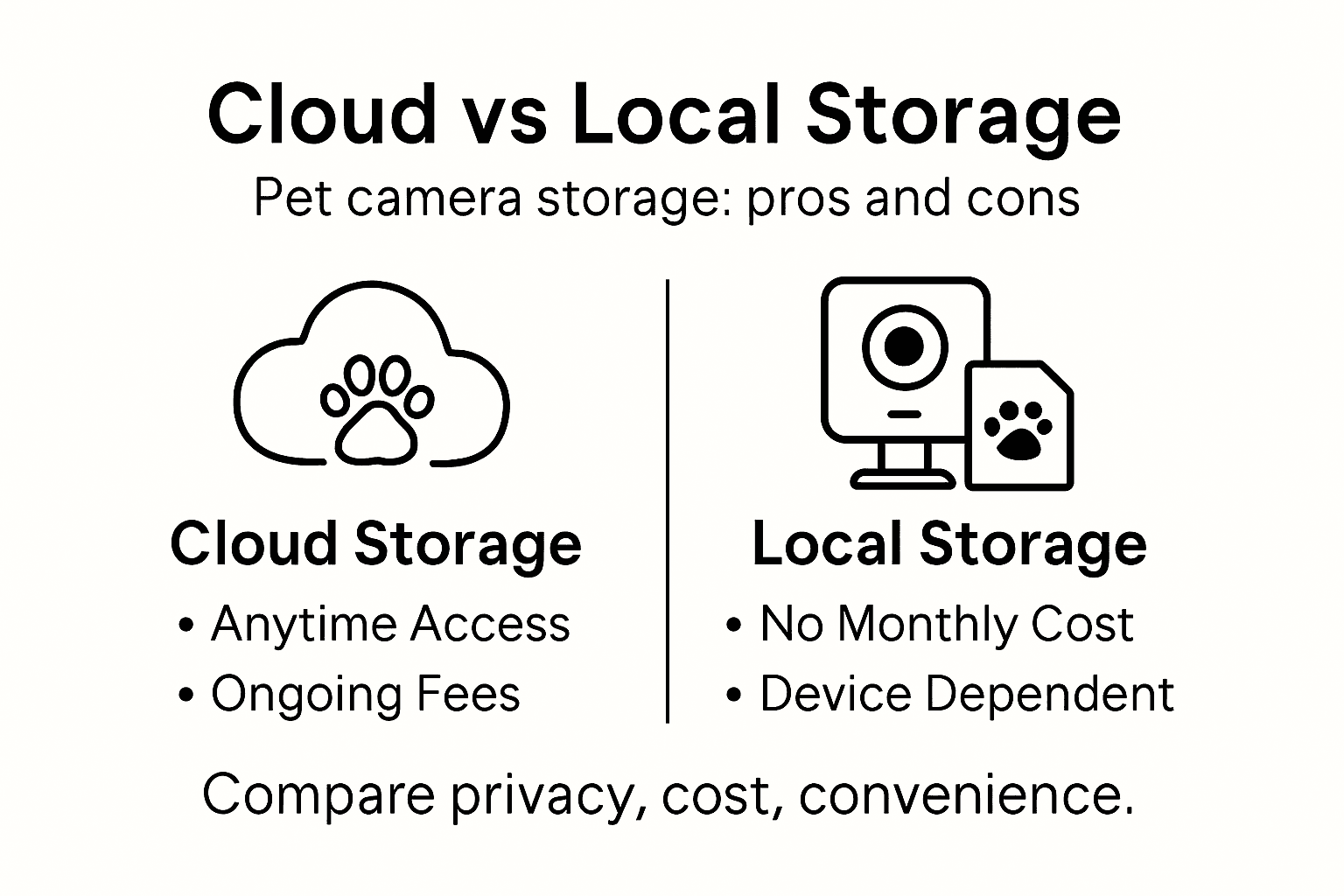
Local storage alternatives offer pet owners more direct control over their monitoring data. Network Attached Storage (NAS) and Digital Video Recorders (DVRs) provide immediate data access without monthly fees, though they sacrifice the remote accessibility and advanced analytics of cloud systems. These on-premises solutions require upfront hardware investments and technical knowledge for setup and maintenance, making them most suitable for tech-savvy users who prioritize complete data control.
Pro tip: Calculate your annual cloud storage costs and compare them with one-time local storage investments to determine the most cost-effective solution for your specific pet monitoring needs.
Compare key differences between cloud-based and local pet camera storage solutions:
| Storage Type | Accessibility | Upfront Cost | Ongoing Costs | Data Control |
|---|---|---|---|---|
| Cloud Storage | Remote, any device | Low | Monthly fees | Provider-managed |
| Local Storage | Home network only | Higher | None | Owner-controlled |
Stay Secure and Informed with Smart Pet Camera Solutions
Managing cloud storage privacy and access for your pet cameras can feel overwhelming. With concerns like video retention limits, encryption, and alert customization, ensuring your pet’s safety while protecting your household’s privacy is critical. Our expert guides cover these challenges in detail so you can make informed decisions about the best storage options and security settings for your needs.
Explore comprehensive reviews and comparisons of top-rated devices on Pet Cameras to find the right fit for your home. Learn how features like two-way communication, treat dispensing, and AI-powered alerts combine with secure cloud storage to reduce separation anxiety and keep you connected. Visit Guides & Comparisons for actionable tips on optimizing privacy and managing costs. Ready to protect your pet with trusted technology Visit ModernPetTech now and take the next step toward smarter pet monitoring.
Frequently Asked Questions
What is cloud storage for pet cameras?
Cloud storage for pet cameras allows pet owners to capture, store, and access video footage remotely using internet-connected servers. It enables seamless video preservation beyond local device limitations.
How do I choose the right cloud storage plan for my pet camera?
To choose the right cloud storage plan, consider critical factors like video retention length, storage capacity, motion alert customization, and the number of supported cameras. Compare plans to find one that best meets your specific needs.
What features should I look for in a cloud storage solution for my pet camera?
Look for features like end-to-end encryption, customizable alert settings, flexible storage plans, AI-powered detection, and comprehensive access controls to ensure the security and effectiveness of your pet monitoring system.
What are the limitations of cloud storage for pet cameras?
Cloud storage has limitations such as dependency on stable internet connections for video access, potential ongoing subscription costs, and privacy concerns regarding data management by third-party providers. Consider these factors when deciding between cloud and local storage.
Recommended
- Indoor vs Outdoor Pet Cameras: Choosing What Fits Your Home
- Pet Camera Setup Basics: Enhancing Remote Pet Care
- Pet Camera Setup Explained: Boosting Safety and Connection
- Pet Camera Terminology: What Tech-Savvy Owners Need
- The Essential Guide to the Importance of Pet Safety – iPupPee
- Traceability vs. Transparency: Key Differences in Pet Food

2 thoughts on “Cloud Storage for Pet Cameras: Protecting Privacy and Access”