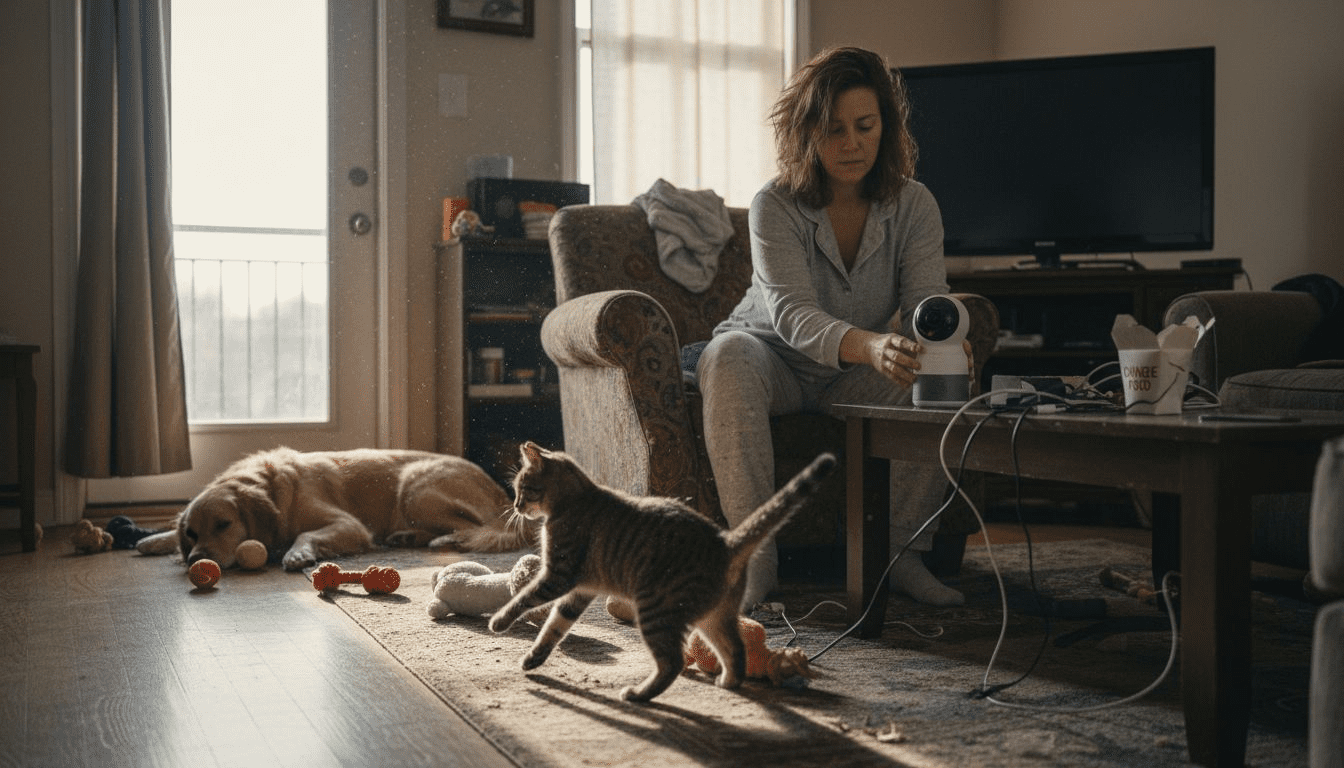
Managing multiple pets at home often reveals a frustrating truth: standard single pet cameras fail to track everyone effectively. You might think one camera pointed at the living room covers your two dogs and cat, but you’re missing crucial interactions and getting bombarded with false alerts. This guide shows you how advanced multi-pet camera technologies using AI recognition, 360-degree coverage, and interactive features transform chaotic monitoring into precise, actionable insights that keep your pets safe and reduce your stress.
Table of Contents
- Understanding Multi-Pet Camera Technology
- Camera Types And Coverage For Multi-Pet Monitoring
- AI-Driven Monitoring And Alerts For Multi-Pet Homes
- Interactive Features For Anxiety Reduction And Engagement
- Common Misconceptions About Multi-Pet Monitoring
- Setting Up An Effective Multi-Pet Camera System
- Top Multi-Pet Camera Product Comparisons
- Subscription Services And Cost Considerations
- Explore Our Multi-Pet Monitoring Solutions
- FAQ
Key Takeaways
| Point | Details |
|---|---|
| AI recognition distinguishes up to 5 pets | Reduces false alerts by identifying each pet individually and tracking their specific behaviors. |
| 360-degree systems minimize blind spots | Provides comprehensive coverage that fixed cameras cannot match in multi-room environments. |
| Interactive features reduce separation anxiety | Treat dispensing and two-way audio lower stress behaviors by 25-35% in multi-pet homes. |
| Multi-camera setups essential for larger homes | Strategic placement reduces blind spots by over 70% compared to single camera systems. |
| Subscription plans unlock advanced features | Monthly costs range from $3.99 to $9.99 but provide critical AI tracking and alert capabilities. |
Understanding Multi-Pet Camera Technology
Multi-pet camera technology has evolved dramatically from basic motion detection to sophisticated AI-powered systems that recognize and track individual animals simultaneously. Early pet cameras simply recorded movement, triggering alerts whenever anything crossed the sensor. This approach created chaos in multi-pet households, where normal interactions between pets generated constant false notifications.
Modern AI-driven pet recognition changes everything by distinguishing individual pets and understanding their unique behaviors. The role of pet cameras has expanded beyond passive recording to active monitoring that identifies which pet is doing what, when, and where. This technology uses machine learning algorithms trained on thousands of pet images to differentiate between your Labrador, your terrier, and your tabby cat.
Key technological components include:
- Facial and body recognition algorithms that create unique profiles for each pet
- Motion tracking that follows individual animals across camera views
- Behavioral pattern analysis that establishes baseline activities
- Smart alert systems that notify you only when anomalies occur
The 360-degree camera revolution addresses another critical limitation: fixed cameras leave massive blind spots. Pan-tilt-zoom mechanisms or true 360-degree lenses provide continuous coverage, ensuring no pet disappears from view when they wander to different areas. AI-driven multi-pet recognition improves monitoring accuracy by distinguishing individual pets, reducing false alerts common in multi-pet households.
Pro tip: Start with AI-enabled cameras even if you have just two pets. The technology pays for itself by eliminating the dozens of false alerts standard cameras generate daily, saving you notification fatigue and actual emergencies get noticed immediately.
Camera Types and Coverage for Multi-Pet Monitoring
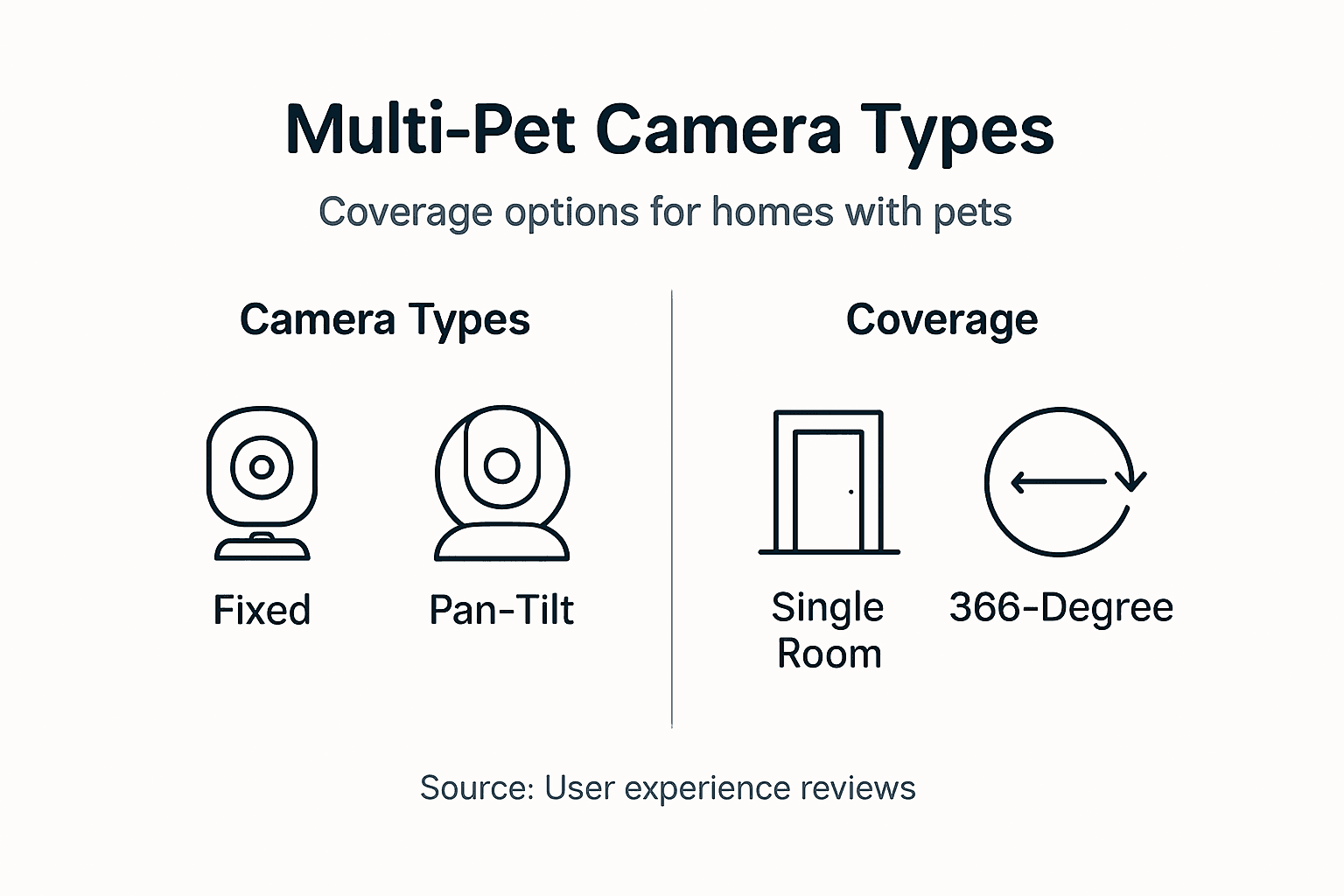
Choosing between fixed, pan-tilt-zoom, and true 360-degree cameras dramatically impacts your monitoring effectiveness. Fixed cameras work well when all your pets stay in one defined space, but most multi-pet households need more flexible coverage. Pan-tilt-zoom cameras rotate on command or automatically track movement, following pets as they move through larger rooms.
True 360-degree camera systems provide comprehensive coverage that single fixed cameras cannot match, enabling continuous tracking of multiple pets in large or multi-room environments. These systems either use fisheye lenses with digital panning or motorized rotation mechanisms that sweep the entire space. The advantage becomes obvious when your German Shepherd plays in one corner while your beagle investigates the opposite side.
Camera type comparison:
| Camera Type | Coverage | Best For | Limitation |
|---|---|---|---|
| Fixed | Single direction | Small spaces, crate monitoring | Misses activity outside frame |
| Pan-Tilt-Zoom | 340-degree rotation | Large single rooms | Slower tracking, mechanical lag |
| 360-Degree | Complete room coverage | Multi-pet open spaces | Higher cost, complex setup |
| Multi-Camera System | Whole home coverage | Multiple rooms, large homes | Installation complexity, coordination |
When single cameras can’t cover your space adequately, multi-camera setups become essential. Strategic multi-camera placement tips focus on high-traffic zones like entryways, feeding areas, and favorite resting spots. Placing cameras at different heights captures both floor-level activity and elevated spaces where cats perch.
Key placement considerations:
- Entry points where pets transition between rooms
- Food and water stations where resource guarding might occur
- Sleeping areas to monitor rest patterns and health
- Play zones where most interactions happen
Pro tip: Test camera angles for a week before permanent installation. Use painter’s tape to mark temporary positions and review footage to identify coverage gaps your pets exploit.
AI-Driven Monitoring and Alerts for Multi-Pet Homes
Artificial intelligence transforms pet monitoring from reactive recording to proactive care management. Standard motion sensors trigger on everything from shadows to ceiling fans, but AI pet recognition can distinguish up to 5 pets and detect behavioral anomalies instantly. This capability matters enormously when you need to know if your anxious rescue dog is pacing versus your playful puppy just being energetic.
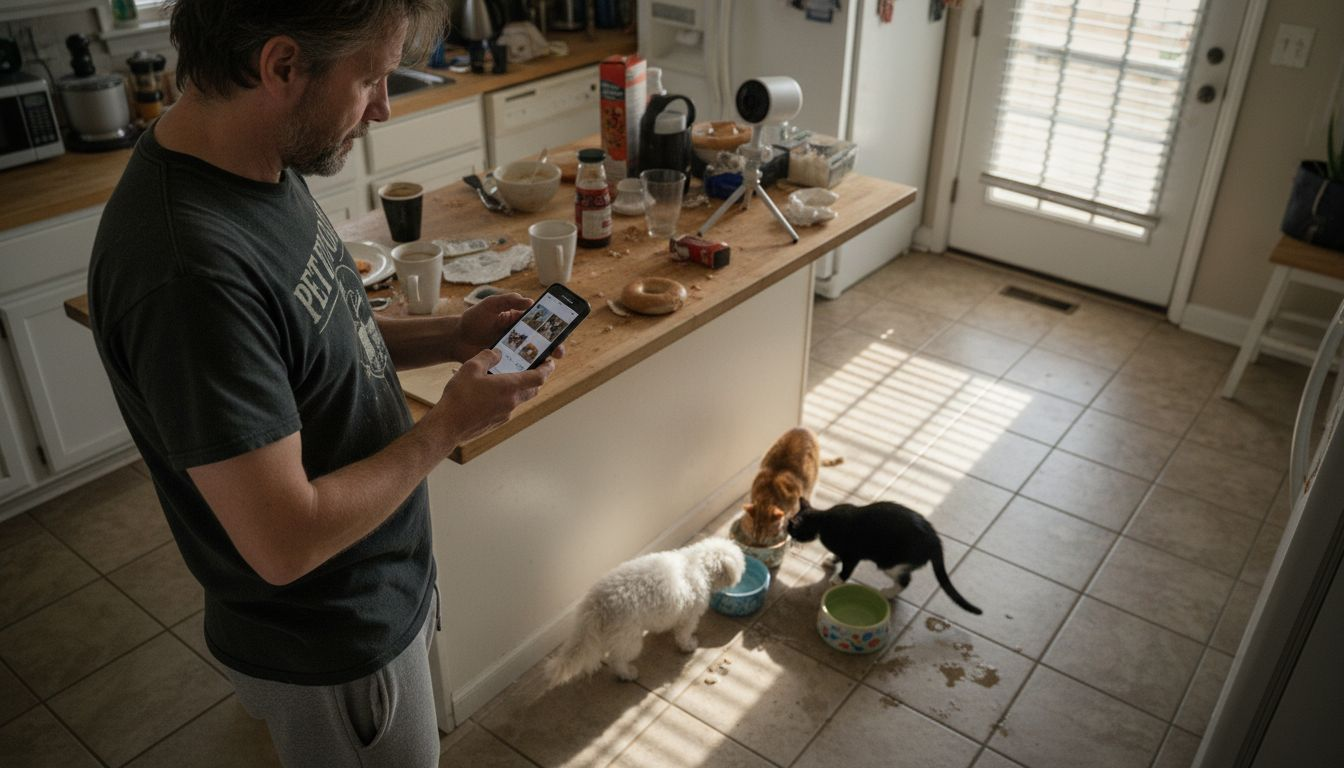
AI systems build behavioral baselines for each pet over the first few weeks of use. They learn your older cat sleeps 18 hours daily while your kitten explores constantly. When patterns deviate, the system sends targeted alerts. Your senior dog suddenly pacing at 2 AM triggers an immediate notification, while your kitten’s normal nighttime zoomies don’t.
Behavioral anomaly detection identifies:
- Excessive barking or vocalization beyond normal levels
- Unusual restlessness or pacing patterns indicating distress
- Extended periods of inactivity suggesting illness
- Aggressive interactions between pets requiring intervention
- Destructive behaviors like furniture scratching or chewing
AI-driven behavior alerts detect deviations such as excessive barking or restlessness, enabling early intervention before minor issues escalate. The system distinguishes normal play fighting from genuine aggression by analyzing body language, vocalization intensity, and movement patterns. This precision helps you respond appropriately rather than rushing home for routine puppy play.
Real-world scenarios demonstrate AI’s value. When your diabetic cat shows lethargy, the camera notices decreased movement and alerts you hours before visible symptoms appear. If your dogs get into a resource guarding dispute over a toy, you receive instant notification with video evidence showing exactly what triggered the conflict. Understanding these AI alerts for anxiety reduction helps you address root causes rather than just symptoms.
Pro tip: Customize alert sensitivity for each pet individually. Your naturally active terrier needs higher thresholds to avoid alert fatigue, while your senior cat’s subtle changes warrant immediate notification.
Interactive Features for Anxiety Reduction and Engagement
Interactive capabilities turn passive monitoring into active engagement that reduces separation anxiety and strengthens your bond with pets remotely. Treat dispensing mechanisms launch treats on command or according to schedules you set, providing positive reinforcement when pets display calm behavior. Treat tossing and two-way communication reduce stress-related behaviors by approximately 30% in tests.
Two-way audio systems let you speak to pets and hear their responses, creating the illusion of presence even when you’re miles away. Your voice calming an anxious dog or redirecting cats away from forbidden countertops provides real-time behavior management. Studies show two-way audio interactions lowered stress behaviors by 25-35% in multi-pet homes.
Effective interactive strategies:
- Schedule treat dispensing during typical anxiety peaks like afternoon separation periods
- Use voice commands through two-way audio to reinforce training remotely
- Combine visual monitoring with audio cues to interrupt negative behaviors immediately
- Create positive associations by dispensing treats when pets remain calm together
- Rotate interactive features to prevent habituation and maintain engagement
Timing considerations for maximum impact:
- Morning departures: Dispense treats 10 minutes after leaving to reward calm settling
- Midday check-ins: Use voice interaction to break up long alone periods
- Pre-arrival: Engage pets 15 minutes before returning to build positive anticipation
- Conflict prevention: Interrupt early signs of tension between pets before escalation
Multi-pet households benefit uniquely from interactive pet camera features because you can address individual needs simultaneously. Toss a treat to your food-motivated dog while using two-way audio benefits to soothe your vocal cat. This differential engagement prevents jealousy and promotes harmony.
Pro tip: Record your voice giving common commands and play them through the camera when you can’t interact live. Pets respond to familiar verbal cues even when pre-recorded, maintaining training consistency.
Common Misconceptions About Multi-Pet Monitoring
Many pet owners make costly mistakes based on false assumptions about camera capabilities and limitations. The biggest misconception claims any pet camera works fine for multiple animals if you just aim it correctly. Reality proves otherwise: standard motion detection cameras can have up to 40% false alert rates in pet households. That single $50 camera generates hundreds of meaningless notifications weekly, training you to ignore alerts right when a real emergency occurs.
Common false beliefs debunked:
- Myth: One camera pointed at the main room monitors all pets adequately
- Reality: Pets move constantly between spaces, creating blind spots where injuries or conflicts go unnoticed
- Myth: Treat dispensing solves all separation anxiety issues
- Reality: Treats help but don’t address underlying anxiety causes like insufficient exercise or environmental enrichment
- Myth: Free camera apps provide the same monitoring as paid subscriptions
- Reality: Critical AI recognition, behavior tracking, and extended video storage require paid plans
- Myth: More cameras always equal better monitoring
- Reality: Poorly placed cameras create redundant coverage while missing key activity zones
Another dangerous assumption treats cameras as pet sitters rather than monitoring tools. Cameras observe and alert but cannot physically intervene when your puppy chews electrical cords or cats knock over hazardous items. They complement, not replace, proper pet-proofing and adequate supervision arrangements.
The subscription model confusion particularly trips up buyers. You purchase a $200 camera expecting full functionality, then discover AI pet recognition, activity history beyond 24 hours, and smart alerts require $10 monthly subscriptions. Over three years, that’s $560 in subscription fees on top of hardware costs. Understanding these common misconceptions in pet monitoring before purchase prevents buyer’s remorse and helps you budget accurately.
Setting Up an Effective Multi-Pet Camera System
Successful multi-pet monitoring starts with systematic planning based on your home layout, pet count, and their activity patterns. Rushing installation without strategy leaves coverage gaps that defeat the entire purpose. Begin by mapping where each pet spends time throughout the day, noting overlap zones where interactions occur and separate areas where individuals retreat.
Step-by-step setup process:
- Assess your monitoring needs: Count pets, identify behavioral concerns, and determine must-cover zones
- Map activity patterns: Track where each pet spends time over several days to find high-traffic areas
- Identify camera positions: Select locations providing overlapping coverage of key zones
- Test camera angles: Use temporary mounts to verify field of view before permanent installation
- Configure AI recognition: Spend time training the system to recognize each pet’s unique features
- Set up alert preferences: Customize notification types and sensitivity per pet and situation
- Establish interactive schedules: Program treat dispensing and create pre-recorded voice messages
Research shows multi-camera setups reduce blind spots by over 70% compared to single camera setups, but only when positioned strategically. Corner mounting provides wider angles than wall center positions. Placing cameras at pet eye level captures facial expressions and body language better than overhead views. Following proven camera setup tips prevents expensive trial and error.
Balancing coverage with budget:
- Start with cameras covering the two highest-activity zones
- Add cameras incrementally based on observed gaps
- Prioritize AI-enabled cameras for main monitoring over basic cameras in secondary spaces
- Consider mixing one premium 360-degree camera with standard fixed cameras for cost efficiency
Pro tip: Use different camera brands strategically. A premium AI camera monitors your main living area while budget cameras cover hallways and entryways. This hybrid approach maximizes coverage per dollar spent.
Top Multi-Pet Camera Product Comparisons
Selecting the right camera system requires understanding how leading models balance features, performance, and cost. Three products dominate the multi-pet monitoring market, each offering distinct advantages for different household configurations. Furbo 360 Dog Camera offers 1080p HD video, 360-degree panning with treat dispensing and subscription-based features.
| Feature | Furbo 360 | Petcube Cam 360 | Eufy Indoor Cam |
|---|---|---|---|
| Video Quality | 1080p HD | 1080p HD | 2K HD |
| Pan/Tilt | 360° rotation | 360° rotation | 340° pan, 96° tilt |
| AI Pet Recognition | Up to 4 pets (subscription) | Up to 5 pets (subscription) | 2 pets (built-in) |
| Treat Dispenser | Yes, automatic | No | No |
| Two-Way Audio | Yes, noise cancellation | Yes, enhanced audio | Yes, standard |
| Night Vision | Infrared | Color night vision | Infrared |
| Base Price | $210 | $150 | $130 |
| Subscription Cost | $6.99/month | $4.99/month | $9.99/month (optional) |
| Best For | Treat-motivated dogs | Budget-conscious multi-pet | Privacy-focused, local storage |
Furbo excels for dog owners prioritizing interactive engagement through its signature treat launching feature. The 360-degree panning tracks active dogs throughout large rooms, while subscription AI distinguishes individual dogs and sends barking alerts. However, its higher subscription cost and dog-centric design make it less ideal for cat-only or mixed pet households.
Petcube Cam 360 offers the most affordable entry into AI-powered multi-pet monitoring. Its color night vision outperforms competitors in low-light conditions, critical for monitoring nocturnal cat activity. The $4.99 monthly subscription provides excellent value for five-pet recognition, though the absence of treat dispensing limits interactive engagement options.
Eufy Indoor Cam distinguishes itself through privacy-focused local storage and built-in AI without mandatory subscriptions. The 2K video resolution captures finer details useful for identifying health issues like eye discharge or limping. Optional cloud subscriptions add advanced features, but core functionality works completely offline. This appeals to privacy-conscious owners wary of cloud-based pet video storage.
User feedback highlights:
- Furbo users praise treat dispenser reliability but note occasional connectivity issues
- Petcube receives high marks for app interface and multi-camera management
- Eufy owners value local storage but report slower AI response compared to cloud-based competitors
Reviews from multi-pet camera product reviews consistently emphasize matching camera capabilities to your specific pet mix and home environment over chasing the highest specifications.
Subscription Services and Cost Considerations
Subscription plans unlock the advanced features that separate basic pet cameras from true multi-pet monitoring systems, but their ongoing costs require careful evaluation. Most manufacturers offer tiered subscriptions ranging from basic cloud storage to comprehensive AI analysis packages. Subscription costs range from $3.99 to $9.99/month depending on features.
Typical subscription features by tier:
- Basic ($3.99-$4.99/month): 7-day video history, motion alerts, single pet tracking
- Standard ($6.99-$7.99/month): 30-day video history, AI pet recognition for multiple pets, behavior alerts
- Premium ($9.99-$12.99/month): 60-day history, advanced behavior analysis, priority support, multiple cameras
The decision between free and paid plans depends on your monitoring priorities. Free tiers typically provide live viewing and basic motion alerts but lack the AI recognition essential for distinguishing between your three cats. You’ll receive alerts when any movement occurs, recreating the false alarm problem subscriptions solve.
Calculating total ownership costs over a typical three-year camera lifespan reveals significant differences. A $150 camera with $6.99 monthly subscription totals $401.64 over three years, while a $200 camera with free AI recognition costs just the initial purchase. However, that cheaper option might lack critical features like extended video history when you need to review what happened yesterday.
Evaluating subscription necessity:
- Essential if: You have three or more pets requiring individual tracking and behavior analysis
- Consider carefully if: You have two pets and need extended video history for liability documentation
- Probably skip if: You primarily want live viewing with minimal alerts and have just one or two calm pets
- Alternative approach: Start with free tier and upgrade only after identifying specific feature gaps
Some advanced users purchase cameras with strong free features and supplement with separate home automation systems for alerts. This approach requires technical expertise but avoids recurring pet camera subscription costs while maintaining functionality.
Explore Our Multi-Pet Monitoring Solutions
Now that you understand the technologies, features, and strategies behind effective multi-pet monitoring, it’s time to find the right system for your household. We’ve tested and reviewed dozens of cameras to identify which models truly deliver on their multi-pet promises versus those that generate more frustration than insight.
Our detailed comparisons of pet monitoring devices examples break down real-world performance beyond manufacturer specifications. You’ll discover which cameras handle the chaos of multiple active dogs, which excel at tracking stealthy cats, and which provide the best value for mixed pet households. We also cover smart pet devices for monitoring that integrate with your existing smart home ecosystem.
Ready to set up your system? Our comprehensive pet safety monitoring tutorial walks you through every step from initial camera placement through AI training and alert optimization, ensuring you maximize your investment from day one.
FAQ
What features are essential for a multi-pet camera setup?
AI pet recognition that distinguishes individual animals is the single most critical feature for multi-pet monitoring. Without it, you’ll receive constant false alerts that train you to ignore notifications. 360-degree coverage or multiple cameras eliminate blind spots where pets hide activity. Two-way audio and treat dispensing provide remote engagement that reduces separation anxiety and enables behavior management when you’re away.
How do I minimize false alerts with multiple pets?
Invest in cameras with AI-enabled pet recognition that learns each animal’s normal behavior patterns and only alerts on genuine anomalies. Configure sensitivity settings individually for each pet, setting higher thresholds for naturally active animals. Proper camera placement avoiding windows and high-traffic areas reduces motion triggers from passing cars or people. Review and adjust alert rules weekly during the first month as the system learns your household patterns.
Can I manage multiple rooms with just one camera?
A single 360-degree camera can monitor large open-concept spaces effectively, but most homes with multiple pets need multi-camera systems. Walls, furniture, and pets themselves create blind spots that single cameras cannot overcome. Even premium 360-degree models struggle to capture adequate detail when covering areas exceeding 400 square feet. Strategic placement of two to four cameras provides comprehensive coverage without redundancy, reducing monitoring gaps by over 70% compared to single camera setups.
Are subscriptions necessary for full multi-pet monitoring features?
Most advanced AI recognition, behavior tracking, and extended video storage require subscription plans ranging from $4 to $10 monthly. Free tiers typically offer only live viewing and basic motion alerts without the pet-specific intelligence that prevents false alarms. Calculate total three-year costs including subscriptions before purchasing, as ongoing fees often exceed initial hardware prices. Some cameras like Eufy provide built-in AI without mandatory subscriptions, offering middle-ground options for budget-conscious owners who still need multi-pet recognition capabilities.
Recommended
- Motion Detection in Pet Cameras: Enhancing Pet Safety
- Optimize Pet Camera Features for Smarter Pet Monitoring
- Pet Camera Features Breakdown: Smarter Pet Care
- Best 4 ai pet camera comparison – Expert Comparison 2025
- ¿Cuál animal es más inteligente: el perro o el gato? – Mundo Cachorro

1 thought on “Multi-Pet Camera Setup: AI Cuts False Alerts 40%”