
Smart home integration for pets has evolved far beyond simple cameras and treat dispensers. In 2026, AI-IoT integration enables real-time health monitoring for pets, transforming how you track behavior, prevent emergencies, and reduce anxiety. Modern systems unify environmental sensors, GPS trackers, and interactive devices into a single ecosystem that adapts to your pet’s needs automatically. This article explains why integrating smart home tech matters for pet owners who want data-driven insights, remote control, and proactive care solutions that go beyond basic monitoring.
Table of Contents
- Understanding Smart Home Integration For Pet Monitoring
- How Smart Home Integration Enhances Pet Safety And Health Monitoring
- Role Of Universal Protocols Like Matter In Simplifying Smart Home Pet Setups
- Reducing Pet Anxiety And Enhancing Training Through Smart Home Integration
- Explore Smart Pet Tech Solutions At ModernPetTech
Key takeaways
| Point | Details |
|---|---|
| Real-time insights | Integration provides continuous health and behavior monitoring through unified sensor data and AI analysis. |
| Anxiety reduction | Smart environmental controls automatically adjust lighting, temperature, and sound to calm stressed pets. |
| Universal compatibility | Matter protocol enables seamless device interoperability across brands without complex setup requirements. |
| Data-driven care | Sensor fusion and AI processing deliver proactive alerts before health issues escalate into emergencies. |
| Cellular connectivity | IoT networks support outdoor and traveling pet owners with reliable monitoring independent of Wi-Fi. |
Understanding smart home integration for pet monitoring
Smart home integration connects various devices and sensors into a unified system controlled through platforms like Apple Home, Google Home, or dedicated pet care apps. This goes far beyond standalone gadgets. Integration creates an ecosystem where your pet camera, GPS tracker, environmental sensors, and treat dispenser communicate and respond to conditions automatically.
The technologies powering this integration include artificial intelligence for behavior pattern recognition, Internet of Things (IoT) protocols for device communication, environmental sensors measuring temperature and air quality, GPS modules for location tracking, and cloud connectivity for remote access. When these components work together, you gain real-time visibility into your pet’s health, behavior, and surroundings from anywhere.
Typical smart home pet care devices include video cameras with two-way audio, GPS trackers with geofencing alerts, environmental sensors monitoring air quality and temperature, automated treat dispensers for training and interaction, and smart feeders with portion control. The integration layer ties these devices together, enabling coordinated responses like adjusting room temperature when your pet shows stress signals or sending treat rewards when training goals are met.
Benefits multiply when devices share data. Remote access lets you check on pets during work hours. Automated alerts notify you of unusual behavior or environmental hazards. Data-driven insights reveal health trends over weeks and months. This connected approach transforms reactive pet care into proactive wellness management, which is especially valuable for why smart home integration pet owners seeking comprehensive monitoring solutions.
Pro Tip: Start with a central hub that supports multiple protocols like Zigbee, Z-Wave, and Wi-Fi to ensure future device additions integrate smoothly without replacing your entire system.
How smart home integration enhances pet safety and health monitoring
Integrated sensor systems track multiple health and safety parameters simultaneously, creating a comprehensive picture of your pet’s wellbeing. Temperature sensors detect overheating or cold stress. Air quality monitors identify allergens or poor ventilation. GPS modules track location and movement patterns. Behavior analysis algorithms spot changes indicating pain, anxiety, or illness. This multi-layered approach catches problems early, often before visible symptoms appear.
Advanced platforms like SmartSense Pet system with BME688 sensor and GPS module achieves superior accuracy and safety by unifying sensor data with real-time AI processing and cloud connectivity. The BME688 environmental sensor measures temperature, humidity, pressure, and volatile organic compounds with high precision. Combined with GPS location data and AI analysis, the system provides continuous health monitoring that adapts to changing conditions.
| Feature | Conventional Systems | SmartSense Pet Systems |
|---|---|---|
| Sensor Types | Single parameter (camera only) | Multi-parameter (environment, GPS, behavior) |
| Connectivity | Wi-Fi dependent | Cellular IoT plus Wi-Fi backup |
| Accuracy | Basic motion detection | AI-powered pattern recognition with 95%+ accuracy |
| Independence | Requires home network | Functions off-grid with cellular connection |
| Data Processing | Cloud-only delays | Edge AI plus cloud for faster response |
For outdoor and traveling pet owners, cellular IoT connectivity solves the Wi-Fi dependency problem. Your monitoring continues even when pets leave home networks or venture into remote areas. AI processing at the device level (edge computing) reduces latency, enabling immediate alerts for dangerous situations like escaping boundaries or encountering wildlife.
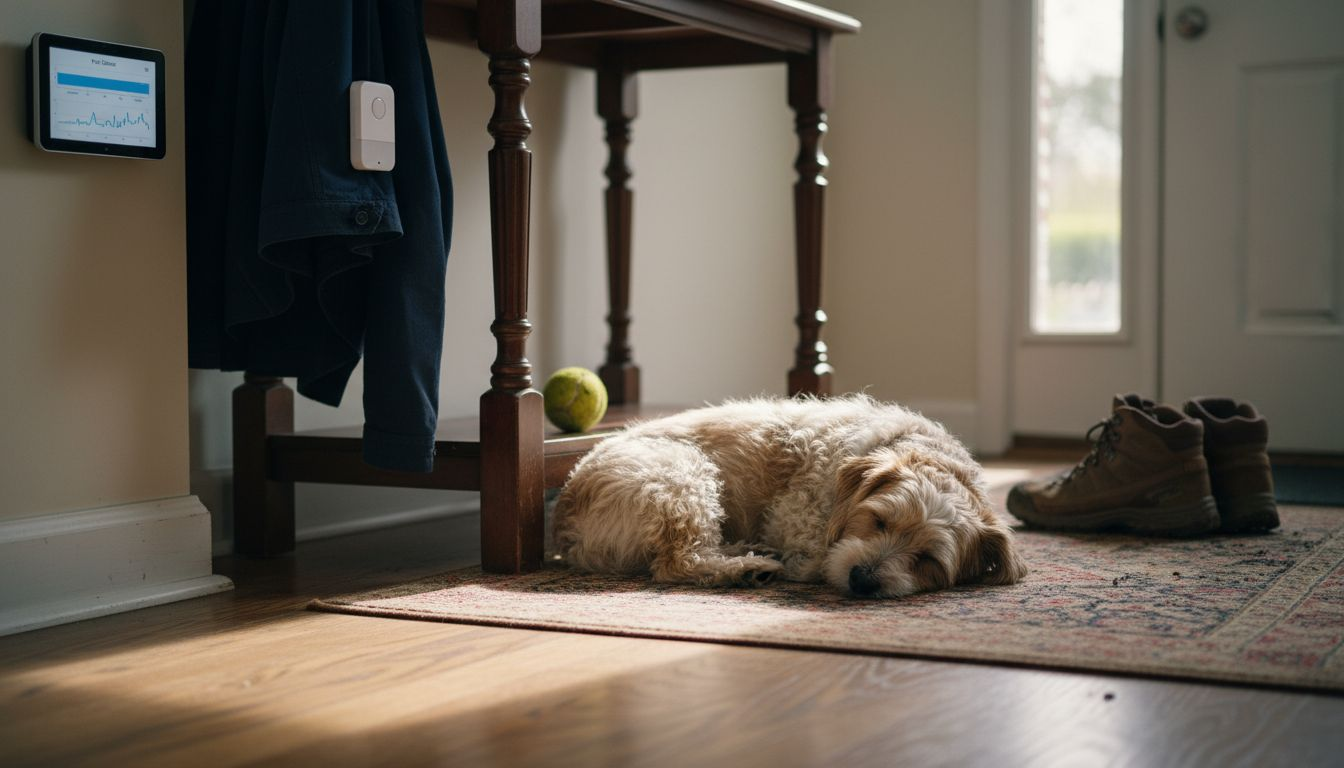
The safety advantage comes from combining multiple data streams. A sudden temperature spike plus unusual behavior patterns might indicate heatstroke. Rapid movement combined with location data alerts you if your pet breaks through a fence. Air quality drops trigger ventilation adjustments automatically. This sensor fusion approach provides context that single-function devices miss, making smart cameras for pet safety far more effective when integrated with environmental and location tracking.
Pro Tip: Configure multi-condition alerts that require two or more sensor triggers before notifying you, reducing false alarms while ensuring genuine emergencies get immediate attention.
Role of universal protocols like Matter in simplifying smart home pet setups
Matter represents a breakthrough in smart home interoperability, addressing the fragmentation that plagued earlier pet tech ecosystems. This IP-based universal protocol supports Thread, Wi-Fi, and Ethernet connectivity, allowing devices from different manufacturers to communicate securely without proprietary hubs or complex configurations. For pet owners, this means choosing the best device for each function without worrying about compatibility issues.
Matter’s impact on smart home ecosystems and pet device interoperability focuses on stability and cross-brand compatibility rather than replacing existing radio technologies. Matter works as a universal language layer on top of proven wireless standards, bringing order to the chaos of competing platforms. Devices certified for Matter guarantee baseline functionality across Apple Home, Google Home, Amazon Alexa, and other major ecosystems.
Key benefits for pet owners include:
- Cross-brand compatibility eliminates vendor lock-in, letting you mix Furbo cameras with Petcube trackers and generic environmental sensors
- Local control keeps basic functions working even during internet outages, crucial for pet safety
- Enhanced security through mandatory encryption and regular security updates protects your pet monitoring data
- Seamless device onboarding using standardized setup codes reduces configuration time from hours to minutes
- Future-proof investments as new devices automatically integrate with existing Matter-certified systems
Existing Zigbee and Z-Wave devices can join Matter ecosystems through bridge devices, modernizing your setup without replacing functional equipment. This gradual upgrade path respects your existing investments while opening access to newer technologies. Thread-based devices offer particular advantages for pet monitoring, providing mesh networking that extends range and improves reliability compared to traditional Wi-Fi connections.
Matter focuses on interoperability and stability rather than replacing radio technologies, creating a universal language for smart home devices that finally delivers on the promise of seamless integration across brands and platforms.
The practical impact shows in daily use. Adding a new pet camera to your Matter-enabled system takes minutes instead of wrestling with app-specific setup procedures. Automations work reliably because devices speak a common language. Smart home security tips pet owners 2026 increasingly emphasize Matter certification as a key selection criterion for building resilient, interoperable pet monitoring systems.
Reducing pet anxiety and enhancing training through smart home integration
Smart home systems address pet anxiety through environmental controls and interactive features that respond to behavioral cues automatically. Lighting systems adjust color temperature and brightness to create calming atmospheres. Climate controls maintain comfortable temperatures that reduce stress. Sound systems play soothing music or white noise to mask anxiety triggers like thunderstorms or traffic. These environmental interventions work continuously, adapting to your pet’s needs even when you’re away.
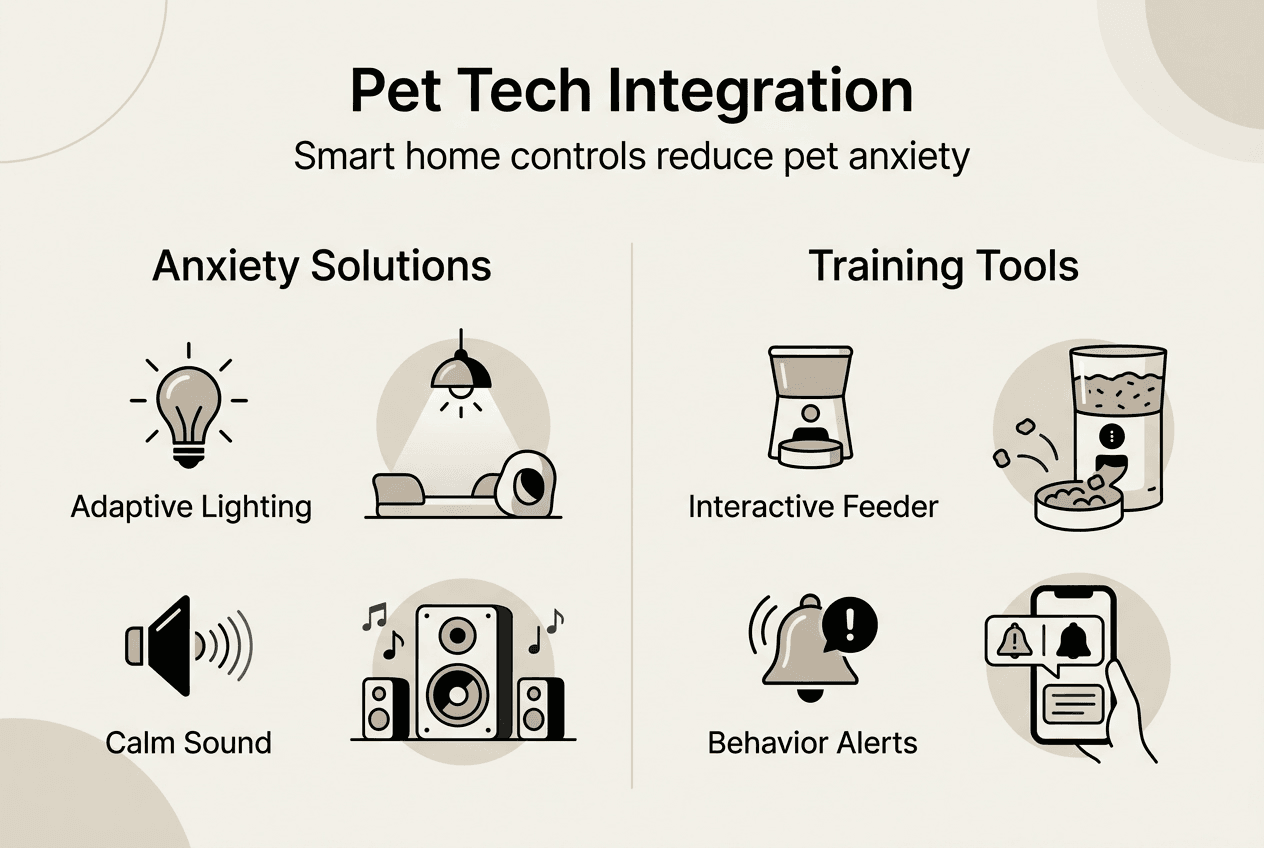
Research demonstrates measurable benefits. Pet tech and anxiety reduction study findings show a 25% reduction in anxiety-related behaviors in pets using smart home systems with environmental controls. The key lies in responsive automation that recognizes stress signals through behavior monitoring and triggers appropriate interventions immediately. This proactive approach prevents anxiety escalation that leads to destructive behaviors or health problems.
Top five ways smart integration supports anxiety relief and training:
- Adjust environment automatically based on behavior patterns detected through camera analysis and motion sensors
- Enable remote calming interaction via two-way audio and treat dispensing when separation anxiety symptoms appear
- Monitor behavior continuously to establish baselines and identify stress triggers for targeted interventions
- Deliver automated training cues like treat rewards or audio commands on schedule to reinforce positive behaviors
- Alert owners to early stress signs through AI analysis of movement patterns, vocalizations, and environmental factors
The training advantages multiply when devices coordinate. Your pet camera detects successful trick completion and triggers the treat dispenser instantly, providing immediate positive reinforcement. GPS trackers combined with boundary alerts teach safe roaming limits. Scheduled feeding and play routines establish predictable patterns that reduce anxiety. This connected ecosystem adapts to your pet’s learning pace, making training more effective than manual approaches.
Pro Tip: Combine behavior monitoring alerts with responsive environmental adjustments for optimal anxiety control, setting up automations that dim lights and play calming sounds automatically when your camera detects pacing or excessive vocalization.
Integration creates feedback loops impossible with standalone devices. When your system learns that your dog becomes anxious around 5 PM before your typical arrival time, it can preemptively adjust the environment and provide interactive distractions. This predictive capability, enabled by AI analysis of historical patterns, represents the frontier of why smart home integration pet technology in 2026. The result is pets that experience less stress and owners who gain peace of mind knowing their companions receive consistent care even during absences.
For maximum effectiveness, pet camera integration benefits extend beyond simple video monitoring to include coordinated environmental responses, treat-based training reinforcement, and health trend analysis that identifies anxiety triggers before they become chronic problems.
Explore smart pet tech solutions at ModernPetTech
Ready to transform your pet care approach with integrated smart home technology? ModernPetTech offers comprehensive guides and curated device recommendations specifically designed for tech-savvy pet owners seeking data-driven monitoring solutions. Whether you’re addressing separation anxiety, enhancing safety, or building a complete smart home ecosystem for your pets, our expert resources help you make informed decisions.
Discover smart pet devices for easy monitoring that integrate seamlessly with your existing smart home setup. Our smart pet monitoring guide walks through device selection, setup best practices, and optimization strategies for maximum effectiveness. Explore how smart pet monitoring AI tech delivers proactive insights that prevent health emergencies and reduce anxiety through environmental adaptation.
Frequently asked questions
What is the key benefit of integrating pet devices in a smart home?
Unified real-time monitoring for health, safety, and behavior with remote control and AI alerts enhances pet care quality significantly. Integration reduces anxiety and prevents emergencies by automating environmental responses based on continuous data analysis. This coordinated approach catches problems early and adapts to your pet’s needs dynamically.
How does the Matter protocol improve smart home pet device compatibility?
Matter enables devices from different brands to work together securely over IP networks, simplifying smart home setups for pet owners who want flexibility in device selection. It supports low-power Thread devices and high-bandwidth Wi-Fi devices simultaneously, enhancing performance and expanding your options beyond single-brand ecosystems.
Can smart home integration help reduce my pet’s anxiety?
Yes, smart home systems that control environmental factors and enable remote interaction can reduce anxiety-related behaviors by up to 25% according to veterinary research. Monitoring behavioral cues allows timely interventions for stress management through automated lighting adjustments, sound therapy, and interactive engagement. The key is responsive automation that recognizes stress signals and triggers calming interventions immediately.
Do I need to replace all my existing pet devices to use Matter?
No, existing Zigbee and Z-Wave devices can join Matter ecosystems through bridge devices, protecting your current investments while enabling gradual upgrades. This approach lets you modernize your setup incrementally, adding Matter-certified devices as you expand your system without discarding functional equipment.
What makes cellular IoT connectivity important for pet monitoring?
Cellular IoT ensures monitoring continues when pets leave Wi-Fi range, crucial for outdoor adventures or travel situations. It provides reliable connectivity in remote areas and serves as backup when home networks fail, guaranteeing uninterrupted safety monitoring regardless of location or network conditions.
Recommended
- Smart home security tips for pet owners in 2026
- Why Smart Home Integration Reduces Pet Anxiety
- Pet Surveillance 2026: 50% More Interaction & Security
- Pet home security tips 2026: 75% smarter monitoring
- Hydroponic Trends in 2025: Innovations Impacting Home Gardens – AMAZING GARDEN
- Rentrée scolaire 2025 : top produits innovants pour les familles – Huby Innovation
