
Smart pet monitoring has evolved from simple webcams into sophisticated AI-powered systems that actively interpret your pet’s behavior, health, and emotional state. The technology combines artificial intelligence, IoT connectivity, and advanced sensors to deliver real-time insights that go far beyond passive recording. 69% of millennial and Gen Z pet owners see technology as essential for responsible pet care, driving explosive adoption of devices that reduce separation anxiety, detect health issues early, and enable meaningful remote interaction with your pets.
Table of Contents
- Introduction To Smart Pet Monitoring
- Technology And Mechanisms Behind Smart Pet Monitoring
- Health Monitoring Benefits
- Behavioral Benefits: Separation Anxiety Reduction
- Common Misconceptions About Smart Pet Monitoring
- Comparison Of Leading Smart Pet Monitoring Products
- Practical Guidance For Selecting And Using Smart Pet Monitors
- Explore Top Smart Pet Monitoring Solutions At ModernPetTech
- Why Use Smart Pet Monitoring?
Key takeaways
| Point | Details |
|---|---|
| AI and IoT integration | Smart monitors actively interpret pet behavior using machine learning, reducing false alarms and increasing reliability. |
| Separation anxiety relief | Two-way audio and treat dispensing features measurably decrease anxiety behaviors during owner absence. |
| Early health detection | Vital sign monitoring detects conditions like dilated cardiomyopathy before visible symptoms appear. |
| Privacy safeguards | End-to-end encryption and local data processing protect against surveillance risks. |
| Product selection matters | Leading devices like Furbo and Petcube offer different AI capabilities; choose based on your pet’s specific needs. |
Introduction to smart pet monitoring
Smart pet monitoring refers to AI and IoT-enabled devices that track, analyze, and respond to your pet’s activities in real time. These systems go beyond basic video feeds by incorporating behavioral analysis, health tracking, and interactive features that enhance your connection with pets when you’re away.
Core functions include monitoring behavior patterns, tracking vital signs like heart rate and activity levels, and facilitating two-way interaction through audio and treat dispensing. The US market has seen explosive growth as younger pet owners integrate technology into their caregiving routines. The smart pet gadgets market shows millennials and Gen Z adopting these tools at unprecedented rates, viewing them as essential rather than optional.
Main device categories include:
- Smart collars with GPS tracking and vital sign sensors
- AI-powered cameras with motion detection and behavioral alerts
- Interactive treat dispensers with scheduling capabilities
- Automated feeders with portion control and meal tracking
- Multi-function hubs combining several features in one unit
The growing importance stems from changing work patterns and increased awareness of pet wellness. Remote work fluctuations and hybrid schedules create unpredictable routines that stress pets. Smart monitoring helps you maintain consistency and connection regardless of your physical location, transforming pet care from reactive to proactive.
Technology and mechanisms behind smart pet monitoring
AI sound recognition forms the backbone of modern pet monitors, distinguishing between normal barking, distress calls, and environmental noises. The algorithms learn your pet’s vocal patterns over time, reducing false alerts while catching genuine concerns. This goes far beyond simple motion detection that triggers on every shadow or passing car.
IoT connectivity enables instant access through smartphone apps, letting you check in from anywhere with internet access. Cloud integration syncs data across devices, while local processing options address privacy concerns by keeping sensitive information on your home network. The smart home integration benefits extend to coordinating with other devices like smart thermostats and lighting systems.
Machine learning personalizes the experience by analyzing behavioral patterns unique to your pet. The system identifies baseline activity levels, typical rest periods, and normal vocalizations. When deviations occur, you receive targeted alerts rather than generic notifications. This adaptive intelligence improves accuracy over weeks of use, learning what matters for your specific pet.
Key sensor technologies include:
- Accelerometers measuring movement intensity and patterns
- Heart rate monitors detecting cardiovascular changes
- Temperature sensors tracking body heat fluctuations
- Microphones capturing audio for behavioral analysis
- High-definition cameras with night vision capabilities
Pro Tip: Start with a 1-2 week baseline period where you observe your pet’s normal patterns through the device without setting aggressive alerts. This training phase helps the AI establish accurate behavioral norms and reduces frustration from initial false positives.
The shift from passive recording to active interpretation represents the core value proposition. Traditional pet cameras simply let you watch. Smart monitors tell you what’s happening and why it matters, connecting observations to actionable insights. Understanding pet monitoring tech basics helps you maximize these interpretation capabilities.
Health monitoring benefits
Vital sign sensors embedded in smart collars and monitors detect anomalies that escape visual observation. Smart collars with AI-driven vital sign monitoring enable early detection of health issues, such as dilated cardiomyopathy in dogs, before visible symptoms appear. Heart rate irregularities, respiratory changes, and activity declines trigger alerts that prompt timely veterinary intervention.
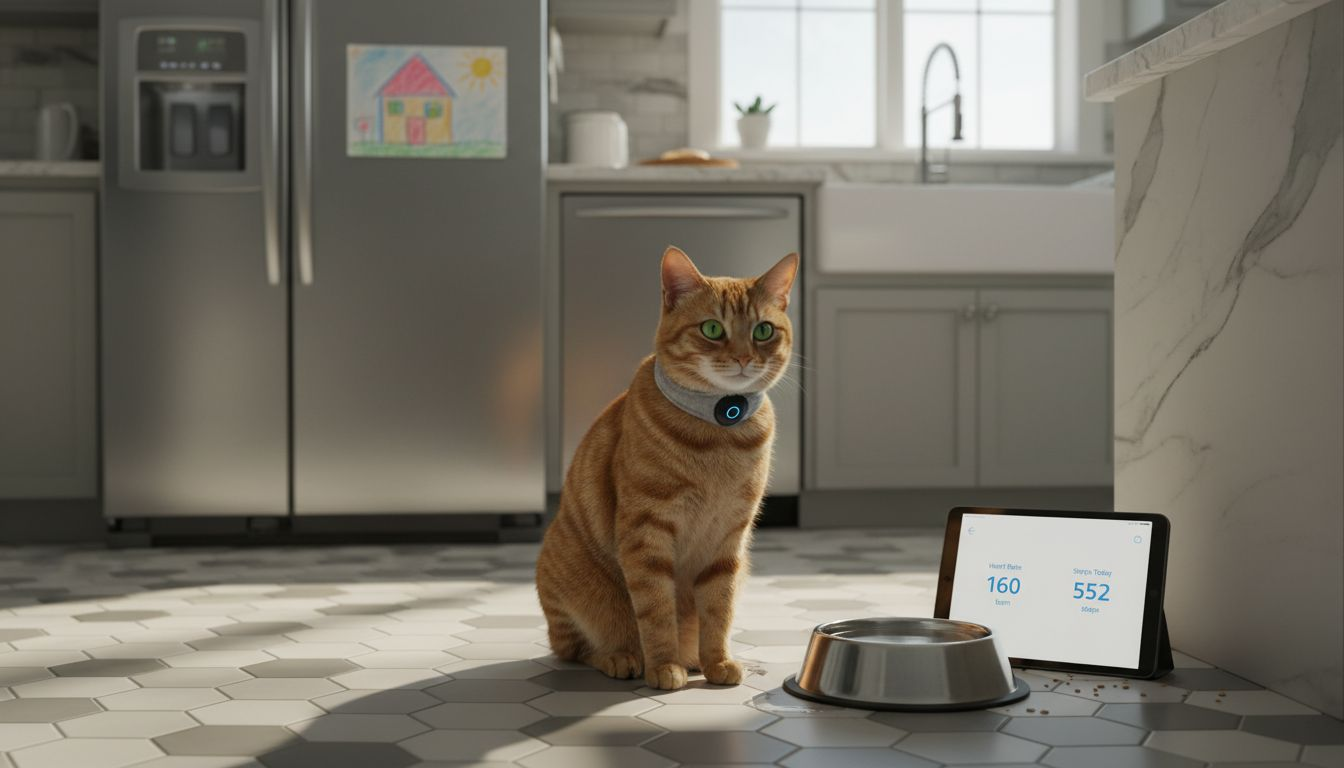
AI analytics continuously compare current data against established baselines, identifying subtle shifts that indicate developing problems. A gradual decrease in daily activity over two weeks might signal arthritis or other mobility issues. Elevated resting heart rates could indicate stress, pain, or cardiac concerns. The technology flags these trends for your attention, supporting earlier diagnosis and treatment.
Early alert systems contribute to significantly better health outcomes. Proactive monitoring reduces late-stage illness cases by approximately 35% by catching conditions when they’re most treatable. The financial impact also matters, as early intervention typically costs far less than emergency treatment for advanced disease.
Continuous data collection creates comprehensive health profiles that complement periodic veterinary visits. You can share weeks or months of activity data, sleep patterns, and vital sign trends with your vet, providing context that 15-minute examinations can’t capture. This partnership between technology and professional care delivers more informed diagnosis and treatment planning.
Primary health benefits include:
- Detection of cardiovascular irregularities before crisis events
- Identification of mobility changes indicating pain or arthritis
- Tracking of eating and drinking patterns signaling illness
- Monitoring of sleep quality and rest disruptions
- Documentation of behavioral changes related to cognitive decline
The contrast with traditional reactive care is stark. Conventional approaches rely on owner observation and scheduled checkups, often missing gradual changes. Pet monitoring for health benefits extends veterinary care into daily life, creating safety nets that catch problems before they become emergencies.
Behavioral benefits: separation anxiety reduction
Two-way audio functionality lets you communicate with pets remotely, providing verbal reassurance during stressful moments. Your voice soothes anxious dogs or cats who respond to familiar tones, reducing destructive behaviors and excessive vocalization. Real-time interaction maintains your presence even when you’re physically absent.
Treat dispensers add positive reinforcement to remote monitoring, letting you reward calm behavior or redirect anxious energy. Scheduled treat releases create predictable comfort moments throughout the day. This combination of voice and rewards replicates in-person soothing techniques, giving you practical tools to manage separation distress.
Research demonstrates measurable decreases in anxiety behaviors when owners use interactive monitoring consistently. Dogs show reduced barking, pacing, and destructive chewing. Cats exhibit fewer stress-related behaviors like excessive grooming or litter box issues. The ability to check in and respond to your pet’s emotional state delivers tangible behavioral improvements.
Remote interaction also strengthens the pet-owner bond despite physical distance. Regular voice contact and treat rewards maintain your relationship during work hours or travel. Pets learn that separation is temporary and manageable, reducing long-term anxiety as they associate alone time with positive interactions rather than abandonment.
Key anxiety reduction features include:
- Live two-way audio for verbal comfort and commands
- Scheduled treat dispensing creating predictable positive moments
- Motion-activated alerts letting you respond to distress quickly
- Recorded voice messages playing on automatic schedules
- Activity tracking showing how your pet copes when alone
Pro Tip: Establish a consistent remote interaction schedule rather than checking in randomly. Pets thrive on routine, and predictable video calls or treat releases at the same times daily reduce overall anxiety more effectively than sporadic contact.
The emotional wellbeing impact extends beyond immediate comfort. Pet camera anxiety reduction helps pets develop healthier coping mechanisms over time. Understanding tech to reduce pet separation anxiety empowers you to use these tools strategically, while smart home pet anxiety benefits multiply when integrated with environmental controls like lighting and temperature.
Common misconceptions about smart pet monitoring
Many people assume smart pet monitors passively record without interpretation, but modern devices actively interpret pet behaviors using machine learning, reducing false alarms and increasing trustworthiness. The AI distinguishes between normal activities and concerning behaviors, learning what’s typical for your pet and alerting only when genuine issues arise.
Machine learning accuracy improves dramatically during the first month of use. Initial setup requires some calibration as the system learns your pet’s patterns and your home environment. However, after this training period, false positive rates drop significantly. Users report that smart monitors become increasingly reliable, building trust through consistent, accurate alerts.
Privacy concerns represent another major misconception deterring adoption. Privacy with smart pet devices is protected by end-to-end encryption and local data processing, addressing surveillance risks that worry US owners. Reputable manufacturers implement strong security protocols, giving you control over who accesses your data and how it’s stored.
Key misconceptions include:
- Believing devices only record rather than analyze and interpret
- Assuming all alerts are false positives without accuracy improvement
- Fearing surveillance without understanding encryption protections
- Thinking setup requires advanced technical knowledge
- Expecting instant perfection without allowing training periods
“Smart pet monitoring technology has matured significantly since early iterations. Current AI capabilities deliver genuinely useful insights rather than overwhelming owners with irrelevant notifications. The key is choosing quality devices from established brands with proven security practices.”
The reality is that technology has evolved to address early limitations. Modern smart monitors balance comprehensive monitoring with user-friendly interfaces and robust privacy safeguards. Understanding the actual capabilities helps you make informed decisions rather than dismissing these tools based on outdated assumptions about their functionality or security.
Comparison of leading smart pet monitoring products
Furbo specializes in treat dispensing combined with barking alerts, using moderate AI capabilities to detect when your dog vocalizes. The device excels at tossing treats accurately and provides clear video quality. Its AI focuses primarily on sound recognition rather than comprehensive behavioral analysis, making it ideal for owners prioritizing interaction over detailed health tracking.
Petcube offers more advanced AI with both audio and video analysis capabilities. The system recognizes multiple pet behaviors beyond barking, including unusual movement patterns or activity changes. Privacy controls are particularly strong, with local storage options and granular sharing permissions. The interface provides detailed activity timelines and behavioral insights.
| Feature | Furbo | Petcube |
|---|---|---|
| AI Capabilities | Barking detection | Multi-behavior analysis |
| Treat Dispensing | Excellent accuracy | Standard functionality |
| Privacy Controls | Cloud storage primary | Local storage options |
| Two-Way Audio | Clear voice quality | HD audio with noise reduction |
| Health Tracking | Basic activity logs | Detailed behavioral patterns |
| Price Range | Mid-tier | Premium |
Two-way communication quality varies noticeably between brands. Furbo provides clear audio but may experience occasional lag during peak internet usage. Petcube’s noise reduction technology delivers cleaner sound in busy households, making voice commands more effective. App interfaces also differ in complexity, with Furbo favoring simplicity while Petcube offers more customization options.
Security settings deserve careful evaluation. Both brands use encryption, but implementation details matter. Petcube allows more control over data storage location and sharing permissions. Furbo’s cloud-focused approach simplifies setup but requires trust in their server security. Review each manufacturer’s privacy policy and security certifications before purchasing.
Recommendations depend heavily on your specific situation. Choose Furbo if treat interaction and straightforward barking alerts meet your needs. Select Petcube if you want comprehensive behavioral analysis and prioritize privacy controls. Consider your pet’s behavior patterns, your budget, and which features address your primary concerns. Exploring smart pet devices examples helps identify options matching your requirements.
Practical guidance for selecting and using smart pet monitors
Step 1: Assess your pet’s specific needs before shopping. Anxious dogs benefit most from interactive features like treat dispensing and two-way audio. Health concerns require vital sign monitoring and activity tracking. Safety-focused owners prioritize reliable alerts and video quality. List your top three priorities to guide feature selection.
Step 2: Evaluate AI capabilities carefully during research. Read reviews focusing on false positive rates and learning curve duration. Check whether behavioral analysis matches your pet’s species and typical activities. Confirm that privacy features align with your security standards, including encryption protocols and data storage options.
Step 3: Customize alert settings immediately after installation to avoid notification fatigue. Start with broader parameters, then narrow them as the AI learns your pet’s patterns. Schedule regular remote interactions at consistent times rather than sporadic check-ins. Consistency helps your pet adapt and maximizes anxiety reduction benefits.
Step 4: Follow manufacturer security recommendations strictly during setup. Change default passwords immediately, enable two-factor authentication, and review sharing permissions. Keep firmware updated to patch security vulnerabilities. Understanding pet monitoring security best practices protects both your privacy and your pet’s safety.
Implementation steps include:
- Install devices in locations with clear views of your pet’s primary areas
- Test audio quality and treat dispensing before leaving your pet alone
- Run the system for 1-2 weeks while home to establish baselines
- Adjust sensitivity settings based on initial performance
- Create a monitoring routine that fits your daily schedule
Pro Tip: Document your pet’s typical daily routine including meal times, nap periods, and active hours before activating alerts. Share this schedule with the device’s learning algorithms if the app offers manual input options. This accelerates the AI training process and reduces initial false positives.
Establish consistent monitoring habits to maximize device impact. Check the app during natural breaks in your day rather than obsessively. Respond to genuine alerts promptly to reinforce the system’s value. Review weekly activity summaries to identify trends that require veterinary attention or behavioral adjustments. Learning pet monitoring setup tips ensures you use the technology effectively from day one.
Explore top smart pet monitoring solutions at ModernPetTech
Ready to enhance your pet care with proven smart monitoring technology? ModernPetTech offers a curated selection of top-rated pet cameras, smart collars, and interactive devices backed by expert reviews and real-world testing. Our detailed guides walk you through feature comparisons, helping you match devices to your pet’s unique needs and your lifestyle.

Discover comprehensive tutorials covering setup, customization, and troubleshooting to maximize your investment. Browse examples of smart pet devices vetted for reliability and security. Follow our pet safety monitoring tutorial for step-by-step implementation advice. Learn more about why use pet monitoring to make confident decisions backed by research and testing. Shop with the assurance that comes from expert curation and practical guidance designed specifically for tech-savvy pet owners who demand quality and results.
Why use smart pet monitoring?
What key features should I look for in a smart pet monitor?
Prioritize AI-powered behavioral analysis that learns your pet’s patterns and reduces false alerts. Two-way audio and treat dispensing address separation anxiety effectively. Vital sign monitoring catches health issues early, while strong encryption protects your privacy. Choose features matching your pet’s specific needs rather than buying maximum capabilities you won’t use.
How does smart monitoring reduce my pet’s separation anxiety?
Interactive features let you communicate and reward your pet remotely, maintaining your presence despite physical absence. Consistent voice contact and scheduled treat releases create positive associations with alone time. Research shows measurable decreases in anxious behaviors like excessive barking and destructive chewing when owners use these tools regularly.
Are smart pet devices safe in terms of data privacy?
Reputable manufacturers implement end-to-end encryption and offer local data storage options that keep footage on your home network. Review privacy policies carefully and choose brands with strong security certifications. Enable two-factor authentication, change default passwords immediately, and keep firmware updated to maintain protection against emerging threats.
Can smart monitors detect early signs of pet illness?
Yes, vital sign sensors in smart collars detect cardiovascular irregularities, activity changes, and behavioral shifts before visible symptoms appear. AI analytics compare current data against baselines, alerting you to gradual declines that indicate developing problems. Early detection enables timely veterinary intervention, improving outcomes and often reducing treatment costs significantly.
How often should I interact with my pet remotely using these devices?
Establish a consistent schedule with 2-3 brief interactions daily at predictable times rather than random check-ins. Pets respond better to routine, and regular contact at the same hours reduces overall anxiety. Use treat releases or voice messages during natural breaks in your workday. Avoid obsessive monitoring, which creates dependency rather than building healthy independence.
Recommended
- Pet home security tips 2026: 75% smarter monitoring
- Pet Surveillance 2026: 50% More Interaction & Security
- Multi-Pet Camera Setup: AI Cuts False Alerts 40%
- Why Use Pet Monitoring – Enhancing Pet Wellbeing Remotely
- Pet Monitoring Cameras | The Best to Keep an Eye on Pets
