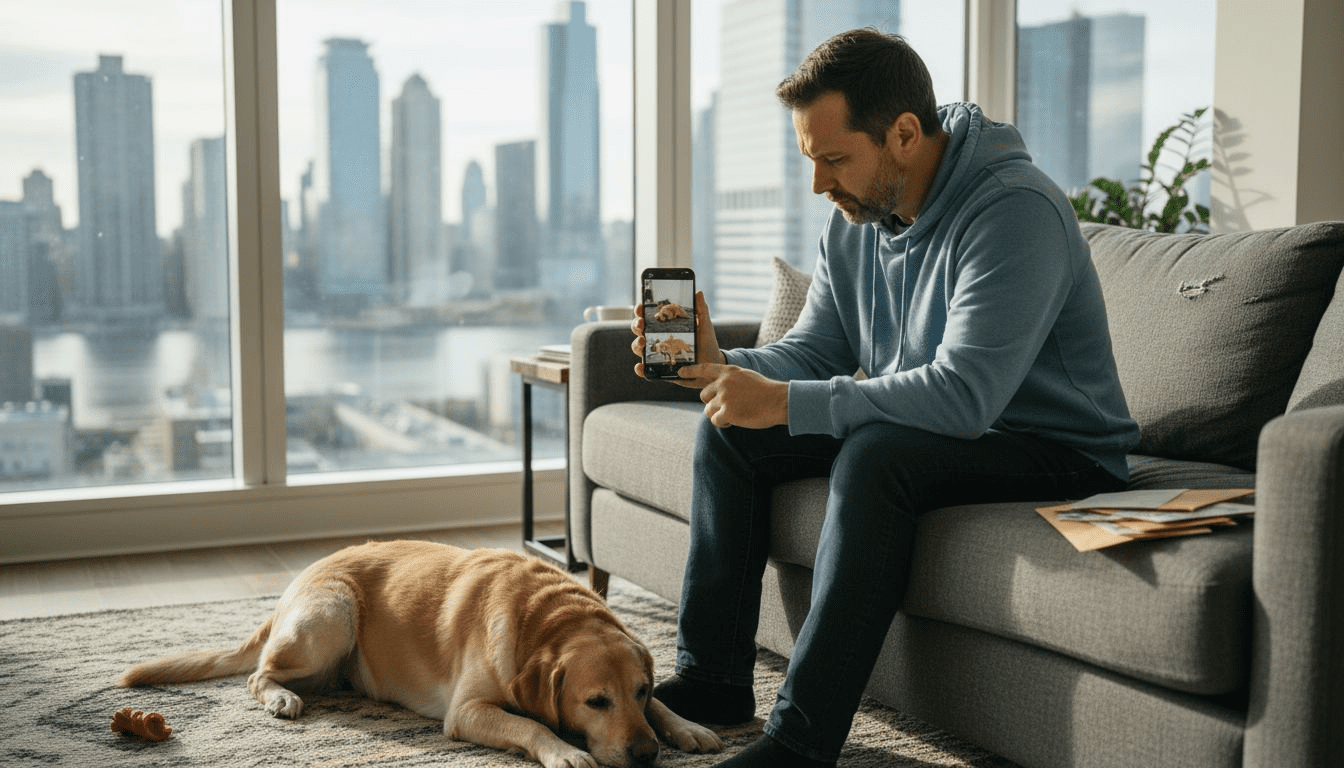
Advanced pet surveillance technology is transforming how tech-savvy owners manage pet anxiety and home security. Studies reveal that two-way audio in pet cameras can increase pet-owner interactions by 50%, drastically reducing anxiety. This guide breaks down the features, brands, and strategies to help you select the right monitoring solution that combines video quality, interactive engagement, and AI-powered alerts to keep your pet calm and your home secure.
Table of Contents
- Understanding Pet Surveillance Technology
- Key Features That Alleviate Pet Anxiety
- How Smart Alerts Enhance Home Security
- Comparing Leading Pet Surveillance Brands
- Advanced Technology Features: Video Quality and Night Vision
- Common Misconceptions and Real Limitations
- Integrating Pet Surveillance Into Smart Homes
- Practical Tips for Choosing the Right Pet Surveillance Device
- Explore ModernPetTech’s Top Pet Monitoring Solutions
- Frequently Asked Questions About Pet Surveillance Technology
Key Takeaways
| Point | Details |
|---|---|
| Advanced pet surveillance combines HD video, interactive features, and smart alerts | These integrated systems provide comprehensive monitoring for pet well-being and home security |
| Two-way audio and treat dispensing reduce pet anxiety symptoms up to 40% | Interactive engagement simulates owner presence, calming anxious pets remotely |
| AI-powered alerts improve home security while minimizing false alarms | Smart detection differentiates pets from humans and unusual activity for accurate notifications |
| Leading brands like Furbo and Petcube vary in AI features and treat dispensing | Brand choice depends on pet behavior severity, multi-pet households, and integration needs |
| Choosing the right device depends on pet behavior, home setup, and budget | Assess anxiety levels, smart home compatibility, and prioritize features that match your needs |
Understanding Pet Surveillance Technology
Pet surveillance technology refers to integrated devices combining high-resolution video cameras, wireless connectivity, and mobile applications designed specifically for remote pet monitoring. These systems go beyond basic security cameras by incorporating features tailored to pet behavior and owner interaction. Understanding what a pet camera is helps you grasp how these devices function as both anxiety-reduction tools and security enhancements.
The core components work together seamlessly. High-resolution cameras capture clear video of your pet’s activities throughout the day. Wi-Fi connectivity transmits live feeds to your smartphone, enabling real-time monitoring from anywhere. Mobile apps serve as the control center, offering features like notifications, two-way communication, and treat dispensing at your fingertips.
These systems provide multiple benefits simultaneously. For pet anxiety, visible monitoring and interactive features create a sense of owner presence even when you’re away. For home security, continuous video surveillance deters intruders and documents unusual activity. The technology enables 24/7 observation and owner interaction regardless of distance, offering peace of mind for busy pet parents.
Key technological advantages include:
- Remote video access through encrypted mobile apps
- Cloud storage for reviewing past footage and behavioral patterns
- Integration with smart home ecosystems for automated routines
- Customizable alert settings based on specific pet needs
Key Features That Alleviate Pet Anxiety
Specific features in modern pet cameras directly address separation anxiety and destructive behaviors. Two-way audio benefits allow you to speak to your pet in real time, providing verbal reassurance when they show signs of distress. This simple interaction increases engagement by 50%, helping pets feel connected to their owners throughout the day.
Treat dispensing capabilities offer another powerful anxiety-reduction tool. Studies show that scheduled treat rewards reduce destructive behavior by 35%, as pets learn to associate your absence with positive experiences rather than abandonment. You can trigger treat releases remotely through the app, creating positive reinforcement patterns that calm anxious pets over time.
Interactive engagement features simulate your physical presence effectively. Interactive pet cameras combine audio, video, and treat dispensing to create multi-sensory experiences for your pet. When used together, these features can reduce anxiety symptoms by up to 40%, providing measurable improvements in pet well-being.
Best practices for anxiety reduction include:
- Establishing consistent check-in times throughout the day
- Using two-way audio for brief, calming conversations
- Scheduling treat dispensing during typical anxiety trigger periods
- Monitoring video feeds to identify specific stress behaviors
Pro Tip: Start with short separation periods while using interactive features to build positive associations. Gradually increase absence duration as your pet shows reduced anxiety symptoms.
Important limitations exist. Technology supports but does not replace direct care, physical exercise, and consistent training. Think of pet cameras as tools that enhance your care routine, not complete substitutes for human attention and veterinary guidance when needed.
How Smart Alerts Enhance Home Security
AI-powered motion detection transforms basic video monitoring into intelligent security systems. AI-powered motion detection reduces false alarms and improves behavioral alerts for pet safety and home security. These systems differentiate between your pet’s normal movement, human activity, and genuinely unusual events requiring your attention.
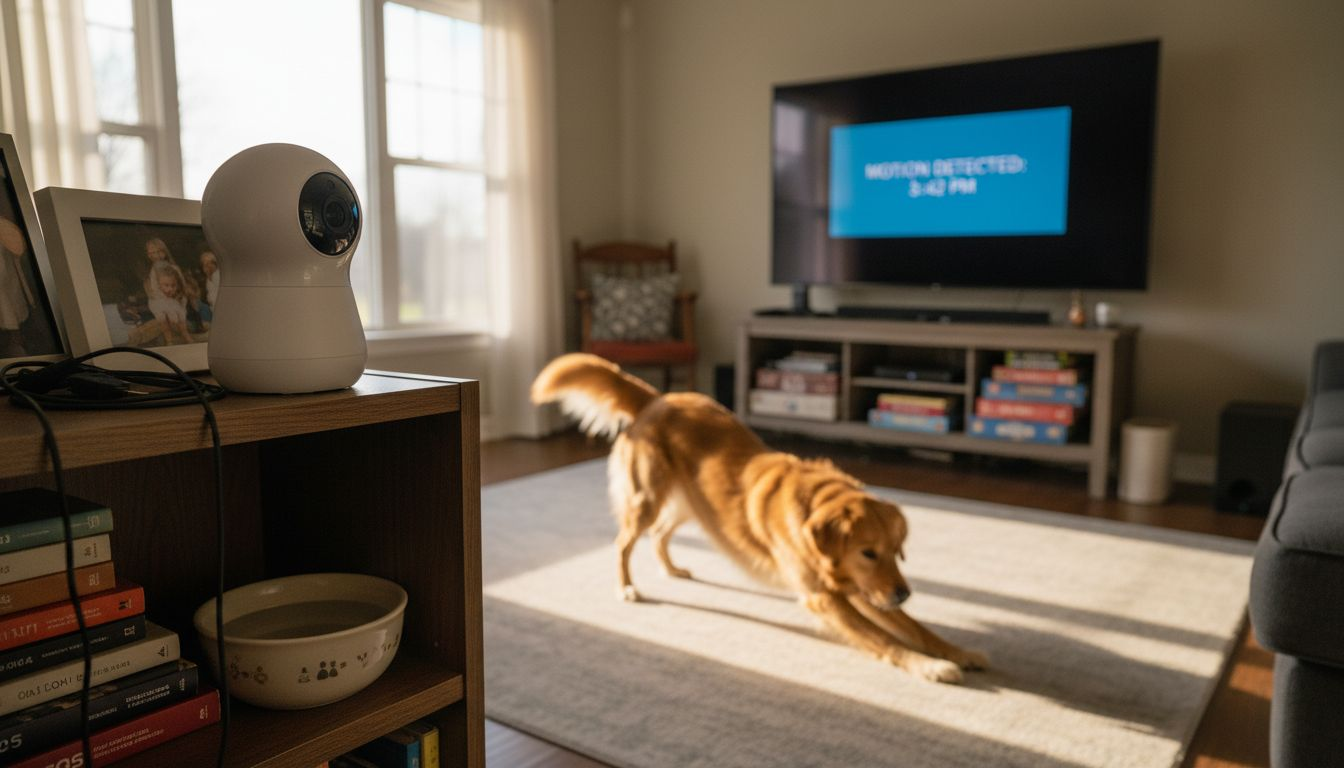
Smart alert systems notify you only when relevant events occur, dramatically reducing notification fatigue. Traditional motion sensors trigger alerts every time your pet walks past the camera, creating dozens of useless notifications daily. AI algorithms learn your pet’s routine patterns and filter out normal activity, alerting you only to deviations or potential security concerns.
Behavior identification capabilities provide dual benefits. For security, the system detects unfamiliar faces or unusual movement patterns that might indicate intruders. For pet care, it recognizes anxiety behaviors like excessive pacing, barking, or destructive actions, enabling timely intervention through two-way audio or early return home.
Motion detection in pet cameras continues improving through machine learning. Advanced systems now identify specific pet behaviors such as jumping on furniture, approaching restricted areas, or showing signs of distress. This behavioral data helps you understand your pet’s daily patterns and make informed care decisions.
Key alert features include:
- Person detection to identify human presence versus pet activity
- Sound recognition for barking, meowing, or distress vocalizations
- Activity zones to monitor specific areas like doors or pet beds
- Customizable notification schedules to avoid disruptions during meetings
Advanced AI insights from other industries demonstrate how pattern recognition algorithms improve accuracy over time, a principle directly applicable to pet surveillance technology.
Comparing Leading Pet Surveillance Brands
Selecting the right brand requires understanding specific feature differences and intended use cases. The Furbo Dog Camera and Petcube Bites 2 represent the two most popular options for tech-savvy pet owners seeking comprehensive monitoring solutions.
| Feature | Furbo Dog Camera | Petcube Bites 2 |
|---|---|---|
| Video Quality | 1080p HD | 1080p HD with 160° wide-angle |
| Treat Dispensing | Yes, with scheduling | Yes, with portion control |
| Two-Way Audio | Clear audio with noise cancellation | Enhanced speaker for larger rooms |
| AI Features | Bark alerts | Advanced behavioral alerts and activity tracking |
| Best For | Single-dog households, bark monitoring | Multi-pet homes, comprehensive behavior analysis |
| Price Range | Mid-range | Premium |
Furbo Dog Camera excels with strong bark alert technology and treat scheduling capabilities. Its 1080p video provides clear monitoring, and the device integrates smoothly with both iOS and Android platforms. The bark alert feature specifically targets dogs with separation anxiety triggered by auditory sensitivity, notifying owners immediately when excessive barking begins.
Petcube Bites 2 offers a wider 160-degree field of view, making it ideal for multi-pet households or larger monitoring areas. Its advanced AI behavioral alerts track activity patterns more comprehensively than basic motion detection. The enhanced speaker system projects audio clearly across larger spaces, beneficial for homes with multiple rooms or open floor plans.
Trade-offs between brands center on AI sophistication versus price points. Petcube’s premium pricing reflects more advanced behavioral tracking and wider monitoring coverage. Furbo provides excellent core features at a more accessible price, suitable for owners prioritizing bark alerts and treat dispensing over extensive AI analytics.
AI pet camera comparison resources help you evaluate which features match your specific needs. Brand choice should consider pet anxiety severity, whether you have single or multiple pets, and your home security priorities. Brand comparisons across the market show consistent patterns in feature-to-price relationships.
Pro Tip: Evaluate compatibility with your existing smart home setup before purchase. Devices that integrate with Alexa, Google Assistant, or Apple HomeKit offer significantly more automation possibilities and user convenience.
Review the pet camera buying checklist for systematic evaluation criteria covering all major brands and feature categories.
Advanced Technology Features: Video Quality and Night Vision
Video resolution directly impacts monitoring effectiveness for both pet behavior and home security. High-definition (1080p and above) video quality in pet cameras increases the accuracy of monitoring both pet behavior and home security events. Clear video enables you to distinguish subtle anxiety signals like trembling or excessive licking that lower resolutions might miss.
| Resolution | Clarity Level | Best Use Case | Bandwidth Requirements |
|---|---|---|---|
| 720p | Basic | Small spaces, budget constraints | Low (2-4 Mbps) |
| 1080p | High-definition | Standard monitoring, most homes | Moderate (4-8 Mbps) |
| 4K | Ultra high-definition | Large homes, security priority | High (15-25 Mbps) |
Night vision extends effective surveillance into darkness or low-light conditions. Infrared LEDs illuminate your pet without disrupting sleep, providing clear video during nighttime hours when anxiety behaviors often peak. This capability proves essential for monitoring nocturnal pets or security concerns during evening hours.
Higher resolution increases detection accuracy but raises costs and bandwidth needs. 4K cameras require robust Wi-Fi networks and larger cloud storage plans, potentially doubling monthly subscription costs compared to 1080p alternatives. For most pet owners, 1080p provides the optimal balance between clarity and practical constraints.
Video quality features vary significantly across price ranges. Budget cameras often cap at 720p without night vision, limiting usefulness for comprehensive monitoring. Mid-range devices typically offer 1080p with infrared night vision, meeting most household needs. Premium models provide 4K resolution with color night vision, justified primarily for large homes or heightened security requirements.
Owners must balance video quality with affordability and connectivity constraints. Assess your home’s Wi-Fi speeds and coverage before investing in 4K cameras that might exceed your network’s capabilities. The impact of HD video demonstrates measurable improvements in monitoring accuracy, but practical implementation depends on your infrastructure.
Common Misconceptions and Real Limitations
Pet surveillance technology offers substantial benefits, but overstated marketing claims create unrealistic expectations. Pet cameras reduce anxiety symptoms by 30 to 40%, not fully eliminate them. Severe anxiety cases require comprehensive treatment plans including behavioral training, environmental enrichment, and potentially veterinary intervention alongside technology support.
Lower priced cameras often lack AI and HD video features, leading to buyer dissatisfaction. Devices under $50 typically provide basic video feeds without smart alerts, treat dispensing, or two-way audio. These limitations severely reduce anxiety-reduction effectiveness, making the initial savings counterproductive when you need to upgrade shortly after purchase.
Treat dispensing alone proves insufficient for meaningful anxiety reduction. Interactive features produce better outcomes when combined. A camera that only dispenses treats without two-way audio or behavioral alerts addresses symptoms superficially, missing opportunities for real-time owner engagement that creates lasting behavioral improvements.
Common misconceptions to avoid:
- Believing any camera will cure separation anxiety without training
- Expecting budget devices to include premium AI features
- Assuming treat dispensing replaces the need for daily exercise and enrichment
- Thinking surveillance cameras eliminate all home security risks
Technology supports but does not replace consistent pet care and attention. View cameras as tools enhancing your existing care routine, not automated solutions removing the need for daily walks, play sessions, and quality time. The 50% increase in interaction facilitated by two-way audio only benefits pets when owners actively use the feature regularly.
Pro Tip: Review privacy and data security standards before purchase to protect personal information. Cameras with end-to-end encryption and clear data policies prevent unauthorized access to your home video feeds.
Realistic expectations for pet cameras center on incremental improvements in pet well-being and security monitoring rather than complete anxiety elimination or foolproof security systems.
Integrating Pet Surveillance into Smart Homes
Connecting pet surveillance devices with existing smart home ecosystems maximizes convenience and monitoring effectiveness. Compatibility with voice assistants like Alexa and Google Assistant enables hands-free control, allowing you to check on your pet or dispense treats through simple voice commands while cooking or working.
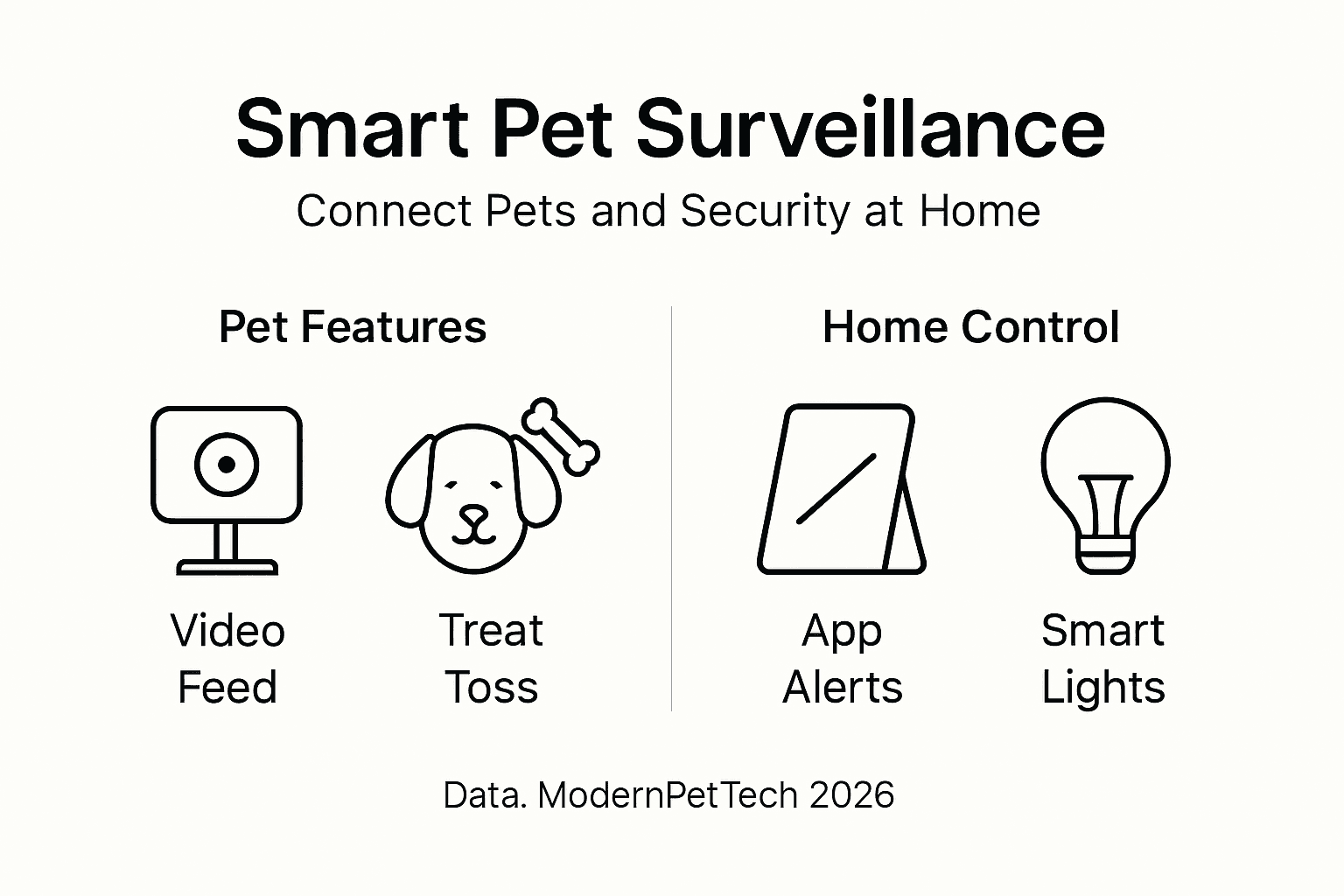
Automation routines can trigger pet monitoring based on schedules or events. Program your system to activate video monitoring when you leave for work, send treat rewards at specific times throughout the day, or notify you if your pet enters restricted areas. These automated workflows reduce the mental burden of remembering to check in manually.
Integrated systems enhance owner convenience significantly:
- Voice commands to view live feeds on smart displays
- Automated treat dispensing tied to your calendar or location
- Cross-device notifications across smartphones, tablets, and smartwatches
- Integration with smart locks to coordinate pet camera activation when doors lock
User satisfaction is higher with seamless device interoperability. Pet cameras that work within your existing ecosystem feel like natural extensions of your smart home rather than isolated gadgets requiring separate apps and management. This integration encourages consistent use, directly contributing to the anxiety-reduction benefits that depend on regular owner interaction.
Smart home integration guides walk through connecting popular pet cameras with major platforms. Assess device compatibility with your smart home before buying to ensure smooth implementation. Devices supporting IFTTT (If This Then That) offer the most flexible automation possibilities, allowing custom routines tailored to your pet’s specific needs and daily schedule.
Practical Tips for Choosing the Right Pet Surveillance Device
Selecting the ideal pet surveillance solution requires systematic evaluation of your specific circumstances and priorities. Follow these steps to match device features with your household needs:
-
Assess your pet’s anxiety severity to prioritize interactive features. Mild anxiety may only require two-way audio, while severe cases benefit from full interactive systems including treat dispensing and behavioral alerts.
-
Evaluate your home’s layout and existing smart devices for compatibility. Measure room sizes to determine necessary camera field-of-view angles. Document your current smart home ecosystem to ensure new cameras integrate smoothly.
-
Prioritize camera specs like HD video and night vision for clear monitoring. Budget for at least 1080p resolution if you need to identify subtle behavioral cues or security concerns accurately.
-
Focus on AI smart alerts for accurate notifications and home security. Devices with person detection and behavior recognition dramatically reduce notification fatigue while improving alert relevance.
-
Balance desired features with budget, favoring reliable brands. Investing in mid-range devices from established brands typically provides better long-term value than budget cameras requiring frequent replacement.
-
Review subscription costs for cloud storage and premium features. Many cameras require monthly fees for video history and advanced AI capabilities, potentially doubling total ownership costs over three years.
-
Test device apps and notification systems prior to purchase for usability. Check app store reviews focusing on interface design, notification reliability, and customer support responsiveness.
Pro Tip: Test device apps and notification systems prior to purchase for usability. Many retailers offer return policies allowing you to evaluate real-world performance in your home before committing long term.
Choosing pet surveillance devices systematically prevents costly mistakes and ensures your investment delivers meaningful benefits for pet anxiety reduction and home security enhancement.
Explore ModernPetTech’s Top Pet Monitoring Solutions
Now that you understand the technology and selection criteria, ModernPetTech offers curated resources to simplify your decision. Our platform provides detailed examples of pet monitoring devices comparing Furbo, Petcube, and other leading brands with real-world performance data.
Our pet safety monitoring tutorial walks you through complete setup processes, from initial installation to optimizing alert settings for your pet’s specific behaviors. These step-by-step guides support seamless integration into your existing smart home ecosystem.
The comprehensive pet camera buying checklist consolidates evaluation criteria, helping you assess anxiety levels, home layout, feature priorities, and budget constraints systematically. This structured approach ensures confident purchase decisions backed by technical knowledge and practical considerations tailored to tech-savvy pet owners seeking advanced monitoring solutions.
Frequently Asked Questions About Pet Surveillance Technology
What privacy measures protect my data on pet cameras?
Reputable pet cameras use end-to-end encryption to protect video feeds from unauthorized access. Look for devices with two-factor authentication and regular security updates. Review each brand’s privacy policy to understand data storage locations and sharing practices before purchase.
How do I install a pet surveillance device for optimum coverage?
Position cameras at your pet’s eye level, 3 to 5 feet above the floor, angled toward their favorite resting spots. Ensure strong Wi-Fi signal strength at the installation location and test video quality before permanent mounting. Place cameras in corners to maximize room coverage while avoiding direct sunlight that washes out video quality.
Can pet surveillance technology help with aggressive behavior?
Cameras help identify triggers for aggressive behavior by documenting incidents and surrounding circumstances. Two-way audio allows immediate verbal correction during unwanted behaviors. However, technology should complement professional behavioral training rather than replace it for serious aggression issues.
What app features are essential for daily pet monitoring?
Prioritize apps with reliable push notifications, intuitive live video access, and easy treat dispensing controls. Cloud storage for reviewing past footage helps identify behavioral patterns. Look for customizable alert settings that filter notifications based on your preferences and schedule.
Is 4K video necessary for effective pet surveillance?
4K resolution is not necessary for most pet owners. 1080p HD provides sufficient clarity to monitor behavior and identify security concerns effectively. Invest in 4K only if you have a large home requiring digital zoom capabilities or heightened security priorities justifying the increased bandwidth and storage costs.
Recommended
- Mobile Access for Pet Cameras: 63% Improved Safety
- News & Innovations – ModernPetTech: Treat-Dispensing Pet Camera Reviews
- Improve Home Security for Pets with Smart Cameras
- Pet Monitoring Workflow for Effective Remote Interaction
- News – The Zoofamily

1 thought on “Pet Surveillance 2026: 50% More Interaction & Security”