
Securing your home while caring for pets presents unique challenges that traditional security systems often fail to address. Pets trigger false alarms, require safe entry and exit, and need monitoring to reduce anxiety when you’re away. The good news is that smart technology in 2026 has evolved dramatically, with AI-powered cameras, cryptographically secure pet doors, and adaptive motion sensors designed specifically for homes with animals. These innovations allow you to maintain robust security without compromising your pet’s comfort or freedom. This guide walks you through the essential criteria, top devices, and implementation strategies to create a pet-friendly security setup that protects your home and keeps your furry companions safe and calm.
Table of Contents
- Key Criteria For Selecting Smart Home Security Tech For Pet Owners
- Top Smart Pet Security Devices To Install In 2026
- Comparison Of Leading Pet Security Tech Solutions In 2026
- How To Decide And Implement The Best Home Security Setup For Your Pets
- Explore Modern Pet Tech Solutions For Smarter Home Security
Key takeaways
| Point | Details |
|---|---|
| Edge AI enhances privacy | Edge computing processes pet recognition locally, eliminating cloud dependency and protecting your data while reducing response delays. |
| Smart pet doors prevent breaches | Cryptographic validation in devices like PawPort blocks unauthorized access far more effectively than traditional RF-based pet doors. |
| Adjustable sensors reduce false alarms | Motion detectors calibrated for pet weight distinguish animals from intruders, cutting unnecessary alerts by up to 80%. |
| AI cameras identify pets accurately | Advanced models like Wyze Cam v4 recognize small pets as light as 5 lbs, ensuring reliable monitoring without constant interruptions. |
Key criteria for selecting smart home security tech for pet owners
Choosing the right smart security devices for a pet-friendly home requires balancing multiple factors that traditional systems overlook. You need technology that recognizes your pets without compromising security, adapts to their behavior, and respects your privacy. The criteria below help you evaluate devices that meet these specialized needs.
First, prioritize edge computing capabilities. Edge inference prioritizes data sovereignty, eliminating third-party liability and the risk of model drift. This means pet recognition happens on the device itself rather than sending video feeds to remote servers. The result is faster response times, enhanced privacy, and systems that continue working even if your internet connection drops. Edge-based AI also learns and adapts to changes in your pet’s appearance over time, such as weight fluctuations or seasonal coat changes, without requiring manual retraining.
Motion sensor technology represents another critical criterion. Technicians can adjust motion sensor sensitivity based on pet weight to avoid false alarms. Look for systems offering granular sensitivity controls that account for your specific pet’s size and movement patterns. A Great Dane requires different settings than a Chihuahua, and quality systems accommodate this range without creating security gaps.
When evaluating cameras and monitoring devices, consider these essential features:
- Real-time pet detection with AI classification to distinguish animals from humans
- Two-way audio for remote interaction and anxiety reduction
- Night vision capabilities for 24/7 monitoring
- Treat dispensing or interactive features to engage pets remotely
- Local storage options to maintain footage privacy
Pro Tip: Test any smart security device during a trial period by deliberately creating scenarios where your pet moves through monitored areas at different times of day. This reveals how well the system handles real-world pet behavior before you commit to a full installation.
Data privacy deserves special attention in 2026. Devices processing pet recognition locally protect your home footage from potential breaches or unauthorized access by third parties. This matters not just for privacy but also for security, since cloud-based systems create additional attack vectors for hackers. Advanced cameras with pet detection features should clearly disclose where and how they process your data.
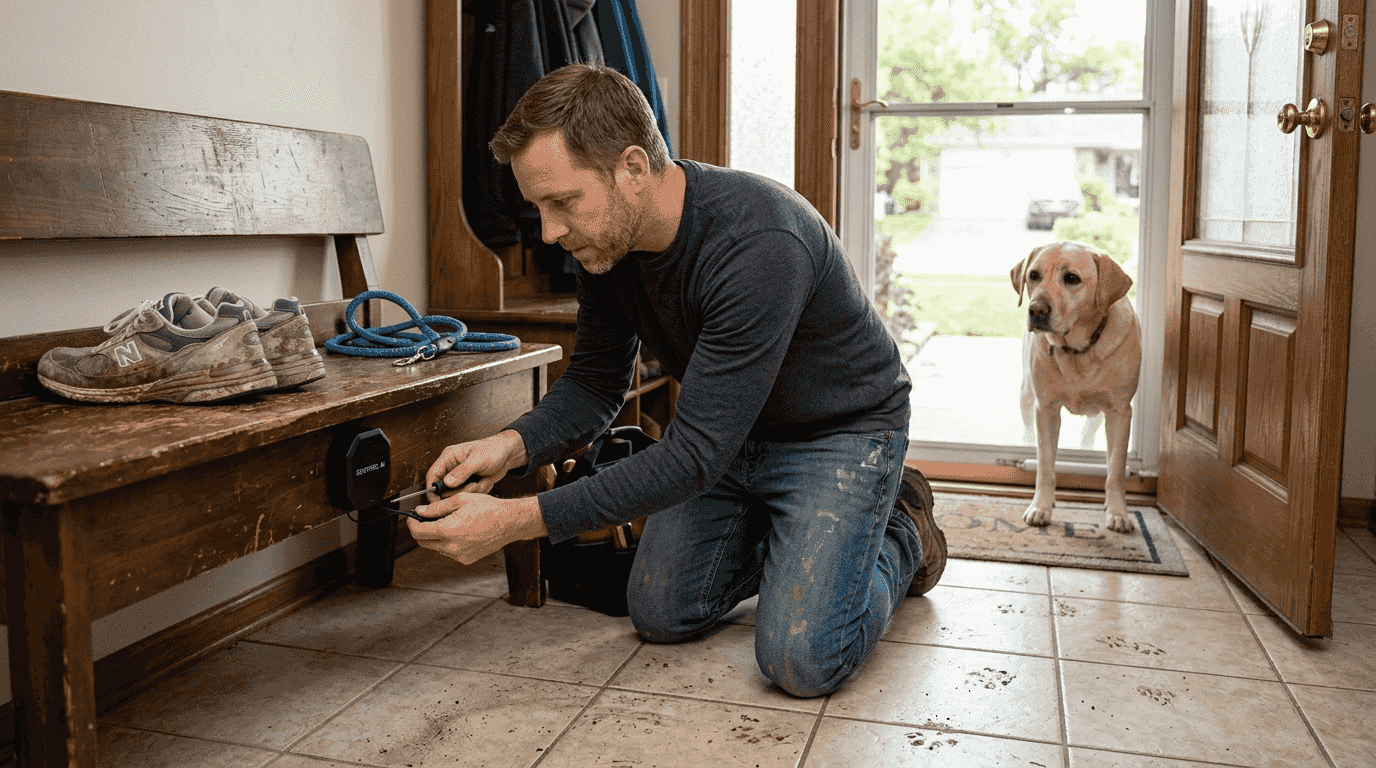
Finally, assess adaptability and integration potential. The best pet security systems work together seamlessly, allowing your smart camera to communicate with your pet door, motion sensors, and alert systems. This creates a cohesive security network that understands your pet’s routine and adjusts monitoring accordingly.
Top smart pet security devices to install in 2026
The smart pet security market has matured significantly, offering devices that combine robust protection with genuine pet welfare benefits. These solutions address the specific challenges pet owners face while maintaining the security standards you’d expect from professional-grade systems.
AI-enabled pet cameras lead the category with remarkable accuracy improvements. The Wyze Cam v4 consistently identifies kittens and toy breeds with minimum pet weight of 5 lbs. This precision eliminates the frustration of constant false alerts while ensuring you receive genuine security notifications. The camera’s AI processing happens locally, protecting your privacy while delivering instant pet versus intruder classifications.
Smart pet doors have evolved beyond simple magnetic collars to sophisticated biometric systems. The PawPort Smart Pet Door demonstrated a 94% reduction in successful breach attempts compared to leading RF-based doors. This dramatic improvement comes from cryptographic validation that prevents signal replay attacks, a vulnerability that plagues traditional electronic pet doors. Unauthorized animals or intruders cannot trick the system by copying your pet’s access credentials.
Key features to look for in 2026’s top pet security devices include:
- Facial or biometric pet recognition with edge processing
- Encrypted communication protocols resistant to wireless attacks
- Integration with existing smart home ecosystems
- Adaptive learning that improves accuracy over time
- Battery backup for continued operation during power outages
- Weatherproof construction for outdoor installations
The Petlibro Scout Smart Camera combines monitoring with interactive features, offering treat dispensing and two-way audio alongside security functions. This dual purpose design helps justify the investment by serving both security and pet engagement needs. You can check on your home’s security status while simultaneously reducing your pet’s separation anxiety through remote interaction.
For comprehensive protection, consider systems like ADT’s pet-focused packages that include smart cameras for pet security alongside traditional security components. These integrated approaches ensure motion sensors, door contacts, and cameras all account for pet presence without creating coverage gaps.
Global shutter cameras represent a technical advancement worth understanding. Unlike rolling shutter cameras that can blur fast-moving subjects, global shutter technology captures your entire pet’s movement simultaneously. This matters when your dog races through the living room or your cat leaps across furniture, ensuring clear footage for both security review and cherished pet moments.
When selecting devices, match capabilities to your specific needs. A multi-pet household requires more sophisticated recognition than a single-pet home. Likewise, large breed dogs need different motion sensor calibration than small cats. Understanding pet camera features helps you avoid overpaying for unnecessary capabilities while ensuring you don’t miss critical functions.
Comparison of leading pet security tech solutions in 2026
Comparing pet security devices side by side reveals important differences in approach, capabilities, and suitability for various home environments. This comparison helps you match specific products to your unique situation.
| Device | Security Method | Pet Detection | False Alarm Prevention | AI Processing | Remote Features |
|---|---|---|---|---|---|
| PawPort Smart Pet Door | Cryptographic validation | Biometric recognition | 94% breach reduction | Edge computing | Mobile alerts, access logs |
| Wyze Cam v4 | Encrypted video | AI classification, 5 lb minimum | Pet-specific motion zones | Local processing | Two-way audio, cloud optional |
| Petlibro Scout Camera | Secure streaming | Visual pet detection | Adjustable sensitivity | Hybrid edge/cloud | Treat dispensing, laser play |
| ADT Pet Sensors | Professional monitoring | Weight-based filtering | 80 lb pet immunity | N/A (motion only) | Professional response, app control |
PawPort’s cryptographic approach offers the strongest protection against unauthorized entry through pet doors. Traditional RF-based systems broadcast signals that attackers can intercept and replay, but cryptographic validation requires unique, time-sensitive credentials that cannot be copied. This makes PawPort ideal for homes in higher-crime areas or for owners with particularly valuable pets that might be targeted for theft.
Advantages of PawPort include:
- Virtually eliminates unauthorized animal entry
- Works offline without cloud dependency
- Learns to recognize pets even as they age or change appearance
- Provides detailed access logs for monitoring pet activity
Limitations include higher upfront cost and the need for initial training period for pet recognition accuracy.
Wyze Cam v4 excels in versatility and value, offering professional-grade AI detection at consumer-friendly prices. Its ability to distinguish small pets from potential threats makes it particularly suitable for cat owners or those with toy breed dogs. The global shutter camera eliminates motion blur, crucial for capturing fast-moving pets with clarity.
Petlibro Scout combines security monitoring with active pet engagement, making it a strong choice for owners primarily concerned with separation anxiety alongside security. The treat dispensing and interactive features help maintain your pet’s emotional wellbeing while you monitor your home. However, its hybrid processing approach means some data does reach cloud servers, a consideration for privacy-focused users.
ADT’s professional monitoring systems offer the advantage of human verification and emergency response coordination. When sensors detect unusual activity, trained operators can assess the situation and dispatch help if needed. The weight-based pet immunity works reliably for most dogs and cats, though extremely large breeds may occasionally trigger alerts.
Pro Tip: Choose devices optimized for your specific pet’s size and typical behavior patterns. A hyperactive puppy requires different sensitivity settings than a senior cat, and selecting appropriately prevents the frustration of constant false alerts that can lead you to disable security features.
For households with multiple pets, multi-pet camera setups using Wyze or similar AI cameras provide individual tracking and behavior monitoring. This granular approach helps you understand each pet’s routine and identify unusual behavior that might indicate health issues or security concerns.
The choice between edge and cloud processing significantly impacts privacy and reliability. Edge devices like PawPort and Wyze (in local mode) continue functioning during internet outages and never expose your footage to third-party servers. Cloud-dependent systems offer advantages like remote storage and advanced analytics but introduce privacy considerations and subscription costs.
When evaluating motion detection pet cameras, test how well they handle your home’s specific lighting conditions and pet movement patterns. Some cameras excel in bright conditions but struggle with night vision accuracy, while others perform consistently across varying light levels.
How to decide and implement the best home security setup for your pets
Selecting and installing pet-friendly security technology requires methodical planning that accounts for your home’s layout, your pets’ behavior, and your specific security concerns. Follow these steps to build an effective system.
-
Assess your home environment by mapping high-traffic pet areas, entry points, and spaces requiring monitoring. Note lighting conditions, internet connectivity strength in each area, and existing smart home infrastructure that new devices should integrate with.
-
Evaluate your pets’ specific characteristics including size, activity level, daily routines, and any anxiety triggers. A nervous rescue dog needs different considerations than a confident outdoor cat. Document typical movement patterns to inform motion sensor placement and sensitivity settings.
-
Define your primary security goals, whether preventing break-ins, monitoring pet safety, reducing separation anxiety, or all three. This clarity prevents overspending on features you won’t use while ensuring you don’t miss critical capabilities.
-
Research devices matching your criteria using comparison tables and reviews. Prioritize products with trial periods or strong return policies so you can test performance with your actual pets before committing.
-
Install devices strategically, starting with highest-priority areas. Place cameras to cover entry points and pet activity zones. Position motion sensors accounting for pet height and typical paths. Install smart pet doors with careful attention to security seal integrity.
-
Calibrate motion sensors precisely for your pet’s weight and movement style. ADT’s motion sensors can be calibrated to ignore pets under 80 pounds, reducing false alarms. Start with conservative settings and adjust based on real-world performance over several days.
-
Test the complete system thoroughly by having pets move through monitored areas while you observe alert accuracy. Deliberately create scenarios like package deliveries or visitors to verify the system distinguishes pets from genuine security events.
-
Establish monitoring routines and response protocols. Decide which alerts require immediate attention versus routine review. Configure notification settings to avoid alert fatigue while ensuring you catch genuine concerns.
Pro Tip: Update device firmware monthly to maintain security patches and AI accuracy improvements. Manufacturers continuously refine pet detection algorithms, and regular updates ensure you benefit from these enhancements without purchasing new hardware.
Integration creates significant value beyond individual device capabilities. When your smart camera detects your pet approaching the door, it can trigger your smart pet door to unlock, log the event, and send you a notification with video confirmation. This coordinated behavior provides security assurance while enabling pet freedom.
Leverage two-way audio strategically to reduce pet anxiety and reinforce training. Hearing your voice through a camera can calm an anxious dog or redirect unwanted behavior. Treat dispensing serves similar purposes, rewarding calm behavior and providing positive associations with your absence. These features transform security devices into active pet care tools.
Consider professional installation for complex systems, especially those integrating with whole-home security networks. While many devices offer DIY setup, professional installers ensure optimal placement, proper calibration, and reliable integration. The upfront cost often pays for itself through improved performance and avoided troubleshooting.
Document your system configuration including device locations, sensitivity settings, and integration rules. This reference proves invaluable when troubleshooting issues or explaining your setup to pet sitters. Include emergency contacts and procedures for scenarios like power outages or internet disruptions.
Explore benefits of smart pet monitoring beyond security, including health tracking through activity pattern analysis and early warning signs of illness detected through behavior changes. Modern systems increasingly offer these wellness features alongside traditional security functions.
As you refine your setup, pay attention to pet surveillance technology trends that might enhance your system. Features like predictive analytics that anticipate pet needs based on routine patterns represent the cutting edge of pet tech in 2026.
Explore modern pet tech solutions for smarter home security
Now that you understand the criteria, devices, and implementation strategies for pet-friendly home security, take the next step by exploring specific product examples and detailed tutorials. Our comprehensive guides help you compare options like Furbo and Petcube, examining real-world performance with different pet types and home configurations. You’ll find examples of pet monitoring devices that break down features, pricing, and ideal use cases.
For hands-on guidance, our pet safety monitoring tutorial walks through setup, calibration, and optimization step by step. You’ll learn exactly how to configure devices for your specific pets and troubleshoot common issues. Understanding why use pet monitoring helps justify the investment by revealing benefits beyond security, including behavioral insights and health tracking capabilities.
Pro Tip: Start with one or two devices in your highest-priority areas rather than attempting a complete system overhaul. This incremental approach lets you learn what works for your pets’ specific behaviors and your home’s unique characteristics before expanding your investment.
FAQ
What is the best type of pet door for home security?
Smart pet doors using edge AI and cryptographic validation, like PawPort, offer the strongest protection against unauthorized access. These systems verify your pet’s identity using biometric recognition that cannot be spoofed or replayed by intruders. Traditional RF-based pet doors broadcast signals that attackers can intercept, but cryptographic approaches generate unique, time-sensitive credentials for each entry. This technology reduces successful breach attempts by over 90% compared to conventional electronic pet doors.
How do smart cameras reduce false alarms caused by pets?
AI-powered cameras use sophisticated pet detection algorithms that distinguish animals from humans based on size, shape, and movement patterns. Adjustable motion sensor sensitivity allows you to set thresholds appropriate for your pet’s weight, preventing small animals from triggering security alerts. Edge computing enables cameras to process these classifications locally in milliseconds, filtering out pet movements before sending notifications to your phone. This combination of AI recognition and configurable sensitivity can reduce false alarms by 70 to 80% compared to traditional motion-only systems.
Can pet cameras help with separation anxiety?
Pet cameras equipped with two-way audio and treat dispensing significantly ease separation anxiety by maintaining your connection with pets while away. Hearing your voice provides comfort and reassurance, while treat rewards create positive associations with your absence. Interactive features like laser toys keep pets mentally engaged, reducing destructive behaviors born from boredom or stress. Studies show that regular remote interaction through smart cameras can decrease anxiety-related behaviors by up to 60% in dogs prone to separation distress.
Recommended
- Pet home security tips 2026: 75% smarter monitoring
- Improve Home Security for Pets with Smart Cameras
- Home Security With Pet Cameras Guide for Smart Owners
- Home Security With Pet Tech: Reducing Anxiety and Risks
- Why Pet Safety Matters for Urban Pet Owners – Teddy Pet
